10-Year-Old Benin Boy Works as Tiler’s Apprentice in Lagos, Raises Child Labour Concerns
A 10-year-old boy from the Republic of Benin has become a tiler's apprentice in Lagos, where he reportedly works on construction sites and sleeps in an unfinished building instead of attending school.
 judithhh
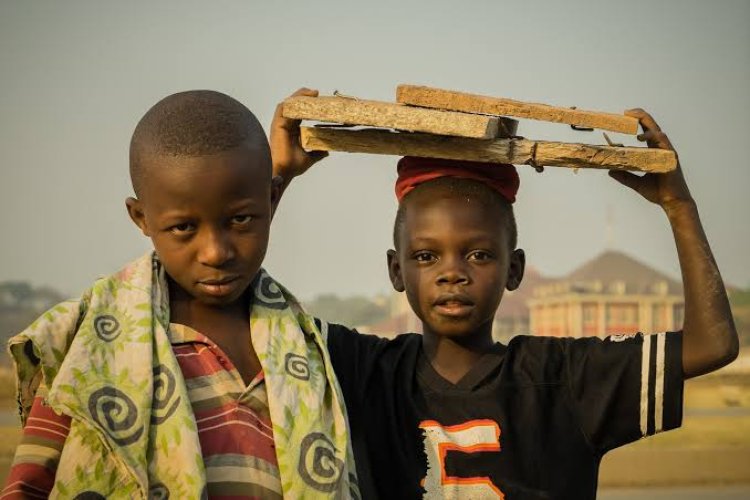
Young boy from Benin Republic has traded the classroom for construction work in Lagos, raising questions about child labour and education.
For 10-year-old Ibukun Ojo, moving from Ifangni in the Republic of Benin to Lagos was supposed to be an opportunity to learn a trade. However, instead of attending school, the boy now works on construction sites, carrying building materials and mixing cement while sleeping on cardboard in an unfinished building.
Ibukun is currently an apprentice under a tiler, Kilamuwaye Alexandre, who brought him from their hometown in southeastern Benin Republic to Lagos. The boy reportedly works at construction sites in Ilasamaja and spends his nights in an unfinished building without a mattress, mosquito net or electricity.
When asked about his education, Ibukun reportedly said he had never attended school.
His situation, reported by The PUNCH, has raised concerns about child labour, informal apprenticeship and the growing number of children who miss out on education in pursuit of vocational skills.
Alexandre explained that Ibukun had expressed interest in becoming a tiler and that his parents had agreed to send him to Lagos to learn the trade. He described the arrangement as a response to the family's circumstances but acknowledged that the boy was too young to work on construction sites.
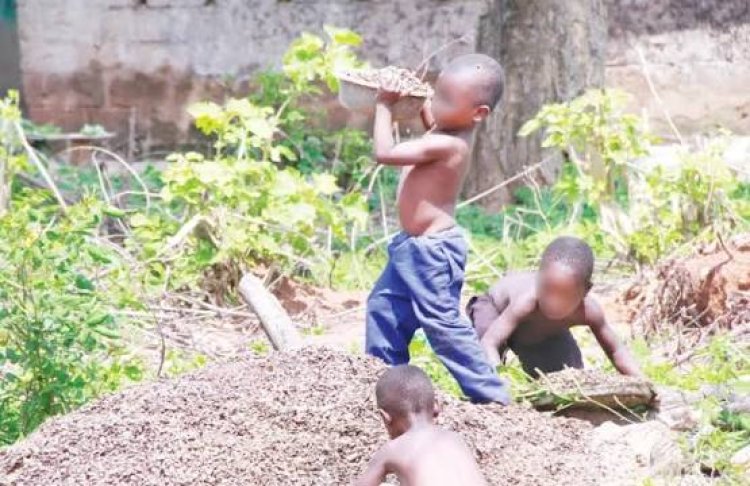
Unlike apprentices who simply observe experienced artisans, Ibukun reportedly performs physically demanding tasks alongside adult workers, raising questions about his safety and welfare.
Another tiler in Lagos, Koku Tosin, told The PUNCH that Ibukun was not the only young boy from the Republic of Benin involved in similar arrangements. He said he had encountered other boys who had travelled to Lagos for construction-related work.
The situation highlights the challenges associated with informal employment and cross-border migration, particularly when children accompany adults into workplaces without adequate protection or access to education.
Although apprenticeship remains an important means of acquiring practical skills in Nigeria, concerns arise when children are withdrawn from school and exposed to hazardous working conditions.
The International Labour Organization (ILO) defines child labour as work that deprives children of their childhood, potential and dignity, or harms their development and education. However, not every activity performed by a child qualifies as child labour; the child's age, working conditions and the nature of the work are important considerations.
Nigeria's 2022 National Child Labour Survey, conducted by the National Bureau of Statistics in collaboration with the ILO and the Federal Ministry of Labour and Employment, estimated that 24.7 million children aged five to 17 were engaged in child labour, while 14.39 million were involved in hazardous work.
Nigeria's Child Rights Act prohibits exploitative labour and activities that deprive children of educational opportunities. The Labour Act also contains restrictions on the employment and apprenticeship of children and young persons.
These protections raise questions about apprenticeship arrangements that expose young children to dangerous work or prevent them from attending school.
Economic hardship remains one of the major factors associated with child labour. For families struggling with financial difficulties, sending children to learn a trade may appear to offer an alternative to formal education.

However, when apprenticeship involves hazardous work, inadequate accommodation and prolonged absence from school, it can undermine children's development and future opportunities.
Nigeria's informal economy also makes enforcement difficult. Construction workers frequently move between sites, while small businesses and workshops often operate without formal employment structures, making it challenging for authorities to monitor the welfare of young apprentices.
In June 2026, Nigeria validated its third National Child Labour Policy and National Action Plan for 2026–2030, aimed at strengthening efforts to eliminate child labour, reduce hazardous work and improve children's access to education.
The effectiveness of the policy will depend partly on its implementation in informal sectors, where many vulnerable children work.
Ibukun's experience highlights the need for stronger child-protection measures, improved access to education and economic support for struggling families.
While vocational training remains important for developing practical skills, his situation raises concerns about children being pushed into hazardous work at the expense of their education.
For a 10-year-old, learning a trade should not mean abandoning school, carrying heavy building materials or sleeping on the floor of an unfinished construction site.