AFUED Counselling Expert Urges Practitioners to Deepen Knowledge of Counselling Theories and Applications
A counselling expert, Mrs Olotu Catherine, has urged practising counsellors at Adeyemi Federal University of Education (AFUED), Ondo, Ondo State, to continually update their knowledge of counselling theories and practices to improve their ability to address clients’ needs.
 Philip22
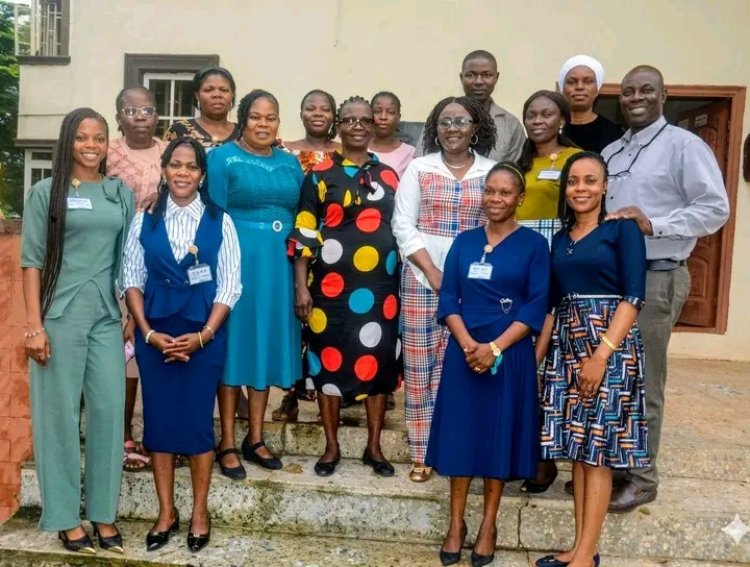
A counselling expert, Mrs Olotu Catherine, has urged practising counsellors at Adeyemi Federal University of Education (AFUED), Ondo, Ondo State, to continually update their knowledge of counselling theories and practices to improve their ability to address clients’ needs.
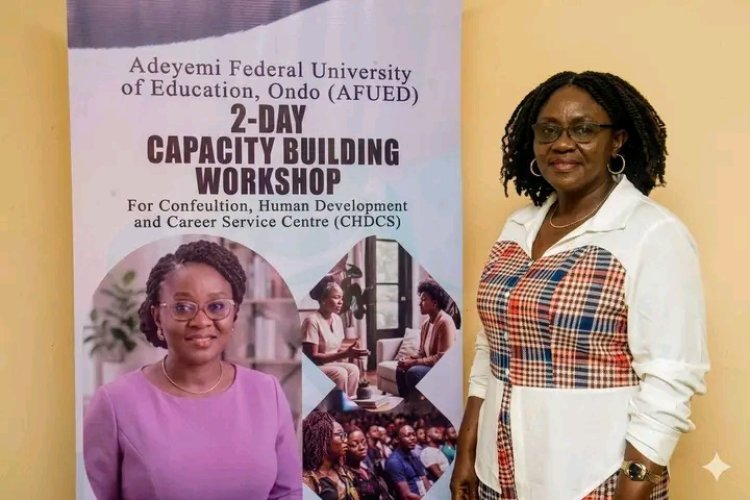
Olotu gave the advice during a two-day capacity-building workshop organised by the university’s Directorate of Counselling, Human Development and Career Services Centre (CHDCSC).
The workshop, themed “Enhancing Counselling Skills for Effective Management,” was held on Tuesday, September 29, and Wednesday, September 30, 2026, at the directorate’s library within the university.
In her welcome address, the Acting Director of CHDCSC, Mrs Janet Funmilayo Adisa, said the workshop was organised to strengthen counsellors’ professional skills, improve their efficiency and enhance their contributions to society.
Adisa encouraged participants to pay close attention to the training, expressing optimism that its outcomes would benefit both the directorate and the university.
Speaking on the workshop’s theme, Olotu addressed issues relating to career counselling and professional practice. She explained that a counsellor’s responsibilities extend beyond listening to clients, emphasising the need to understand their situations, assess relevant information and determine appropriate interventions.
According to her, the counselling process involves listening, understanding, assessment, formulation, intervention and review.
She explained that counsellors must first listen to clients’ experiences, understand their circumstances, assess relevant factors, develop a working understanding of each case, select appropriate interventions and review whether those interventions are effective.
Addressing the misconception that counselling primarily involves giving advice, Olotu stressed that counselling should not be reduced to advice-giving, although advice may sometimes be appropriate.
She urged practitioners to gather sufficient information about clients’ histories and circumstances before making recommendations, noting that a proper understanding of each case was essential to providing justified and effective guidance.
The facilitator also highlighted the broad application of counselling across different areas of human activity, including teaching, mentoring, coaching, pastoral support, career guidance, psychological support and crisis management.
She encouraged counsellors to pursue continuous professional development to strengthen their competence and improve service delivery.
Emphasising the importance of effective counselling, Olotu noted that success depended not on how quickly a counsellor responded to a problem but on how accurately the situation was understood before deciding on an appropriate response.
The two-day workshop was attended by counsellors from the CHDCSC and staff members from the university’s Directorate of Information and Public Relations.