Effective Development Goes Beyond Economic Growth to Embrace Human Welfare, Social Inclusion and Institutional Effectiveness — VC
Effective Development Goes Beyond Economic Growth to Embrace Human Welfare, Social Inclusion and Institutional Effectiveness — VC
 UmarFarouk123
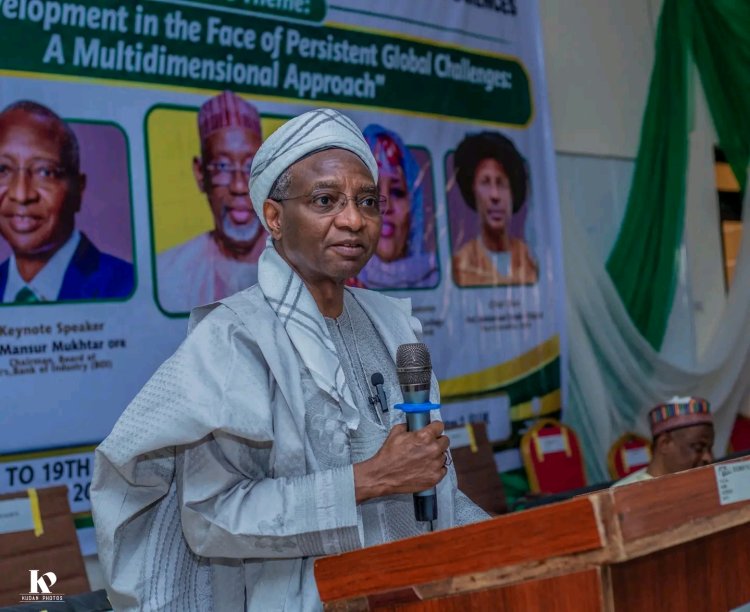
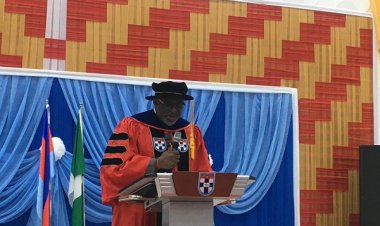
The Vice-Chancellor of Sule Lamido University, Kafin Hausa (SLUK), Professor Muhammad Ibrahim Yakasai, has emphasised that effective development must go beyond economic growth to encompass human welfare, social inclusion, institutional effectiveness, technological advancement and environmental sustainability.
The Vice-Chancellor made this assertion while speaking at the opening ceremony of the 4th International Conference of the Faculty of Social and Management Sciences, held on Tuesday, 17th November, 2026, with the theme, "Rethinking Development in the Face of Persistent Global Challenges: A Multidimensional Approach."
Professor Yakasai further stated that the University recognises that for research to be fully effective and impactful, it must not remain confined to academic publications and conference presentations but should translate into practical solutions, influence public policies, strengthen institutions and improve the quality of people's lives.
Declaring the conference open, the Chairman of the Occasion and Secretary to the Government of Jigawa State, Malam Bala Ibrahim, stated that development should be assessed based on the quality of life of citizens, fairness of opportunities, strength of institutions, protection of human rights, environmental sustainability and people's ability to live meaningful and dignified lives.
He noted that the multidimensional approach advocated by the conference was not merely an academic preference but a development necessity. Represented by the Permanent Secretary, Administration and Finance, Office of the Secretary to the Government of Jigawa State, Alhaji Abdullahi Sa'idu, the SSG described the conference as an important platform for generating ideas, challenging established assumptions, identifying policy gaps and developing practical solutions to prevailing development challenges.
In his keynote address, the Chairman of the Board of Directors of the Bank of Industry (BOI), Dr. Mansur Mukhtar, OFR, the Sarkin Ban Kano and District Head of Dambatta, observed that the global community was confronted with numerous persistent challenges, including economic instability, poverty, unemployment, insecurity, climate change, food insecurity, technological disruptions, political instability, public health emergencies, inequality and the widening gap between developed and developing economies.
He explained that these challenges were interconnected and often reinforced one another, thereby creating complex barriers to development. He consequently called for a shift from the narrow perception of development as merely economic growth, increased national income or physical infrastructure to a multidimensional process encompassing economic prosperity, social justice, political stability, institutional accountability, environmental sustainability, technological advancement, human security and the overall well-being of citizens.
Dr. Mukhtar further stressed the need for development policies and strategies to be people-centred, inclusive, evidence-based and responsive to the peculiar circumstances of individual societies.
Similarly, the Lead Presenter, Professor Ummu Ahmad Jalingo of the Department of Economics, Bayero University, Kano, identified unemployment, de-industrialisation, debt, climate change and conflicts as major factors impeding development in Sub-Saharan Africa, particularly Nigeria.
Professor Jalingo proposed five multidimensional strategies for achieving effective development. These include making debt-related trade-offs explicit; protecting early childhood nutrition, healthcare and learning; creating jobs in tradable sectors through improved electricity supply, agro-processing and services; extending portable digital social protection to informal-sector workers; and using subnational poverty data to ensure effective targeting of resources.
Earlier, in his welcome address, the Dean of the Faculty of Social and Management Sciences, Dr. Mustapha Hussaini, described the conference theme as timely and intellectually compelling, noting that it challenged scholars and policymakers to critically reconsider conventional approaches to development in a world increasingly characterised by complexity, uncertainty and interconnected crises.
The Dean emphasised that scholars and researchers must move beyond producing knowledge for academic consumption alone, stressing that research should address real societal needs, influence public policies, promote entrepreneurship, strengthen governance and contribute meaningfully to national and global development.
He added that the conference provided an important platform for intellectual exchange, constructive debate, research dissemination and the establishment of collaborative partnerships among academics, policymakers, development practitioners and other stakeholders.
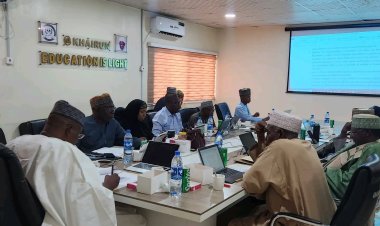
The conference attracted a wide range of participants from across the globe, with over 260 abstracts accepted. Participants included researchers and scholars from countries such as Indonesia, Cyprus, the United Kingdom and Ghana, among others. The conference also featured approximately 54 participants sponsored by the Tertiary Education Trust Fund (TETFund).
The conference is expected to provide valuable insights and policy-relevant recommendations towards addressing contemporary development challenges and advancing sustainable development.