IBBUL Pro-Chancellor Meets Management and Union Leaderships, Charges on Industrial Harmony
IBBUL Pro-Chancellor Meets Management and Union Leaderships, Charges on Industrial Harmony
 UmarFarouk123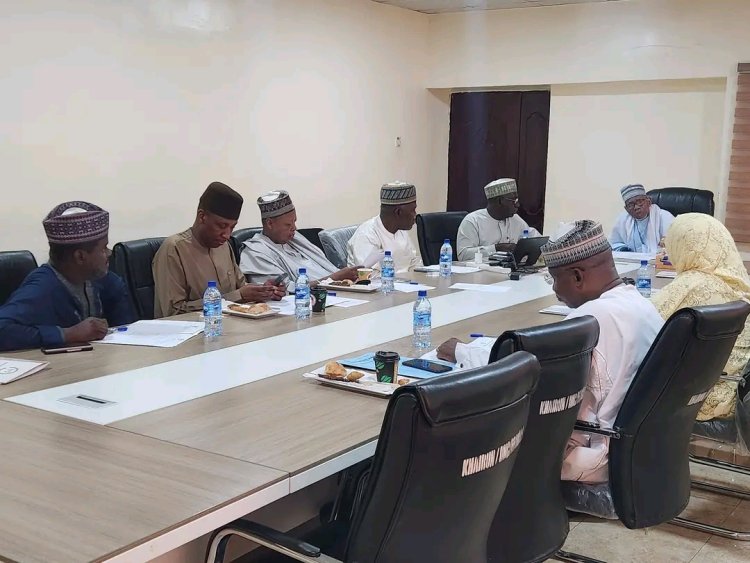
The Pro-Chancellor and Chairman of the Governing Council of Ibrahim Badamasi Babangida University, Lapai (IBBUL), Professor Sheikh Abdullah, has charged the University Management and labour unions to embrace dialogue, mutual respect and responsible collective bargaining as pathways to resolving industrial disagreements and advancing the institution.
Professor Abdullah made the call during a meeting with Management and leaderships of the four in-house unions in Lapai.
He described labour as a critical pillar of every organisation, stressing that no institution could achieve sustainable progress without recognising the contributions and welfare of its workforce.
He urged stakeholders to focus on practical issues, avoid unnecessary confrontation and maintain open channels of communication in addressing concerns affecting the University community.
The Pro-Chancellor highlighted the importance of understanding the respective financial and administrative responsibilities of the state government, university management and labour unions. He called for realistic negotiations guided by the principle of ability to pay, noting that mutual understanding and respect for each party's position were essential to reaching workable agreements.
He maintained that academics and administrators must not only identify challenges but also contribute to resolving them, calling on all parties to work in unity towards the continued growth, stability and development of IBBUL.
Earlier in his opening remarks, the Vice-Chancellor, Professor Mohammed Hadi Sulaiman, appreciated the Pro-Chancellor for providing a platform for constructive engagement with the unions. He noted that the meeting would strengthen understanding between Management and the unions, expressing confidence that the Pro-Chancellor's fatherly advice and wealth of experience would foster industrial harmony and promote the institution's growth.
The Chairmen of the four labour unions, comprising ASUU, SSANU, NASU and NAAT, appealed to the Pro-Chancellor to intervene in their outstanding demands following the suspension of the recent industrial action.
They urged the Council Chairman to look into the non-financial aspects of the 2026 agreement and grant necessary approval to facilitate its full implementation.
The union leaders commended the Vice-Chancellor for his commitment to dialogue and for prioritising the future of the University throughout the crisis. They disclosed that some demands had been set aside to facilitate resolution of the strike, leaving outstanding issues including the 25-35 percent salary adjustment and release of the 7.5 percent salary-related funds.
They also called for expedited consideration of other matters requiring Council approval, including establishment of an occupational health and safety committee, improved workplace safety, proposed restructuring of the Physical Planning, Works and Maintenance functions, and issues concerning representation in the University's Congregation.
Responding, Professor Abdullah acknowledged concerns raised by the unions and stressed the need to balance workers' welfare with the University's financial realities. He assured stakeholders of continued engagement with relevant authorities to explore ways of addressing outstanding demands, while urging unions and Management to sustain mutual respect, unity and constructive dialogue.
He further encouraged Management to examine proposed administrative reforms within applicable legal and institutional frameworks, emphasising that lasting industrial harmony depends on shared responsibility and collective commitment to the growth and stability of IBBUL.