NSUK Faculty of Arts Hosts 9th International Conference on Islam, Entrepreneurship and Sustainable Development
NSUK Faculty of Arts Hosts 9th International Conference on Islam, Entrepreneurship and Sustainable Development
 UmarFarouk123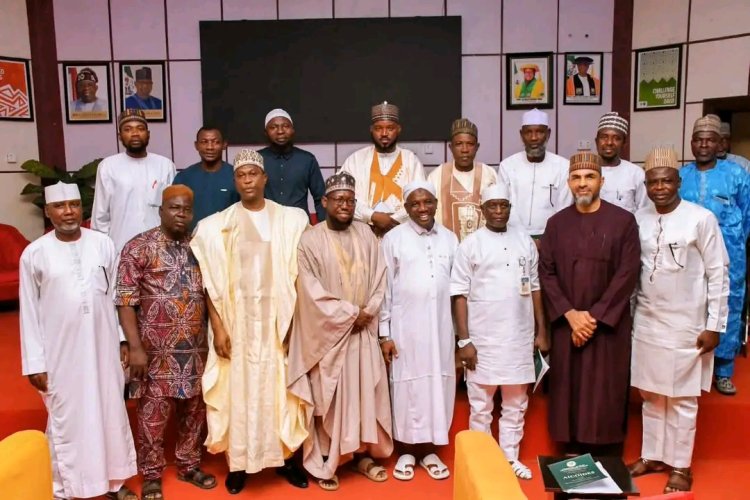
The Department of Islam and Development Studies, Faculty of Arts, Nasarawa State University, Keffi (NSUK), on Monday, 5 October 2026, hosted its 9th Annual International Conference with the theme, “Islam, Entrepreneurship and Sustainable Development.”
Held at the S.B. Mohammed Auditorium, School of Postgraduate Studies, the conference brought together Islamic scholars, academics, students and members of the university community from across the country to examine the role of Islam and entrepreneurship in addressing contemporary socioeconomic challenges and advancing sustainable development.
In her welcome address, the Vice-Chancellor, Professor Sa’adatu Hassan Liman, represented by the Deputy Dean, Faculty of Natural and Applied Sciences, Dr Muhammad Bawa, commended the Department of Islam and Development Studies for sustaining the annual conference and creating a platform for intellectual discourse on issues of national and global relevance.
Dr Bawa said the theme was particularly significant in promoting moral and ethical values in society, noting that entrepreneurship, from an Islamic perspective, constitutes an act of worship, a trust (Amana) and a form of service to humanity.
He emphasised that Muslims are “trustees rather than absolute owners” of the resources entrusted to them, and should therefore pursue entrepreneurship responsibly for the benefit of individuals and society.
According to him, entrepreneurship also contributes to human and capital development through mechanisms such as Zakat and Waqf, while promoting wealth redistribution, social welfare and women's empowerment.
In his opening remarks, the Head of Department, Professor Muhammad Alhassan Yunusa, commended the Vice-Chancellor for her exemplary leadership and appreciated the conference organising committee for its efforts in ensuring the success of the event.
He explained that the conference was designed to foster intellectual discourse, strengthen knowledge, promote sustainable development and uphold the noble values of Islam through lawful entrepreneurship, while contributing to solutions to socioeconomic challenges and sustainable national development.
Entrepreneurship as a Religious and Social Responsibility
In his keynote presentation, Sheikh Nuruddeen Lemu (OON) underscored the importance of unity and collaboration in achieving sustainable development.
He described entrepreneurship as a religious obligation (Fard Kifayah) through which social amenities, community development, socioeconomic activities and security could be enhanced.
Sheikh Lemu identified key pillars of sustainable entrepreneurship as earning through capacity building, competence and character; saving; investment; responsible spending; and giving.
He also highlighted discipline, positive mindset, strategic business planning, honesty, integrity and equitable redistribution of wealth as essential requirements for lawful entrepreneurship and sustainable development.
Presenting the lead paper, Sheikh Dr Tajuddeen Muhammad Bello Adigun (OON) said Islam encourages productive and lawful trade, social responsibility, honesty, integrity and human capital development.
He examined the role of the Prophets in advancing economic and business prosperity, stressing that while Allah has permitted legitimate business transactions in the Glorious Qur'an, Riba (interest/usury) has been prohibited because of its negative implications for economic growth and development.
Dr Adigun emphasised the importance of honesty, justice, trust and integrity in business, citing the teaching of Prophet Muhammad (peace be upon him) on the elevated status of trustworthy businesspeople.
He further highlighted the importance of partnerships, women's empowerment and environmental sustainability, while identifying major contemporary barriers to entrepreneurship, including inadequate access to affordable finance, poor infrastructure, inadequate entrepreneurial knowledge, insecurity and limited access to technology.
He proposed strengthening education and skills-acquisition programmes, improving employment opportunities, electricity and infrastructure, enhancing security and healthcare, promoting accountability and good leadership, effectively utilising Zakat and Waqf, encouraging lawful entrepreneurship and protecting the environment as key measures for overcoming the challenges.
In their separate goodwill messages, the Dean, Faculty of Arts, Professor Adam A. Binchi,represented by the Deputy Dean Professor Mathew Michael, and the Inspector-General of Police, Mr Olatunji Ridwan Disu, represented by ACP (Dr.) Alhassan Yakub, all commended the Vice-Chancellor for her visionary leadership and the Department of Islam and Development Studies for its commitment to academic excellence.
They highlighted the contribution of Islamic principles—including justice, fairness, integrity and responsible enterprise—to ethical business practices and economic development in Africa.
The conference also featured a panel discussion led by Professor Muhammad Tanko Aliyu of thr Federal University of Lafia, who examined Islamic pathways to entrepreneurship and sustainable national development, providing participants with further opportunities for intellectual engagement, knowledge exchange and the exploration of practical solutions to contemporary development challenges.
©️ Information and Protocol Unit, 2026.
Nasarawa State University, Keffi