FUTES-Iyin VC Charges Lecturers: Our Research Must Solve Real-Time Problems, Nigeria’s Most Pressing Challenges
FUTES-Iyin VC Charges Lecturers: Our Research Must Solve Real-Time Problems, Nigeria’s Most Pressing Challenges
 UmarFarouk123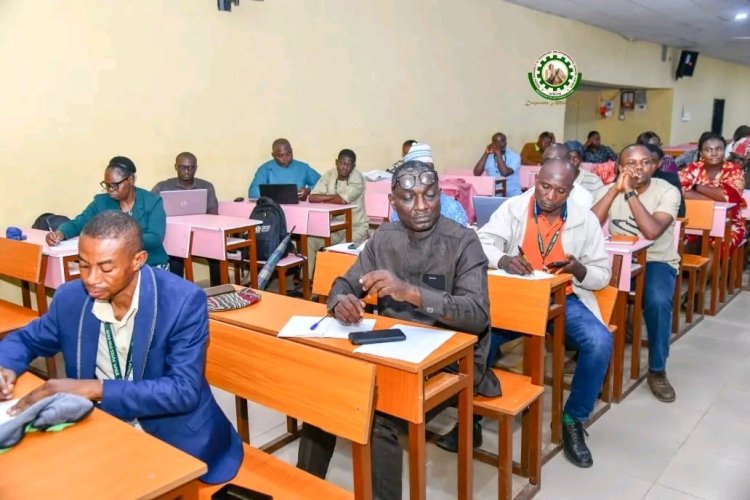
The Vice-Chancellor of the Federal University of Technology and Environmental Sciences, Iyin-Ekiti (FUTES-IYIN), Professor Gbenga Aribisala, has charged lecturers of the University to channel their research towards solving real-time problems and addressing Nigeria’s most pressing challenges.
Professor Aribisala gave the charge at a one-day workshop on competitive concept note writing for the TETFund National Research Fund (NRF) 2026, organised by the University Centre for Research Development and Innovation (CeRDI).
Represented by the Deputy Vice-Chancellor, Professor Olumide Ogundipe, the Vice-Chancellor said the training was another step towards building a strong research culture and foundation for the young institution, stressing that the quality and relevance of research produced by the University must translate into solutions that respond to real societal needs.
He said the University’s research direction is guided by the philosophy of “research to solve,” urging lecturers to move beyond research for knowledge generation alone and focus on ideas capable of addressing challenges within their immediate communities and the country at large.
“The narrative we are advancing is research to solve. Our research must focus on solving the problems in our immediate community, providing answers to Nigeria's most pressing challenges in food security, health, technology, unemployment and governance, and contributing our quota to global knowledge,” he said.
Reiterating research, teaching and community service as the three key pillars of the University, Professor Aribisala explained that as long as research creates new knowledge, innovation must transform such knowledge into practical solutions capable of supporting development.
He noted that good research ideas also require adequate funding to move from the conceptual stage to practical application, urging lecturers to take advantage of available funding opportunities, particularly the TETFund National Research Fund.
According to him, the ability of the University to attract competitive research funding would depend significantly on the capacity of its researchers to develop strong, relevant and fundable proposals.
He therefore stressed the importance of understanding the priorities and expectations of funding agencies, describing the workshop as strategic to the University’s continued efforts to equip its researchers with the skills required to turn research ideas into fundable projects and, ultimately, impactful solutions.
The training brought teaching staff together for practical sessions on understanding the TETFund NRF 2026 call, identifying its funding priorities and developing competitive concept notes.
The technical sessions covered key components of a strong concept note, including problem statements, objectives, methodology and expected outcomes, as well as common mistakes in concept note writing and ways to avoid them.
Participants also engaged in an interactive question-and-answer session with the resource person, Professor Banji Oyun of the Federal University of Technology, Akure (FUTA).
Earlier in her opening address, the Director of CeRDI, Professor Folasade Isinkaye, urged participants to engage actively with the resource persons and make the most of the opportunity.
She stressed the need for the University to move “from having good ideas to having funded ideas,” noting that the ability to translate research ideas into fundable proposals would be critical to advancing the University’s research agenda.
It would be recalled that the University had a similar training for its academic staff members in July 2026, which centred on strategic grant writing, equipping participants with the knowledge and skills required to identify funding opportunities, develop compelling research proposals and improve their chances of securing competitive research grants.