UI Trains Drivers on Promoting Safe Driving Culture for a Safer Campus
UI Trains Drivers on Promoting Safe Driving Culture for a Safer Campus
 UmarFarouk123
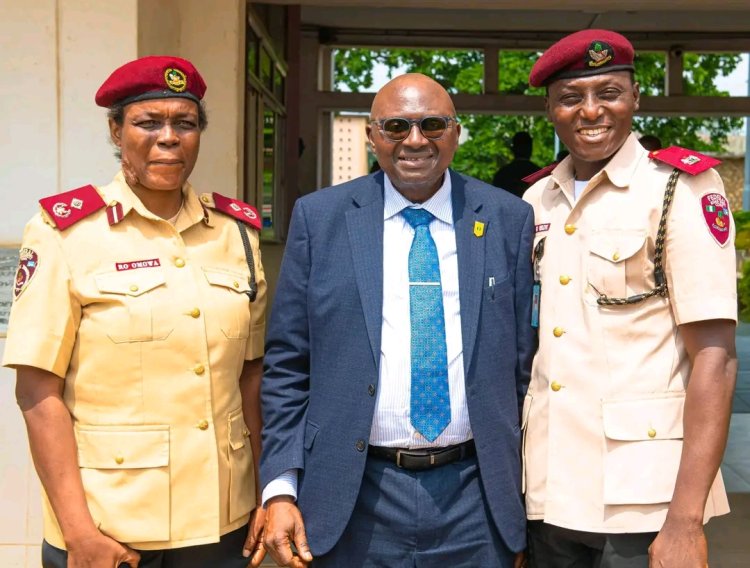
The University of Ibadan in collaboration with the Federal Road Safety Corps RS 11.3 Oyo State Sector Command has organised a 4-Day Training and Re-training programme for drivers of the University to strengthen their driving skills, promote road safety consciousness and enhance professionalism in the discharge of their duties.
The Training and Re-training Programme was themed "Promoting Safe Driving Culture for a Safer Campus."
The 13th Vice-Chancellor of the University, Professor Kayode O. Adebowale, mni, FAS, fspsp, who spoke during the training programme said safety remained a critical responsibility in every institution, noting that drivers played a significant role in ensuring the protection of lives and property.
He described the initiative as essential, stressing that continuous training was necessary to keep pace with changing technologies and modern driving practices and announced plans to institutionalise the training of drivers as part of efforts to improve road safety, protect lives and property, and enhance the professionalism of university drivers.
Professor Adebowale assured that the training programme would not be a one-off exercise but would become a regular feature of the university’s activities, with periodic assessments to ensure that drivers maintained the required standards of competence and professionalism.
He also urged the drivers to adhere strictly to the university’s regulations, particularly those governing official journeys outside the city and also cautioned against night driving after long hours on the road, advising drivers to stop and rest when necessary.
According to him, the university allows drivers on official trips to spend the night when circumstances require it, adding that adequate rest was essential to prevent fatigue and ensure safe driving.
He further emphasised the importance of maintaining good health and physical fitness, noting that driving for extended periods could be physically demanding and required alertness and concentration.
The Vice-Chancellor commended the Federal Road Safety Corps (FRSC) for its support for the training programme, expressing appreciation to the Corps and its representatives for contributing to the university community.
He particularly acknowledged the contribution of the FRSC officials who are alumni of the university for their contribution to institutional development, describing alumni engagement as increasingly important in addressing the funding and development challenges facing tertiary education in Nigeria.
Professor Adebowale noted that universities around the world benefited significantly from the support of their alumni and called for stronger collaboration between institutions and their graduates.
The Vice-Chancellor expressed confidence that the partnership between the university and the FRSC would continue to grow, describing the participating alumni as ambassadors of the institution.
He encouraged the drivers to apply the knowledge gained to their daily responsibilities.
He reiterated the university’s commitment to improving staff capacity through continuous training and professional development, stressing that the success of the initiative would depend on the drivers’ willingness to adhere to safety rules and maintain high professional standards.
The Registrar of the University, Mr. G. O. Saliu, JP, fspsp, FNIM, FCIML, MANUPA, MAUA, commended the Federal Road Safety Corps (FRSC) for its collaboration with the institution in organising a driver training programme aimed at improving road safety awareness and driving practices among members of the university community.
He also expressed appreciation to the Vice-Chancellor for making time to attend despite his demanding schedule
and the university management, for approving the funds required for the programme.
Mr. Saliu commended the planning team headed by the Senior Deputy Registrar (General Administration), Mr. I. Akinbola and the Insurance Officer, Dr. Gbemisola Lai-Folorunso and other members as well. He also commended the participants for their commitment to the training, patience, enthusiasm and willingness to learn, noting that reports from all the sessions indicated active participation through questions and responses.
According to him, such an engagement demonstrated that the training achieved its objectives and encouraged participants to sustain their cooperation throughout the programme.
He also acknowledged the contributions of members of the University Inter-Campus Committee who participated in the training, describing them as ambassadors who could help extend the knowledge gained to other members of the university community.
The Registrar emphasised the importance of responsible driving, noting that improving the skills of one group of road users would have limited impact if other road users continued to engage in unsafe practices and therefore urged the participants to share the knowledge acquired and promote safer driving habits across the university.
Reflecting on the history of the university's relationship with the FRSC, the Registrar noted that similar training programmes had been oganised in the past but had not taken place in recent years.
He attributed the renewed collaboration to the commitment of the university's successive administrations and expressed optimism about the continuity of the initiative assuring that the training would be incorporated into the university's calendar, describing the development as an important step towards sustaining the partnership with the FRSC and promoting a lasting culture of road safety within the institution.
Speaking at the opening of the training programme, the Chairman of the Planning Committee and a Senior Deputy Registrar, Mr I. Akinbola, appreciated officials of the Federal Road Safety Corps (FRSC) for partnering with the University to organise the programme.
He described the drivers as an important part of the University's operational structure, noting that their responsibilities go beyond transporting staff and other members of the University community to ensuring their safety.
Mr. Akinbola emphasised the importance of continuous training and retraining, particularly in vehicle maintenance, road safety and professional conduct.
He explained that the programme was designed to update the participants' knowledge and expose them to important safety practices that would improve their performance.
He urged the drivers to take the training seriously, describing it as an investment in their safety, skills and professional development and further disclosed that the training was mandatory for all University drivers and would be conducted over four days, with participants divided into two groups.
According to him, the knowledge acquired would help the drivers identify practices that could endanger their lives and the safety of other road users, while ensuring that the University's vehicles remain in good condition.
In his remarks, the Corps Commander, Kehinde S. Dahunsi of the Federal Road Safety Corps, expressed appreciation to the University of Ibadan for its continued support and cooperation with the Corps.
He acknowledged the University's contributions to capacity building and other areas of institutional support, describing the training programme as an opportunity for the FRSC to reciprocate the University's goodwill.
The Corps Commander encouraged the participants to pay close attention to the resource persons and make effective use of the knowledge that would be shared during the sessions.
Corps Commander Dahunsi subsequently declared the training programme open.
Earlier, Mr Wole Ojelabi of the Training and Development Unit of the Registry had appreciated the University Management, particularly the Vice-Chancellor for approving the funds required to organise the programme.
He also commended the Registry for initiating the training, as well as the FRSC officials and resource persons for making themselves available to facilitate the sessions.
Mr. Ojelabi stressed that training and retraining remained essential to institutional development, particularly for personnel whose responsibilities directly affect the safety and smooth operation of the University and expressed optimism that the programme would be rewarding and beneficial to all participants.