TASFUED Deputy Vice-Chancellor Proposes Conversion of Agricultural Waste into Livestock Feed to Tackle Food Insecurity
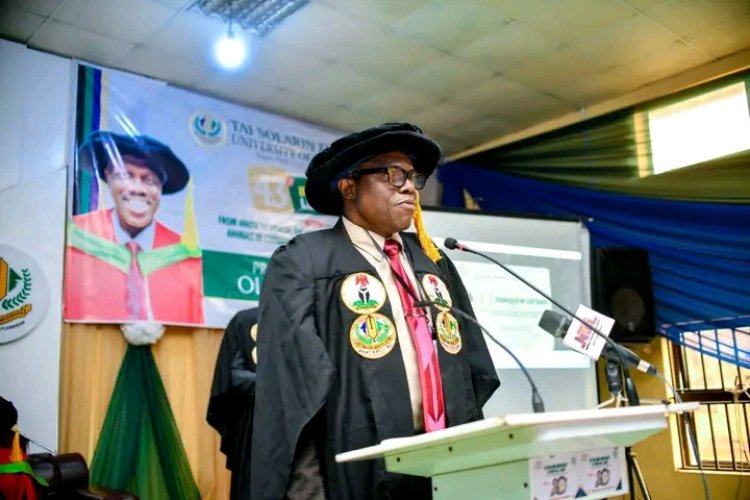
The Deputy Vice-Chancellor (Academic) of Tai Solarin Federal University of Education (TASFUED), Ijagun, Ogun State, Professor Rotimi Olatunji Ettu, has called for the adoption of scientific techniques to convert agricultural and agro-industrial waste into affordable livestock feed as part of efforts to address food insecurity, protein deficiency and environmental pollution in Nigeria.
 Philip22
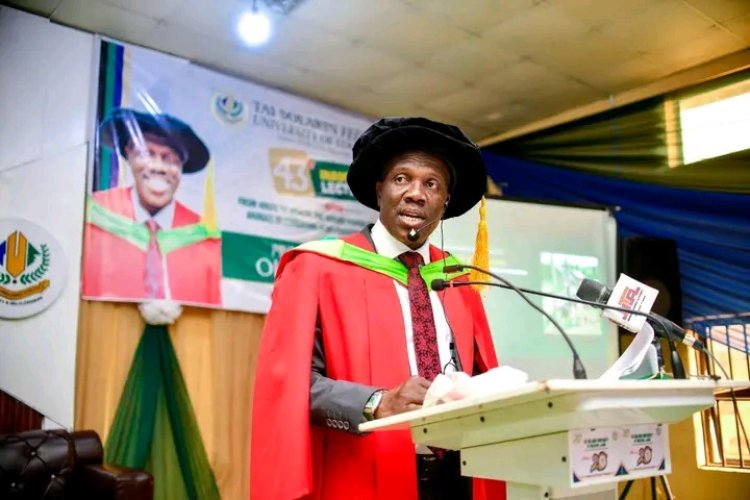
The Deputy Vice-Chancellor (Academic) of Tai Solarin Federal University of Education (TASFUED), Ijagun, Ogun State, Professor Rotimi Olatunji Ettu, has called for the adoption of scientific techniques to convert agricultural and agro-industrial waste into affordable livestock feed as part of efforts to address food insecurity, protein deficiency and environmental pollution in Nigeria.
Professor Ettu, a specialist in Ruminant Nutrition, said the country could substantially increase domestic animal protein production, reduce livestock feeding costs and improve farmers' incomes by utilising agricultural residues and industrial by-products that are currently discarded, burnt or dumped into waterways.
He made the recommendation while delivering the university's 43rd Inaugural Lecture, titled "From Waste to Wealth: The Hidden Power of Ruminant Animals in Combating Agro-Industrial Pollution," on Thursday, November 5, 2026.
During the lecture, the professor disclosed that Nigeria generates approximately 140 million tonnes of crop residues annually, including maize stalks, rice straw, cassava peels and other agricultural by-products. He noted that a significant proportion of these materials is wasted despite their potential nutritional value for livestock production.
He observed that Nigeria's persistent food security challenges, particularly inadequate access to affordable animal protein, existed alongside enormous underutilised agricultural resources that could support livestock development and rural economic growth.
According to him, ruminant animals such as sheep and goats possess specialised digestive systems that enable them to convert fibrous agricultural materials, which are unsuitable for direct human consumption, into valuable animal protein.
Presenting findings from his research, Professor Ettu explained that simple hydrothermal boiling could improve the nutritional utilisation of Cocoa Seed Testa and Sorghum Malt Dust, two agro-industrial by-products with considerable potential as alternative livestock feed ingredients.
He revealed that feeding trials conducted with West African Dwarf sheep showed that incorporating 20 per cent Sorghum Malt Dust into their diets produced the highest weight gain of 6.33 kilogrammes during the experimental period, compared with 3.33 kilogrammes recorded under the conventional control diet.
The research also demonstrated improved feed conversion efficiency, with the 20 per cent Sorghum Malt Dust formulation recording a feed conversion ratio of 6.51, against 11.05 for the control diet.
Furthermore, the sheep retained up to 54.23 per cent of their dietary nitrogen under some experimental treatments, indicating that properly processed agro-industrial by-products could support efficient livestock growth and protein utilisation.
Beyond conventional feed-processing methods, the inaugural lecturer highlighted the role of biotechnology in improving the nutritional quality of agricultural residues that are naturally difficult for livestock to digest.
He cited research involving white-rot fungi, particularly Pleurotus ostreatus and Trametes, which demonstrated that biological treatment could reduce lignin content in fibrous agricultural materials such as rice straw and maize stover, thereby improving their digestibility and suitability for animal feeding.
According to the research findings, the fungal treatment achieved between 25 and 40 per cent lignin degradation while increasing in-vitro organic matter digestibility by 18 to 30 percentage points.
Professor Ettu explained that the technology could also create additional income opportunities for rural households, as farmers could harvest edible mushrooms from treated agricultural materials before utilising the remaining substrate as livestock feed.
On the environmental implications of agricultural waste management, he warned that uncontrolled burning and indiscriminate disposal of processing residues contribute to atmospheric pollution, degradation of aquatic ecosystems and the loss of valuable agricultural nutrients.
He advocated an integrated system involving agricultural waste collection, processing, livestock feeding and manure recovery to promote a circular agricultural economy in which waste generated from one production process becomes a useful resource for another.
The professor added that properly processed livestock manure could restore soil organic matter, improve soil fertility and reduce farmers' dependence on expensive synthetic fertilisers. He also identified biogas production from ruminant manure as another opportunity to provide renewable energy for rural communities.
While acknowledging that livestock production contributes to greenhouse gas emissions through enteric methane, he emphasised the need for scientifically informed feeding practices that improve feed digestibility and reduce methane emissions per unit of animal production.
To translate his research findings into practical agricultural development, Professor Ettu called for stronger agricultural extension services to train smallholder farmers in affordable waste-processing techniques, including boiling high-tannin feed ingredients and biologically treating crop residues.
He also recommended the establishment of organised markets for agro-industrial by-products, stricter enforcement of environmental regulations against indiscriminate waste disposal and open burning, and increased research funding for affordable livestock feed technologies.
Other recommendations included improved access to agricultural credit for smallholder farmers and young entrepreneurs investing in livestock production, feed processing, mushroom cultivation and organic manure production.
He further stressed the importance of collaboration among universities, agricultural researchers, extension workers and farming communities in developing practical technologies that reflect local production conditions, available resources and indigenous agricultural knowledge.
Professor Ettu maintained that effective utilisation of agricultural waste could help Nigeria address several interconnected challenges, including food insecurity, unemployment, environmental degradation, rising livestock production costs and rural poverty.
He concluded that agricultural waste should no longer be regarded merely as an environmental burden but as an underutilised economic resource capable of generating wealth, strengthening food security and promoting sustainable agricultural development.
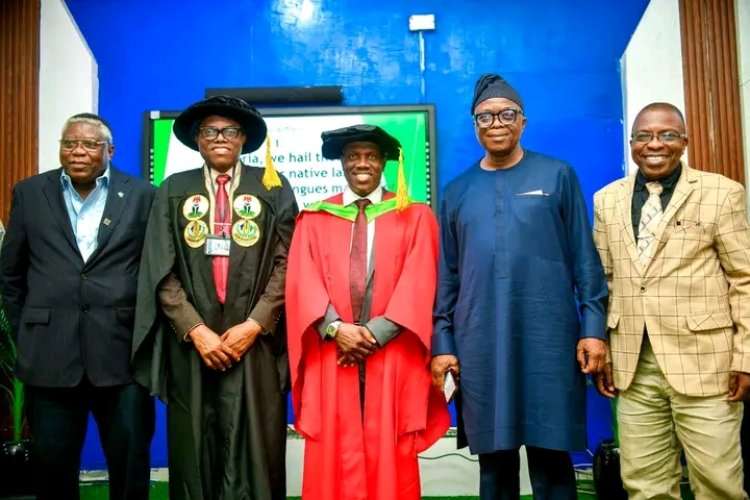
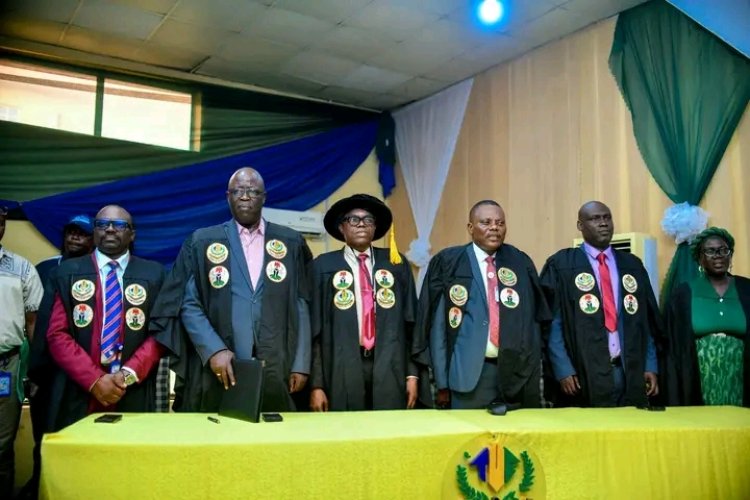
The 43rd Inaugural Lecture attracted several dignitaries and members of the academic community, including members of the university management; the pioneer Vice-Chancellor, Professor Emeritus Kayode Oyesiku; a former Vice-Chancellor and Ogun State Commissioner for Science and Technology, Professor Abayomi Arigbabu, FMAN; and the immediate past Vice-Chancellor, Professor Wole Banjo.
Also in attendance were the former President of the Academic Staff Union of Universities (ASUU), Professor Biodun Ogunyemi, alongside other ASUU members; Professor C.F. Onwuka of the Federal University of Agriculture, Abeokuta (FUNAAB); and Professor Olasunkanmi Gbadamosi.
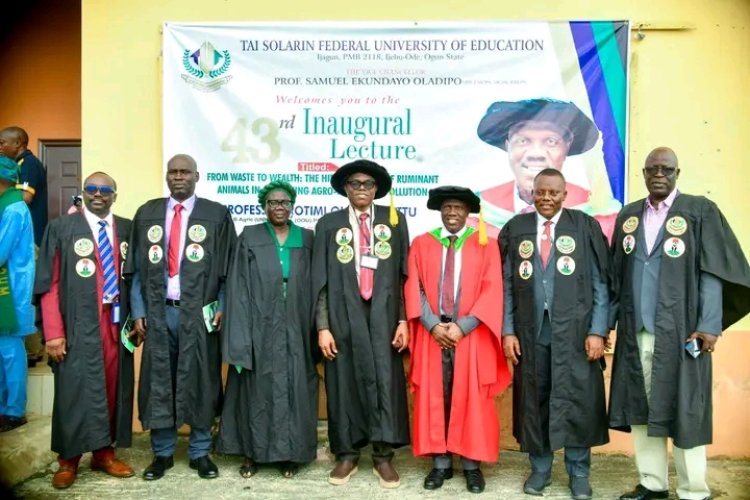
Other attendees included the wife of the Vice-Chancellor, Mrs Christianah King Oladipo; Oba (Dr.) Abdul Rasak Banjo, the Olokine of Ojowo; members of the Ettu family, led by Mr Adesoye Ettu; members of the Okisola family; Egbe Bobakeye Akile Ijebu; Reverend (Dr.) Bolarinwa Solomon; Reverend Canon Adeoye Clement Kolawole; the wife of the inaugural lecturer, Mrs Olusola Ettu; their children; and members of the university community, including staff and students.