UI Don Advocates Safe System Approach to Curb Road Fatalities in Nigeria
UI Don Advocates Safe System Approach to Curb Road Fatalities in Nigeria
 UmarFarouk123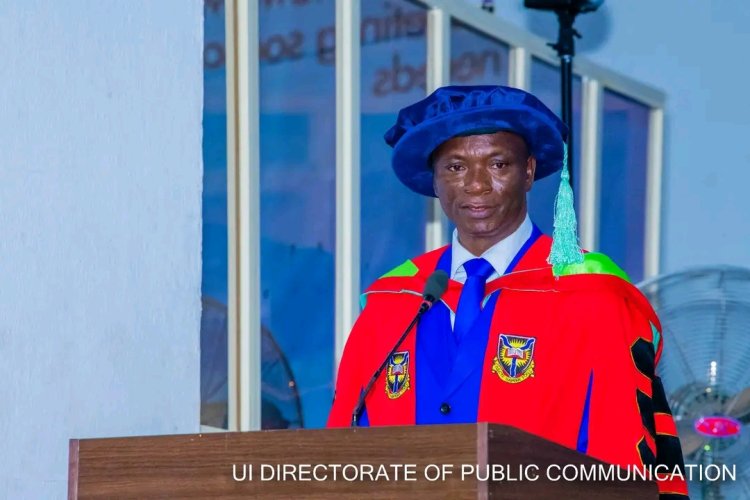
A Professor of Urban and Regional Planning at the University of Ibadan, Prof. Olusiyi Ipingbemi, has called for the adoption of the Safe System Approach to reduce road traffic fatalities in Nigeria.
Prof. Ipingbemi made the call while delivering the 626th Inaugural Lecture of the University of Ibadan on behalf of the Faculty of Environmental Design and Management, titled It Must Not Happen Again: Achieving Vision-Zero Road Traffic Fatalities Through Safe System Approach.
He described road traffic accidents as a major public health and development challenge, with consequences including permanent disabilities, loss of productivity, poverty, economic burden and loss of lives.
Citing statistics from the Federal Road Safety Corps, he said road crashes between 1960 and 2024 resulted in about 400,000 deaths and close to 1.5 million injuries, with reported fatalities rising from 1,083 in 1960 to 5,421 in 2024, and injuries increasing from 10,216 to 31,154 within the same period.
The Don noted that the figures may not fully reflect the magnitude of the crisis due to under-reporting, referencing a World Health Organisation estimate of 36,772 road traffic deaths in Nigeria in 2023. He stressed the need for improved data collection, monitoring and analysis.
He identified human error, unsafe road infrastructure, traffic violations, poor enforcement of traffic laws, defective vehicles and inadequate post-crash management as major contributors to road fatalities.
Prof. Ipingbemi explained that the Safe System Approach recognises that road users can make mistakes and that the transport system should be designed to ensure such errors do not result in death or serious injuries. He said responsibility for road safety should be shared among road users, planners, engineers, policymakers, law enforcement agencies, vehicle manufacturers, emergency personnel, insurance companies and other stakeholders.
He also drew attention to challenges faced by vulnerable road users, including pedestrians, school children, older persons and people with disabilities, and highlighted factors such as excessive speed, non-use of seat belts and helmets, distracted driving, poor road design and vehicle defects.
To address the challenge, he recommended that roads be designed with safety as a priority, with appropriate signage and infrastructure capable of accommodating human errors, effective enforcement of traffic laws, and investment in intelligent transport systems and emerging technologies.
He further proposed the establishment of a Road Safety Compensation Fund, ROSACOF, to support injured victims and families of those who lost their lives in crashes, and called for strengthening the capacity of the FRSC to generate accurate and reliable crash data as well as improving emergency response systems.
The lecture was the 22nd in the series for the 2025/2026 academic session.