135th Inaugural Lecture: Prof Saka Urges FG To Boost Nanotechnology Funding
135th Inaugural Lecture: Prof Saka Urges FG To Boost Nanotechnology Funding
 UmarFarouk123
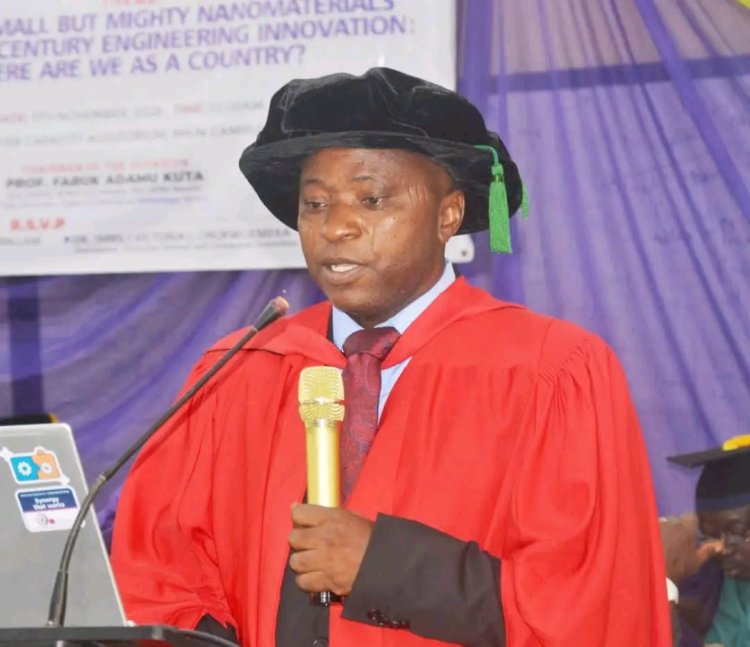
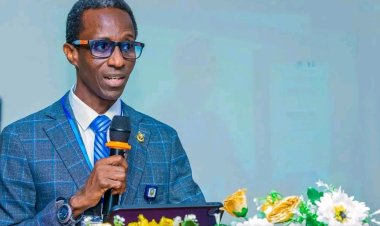
A Professor of Chemical Engineering, Engr. Prof. Abdulkareem Ambali Saka, has urged the Federal Government to prioritise nanotechnology research and development through increased funding and strategic policy interventions, warning that Nigeria risks missing out on the transformative opportunities of a technology increasingly shaping global industrial and scientific advancement.
The Don made the call while delivering the 135th Inaugural Lecture of the Federal University of Technology, Minna (FUT Minna). The lecture, titled "Rave of Small but Mighty Nanomaterials in 21st Century Engineering Innovation: Where Are We as a Country?", held on Thursday, 5 November 2026, at the University Auditorium, Main Campus.
Prof. Saka described nanotechnology as a rapidly evolving field with enormous potential to transform engineering, healthcare, agriculture, environmental management, alternative energy and national security. He explained that nanomaterials, despite their extremely small sizes, possess unique properties that make them valuable in developing innovative and sustainable solutions to societal problems.
Drawing inspiration from Qur'anic references to the atom (Dharrah) in Surah Yunus (10:61) and Surah Zalzalah (99:7-8), the inaugural lecturer highlighted the significance of the nanoscale and its relevance to scientific discovery and innovation.
He observed that while developed countries such as the United States, Japan and members of the European Union had made substantial investments in nanotechnology, Nigeria was yet to fully harness its potential due to inadequate funding, insufficient research infrastructure, a shortage of skilled personnel and the absence of a coordinated national policy.
The professor noted that although Nigeria had demonstrated considerable research capabilities in nanoscience and nanotechnology, the country was yet to translate these efforts into meaningful participation in the global nanotechnology market.
Presenting his research contributions at FUT Minna, Prof. Saka, who is also the Director, FUTMIN Ventures, highlighted the achievements of his research team in synthesising various nanomaterials, including gold, silver, copper oxide, iron, magnetite, zinc oxide, titanium dioxide, carbon nanotubes, graphene and nanocomposites.
He explained that these materials had been applied in wastewater treatment, environmental remediation, electroplating, pharmaceutical applications, alternative energy, corrosion prevention and agricultural development.
Among the research innovations presented was the development of nanoadsorbents and nanoclay filtration techniques for industrial wastewater treatment, which he said offered promising solutions to environmental pollution.
On alternative energy development, the lecturer disclosed that his team had developed a proton exchange membrane using locally available polystyrene-butadiene rubber blended with carbon nanoballs. According to him, the innovation demonstrated the potential to serve as a cost-effective alternative to conventional membranes used in hydrogen fuel-cell technology.
He also presented research findings on carbon nanofibre-based electrocatalysts, explaining how the distribution of platinum nanoparticles on carbon nanofibre supports could enhance electron transportation and improve fuel-cell performance.
A major highlight of the lecture was the development of a locally made prosthetic foot using carbon nanotube-reinforced natural rubber composites.
Professor Saka explained that the innovation was aimed at addressing the high cost, limited durability and accessibility challenges associated with imported artificial limbs in Nigeria.
He disclosed that the prosthetic foot, developed by his research team, had undergone testing and evaluation and was successfully tested on Mallam Hamisu Yusuf from Sokoto State at the Leprosy Mission Hospital, Minna.
He described the innovation as a Nigerian solution designed to provide affordable, durable and comfortable artificial limbs for Nigerian amputees.
Speaking on his academic and research achievements, the inaugural lecturer disclosed that his research activities had attracted over ₦1.4 billion in grants to the University from various funding agencies, including TETFund, the Petroleum Technology Development Fund (PTDF), the National Agency for Science and Engineering Infrastructure (NASENI), and other national research and development institutions.
He further revealed that his research team had published more than 220 refereed journal articles, with 202 indexed in Scopus and ISI databases, in addition to securing 13 patents within and outside Nigeria.
He added that his research activities had contributed to building the capacity of postgraduate students and other young researchers in nanoscience and nanotechnology, equipping them with the knowledge and practical skills required to develop innovative solutions to societal challenges.
In his recommendations, Prof. Saka urged the Federal Government to prioritise nanotechnology through increased research funding, the provision of state-of-the-art facilities, training of skilled personnel and stronger collaboration among universities, industries and research institutions.
He also called for the development of a comprehensive national nanotechnology policy to provide strategic direction for research, innovation and the commercialisation of locally developed technologies.
He maintained that with sustained investment and institutional support, Nigeria could harness the enormous potential of nanotechnology to drive industrial growth, improve healthcare delivery, promote environmental sustainability and strengthen its technological competitiveness.
In his remarks, the Vice-Chancellor, Prof. Faruk Adamu Kuta, commended Prof. Saka for his outstanding contributions to research, innovation and technological development. He noted that the lecture had demonstrated the capacity of the researchers in the University to develop indigenous solutions to national challenges.
The Vice-Chancellor emphasised the importance of sustained investment in research, interdisciplinary collaboration and the provision of an enabling environment for academic staff and researchers to translate scientific discoveries into practical solutions that would benefit society. He also encouraged the University community to sustain its commitment to research excellence and innovation.