FUNAAB Researcher Explores Silver Catfish Potential for Sustainable Fisheries Management
FUNAAB Researcher Explores Silver Catfish Potential for Sustainable Fisheries Management
 UmarFarouk123
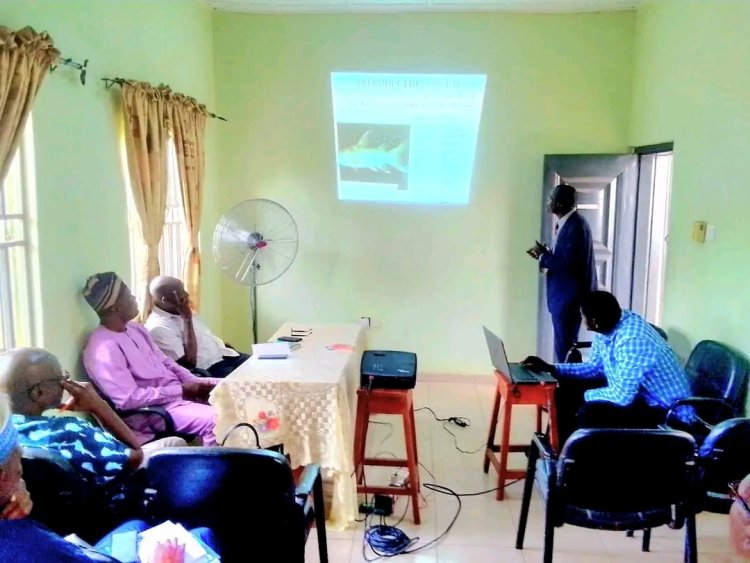
The Federal University of Agriculture, Abeokuta (FUNAAB), has reaffirmed the importance of scientific research in advancing sustainable fisheries management, as Dr. Mathew Ipadeola explored the biological characteristics and fisheries potential of silver catfish in Oyan Lake and Badagry Estuary, Southwest Nigeria.
The research was presented at the October 2026 monthly seminar of the university's Institute of Food Security, Environmental Resources and Agricultural Research (IFSERAR), held on October 28, 2026.
Titled “Comparative Studies of the Biology and Fisheries Potential of Silver Catfish (Chrysichthys nigrodigitatus) in Oyan Lake and Badagry Estuary, South-West Nigeria,” the study seeks to generate scientific evidence to support sustainable exploitation, conservation and aquaculture development of the species.
The study highlights the critical role of fisheries in food security, employment and income generation, while underscoring the need for reliable scientific data to address declining fish production and promote effective management of aquatic resources.
It examined the biological characteristics of silver catfish across freshwater and brackish-water ecosystems, focusing on morphometric and meristic traits, length-weight relationships, reproductive biology, feeding habits and the physicochemical properties of the two water bodies.
For the investigation, 200 specimens were obtained from local fishers, comprising 100 each from Oyan Lake and Badagry Estuary. Sampling covered six stations: Ilakan, Imala Odo and Ibaro around Oyan Lake, and Ebute Jegba, Topo and Iworo in Badagry.
The morphometric assessment examined measurable features including body length, weight, depth and head dimensions, while the meristic analysis focused on countable characteristics such as fin rays, spines, gill rakers and barbels.
The reproductive component evaluates fecundity and the gonadosomatic index, which relates gonad weight to body weight to assess reproductive development. The feeding assessment involves examining stomach contents to identify food items consumed and their frequency.
The study also investigated water quality parameters including temperature, dissolved oxygen, pH, conductivity, turbidity, phosphate, nitrate, biochemical oxygen demand, salinity and hardness. These indicators will be examined alongside the biological characteristics to establish relationships between water conditions, growth and reproductive performance.
The findings are expected to deepen understanding of the species' growth, feeding patterns, reproductive biology and environmental adaptations, providing valuable information for fisheries resource management, biodiversity conservation and aquaculture development.
The seminar reflects IFSERAR's commitment to promoting research, knowledge exchange and scientific engagement in support of food security, environmental sustainability and agricultural development.