Akwa Ibom Moves to Reform Education Sector After Reported NECO Performance Drop
Akwa Ibom State Governor Umo Eno has declared a state of emergency in the education sector and approved the recruitment of 2,000 additional teachers.
 judithhh
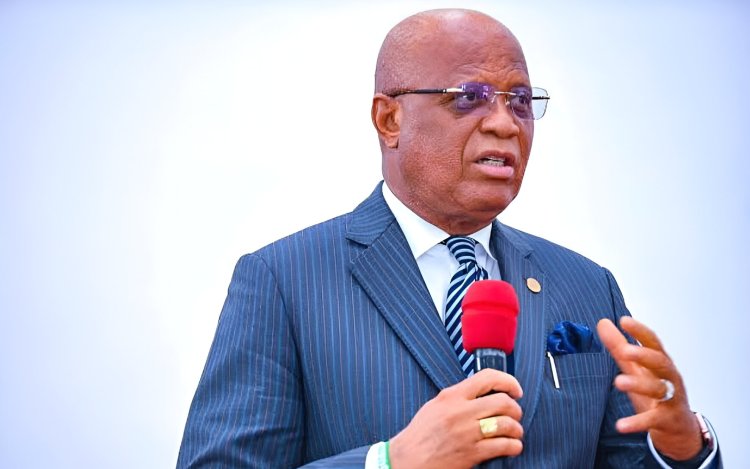
Akwa Ibom declares a state of emergency in education after reported NECO performance concerns, with 2,000 teachers approved for recruitment.
Akwa Ibom State Governor Umo Eno has declared a state of emergency in the education sector and approved the recruitment of an additional 2,000 teachers, weeks after the state recorded a sharp drop in its reported 2026 National Examinations Council (NECO) performance.
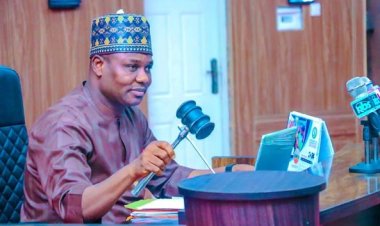
Eno announced the measures on Monday, October 5, during the 2026 World Teachers’ Day celebration at the Uyo Township Stadium, where the state government also unveiled a teacher welfare package and ordered a comprehensive review of the education system.
The governor directed his Deputy, Senator Akon Eyakenyi, to work with the Commissioner for Education, Prof. Ubong Umoh, to constitute a high-powered committee that will conduct a holistic assessment of the sector and produce a comprehensive reform plan.
“Other than the State Ministry of Health, where we declared a state of emergency, I hereby declare a state of emergency in the Akwa Ibom State education sector,” Eno said.
He said the review would examine areas requiring intervention, including school infrastructure, teaching capacity and reforms needed across secondary and tertiary education.
“We trust God that as we constitute the committee on the state of emergency in our educational system, we will have deliverables that will make our students continue to record higher scores in their various promotional examinations,” he said.
The announcement came shortly after reported 2026 NECO state-by-state results placed Akwa Ibom 36th among the 36 states and the Federal Capital Territory, with 37.42 per cent of candidates obtaining at least five credits, including English Language and Mathematics.
The figures showed that 7,754 of the 20,720 candidates from the state who sat the examination met the benchmark. Only Sokoto recorded a lower rate at 26.82 per cent.
However, the Akwa Ibom State Government has disputed the reported ranking and said the data used did not accurately reflect the state’s performance. The government has not, in the material reviewed, produced alternative official figures to establish a different ranking.
Against that backdrop, Eno said the government would strengthen the teaching workforce, announcing approval for 2,000 additional teachers following an earlier recruitment of 1,000 teachers.
He said the recruitment portal would soon open, after which applicants would undergo a Computer-Based Test and oral interview.
The governor cautioned prospective applicants that success in the CBT would not automatically translate into employment.
“That you scored 100 per cent in the CBT does not automatically convert to employment. The civil service has its rules,” he said.
He added that applicants’ records, appearance and performance during the oral interview would also be considered.
Eno said the government had reduced the number of candidates proceeding to the oral interview stage from about 12,000 to 4,000 following the assessment process.
The new recruitment is part of a broader package announced by the governor to address both workforce and welfare issues in the education sector.
The state government approved a ₦50,000 wardrobe allowance and ₦10,000 transport allowance for each of its 21,167 public school teachers, forming part of a reported ₦2.1bn welfare package. It also approved ₦500,000 support for each of the 1,776 registered private schools in the state.
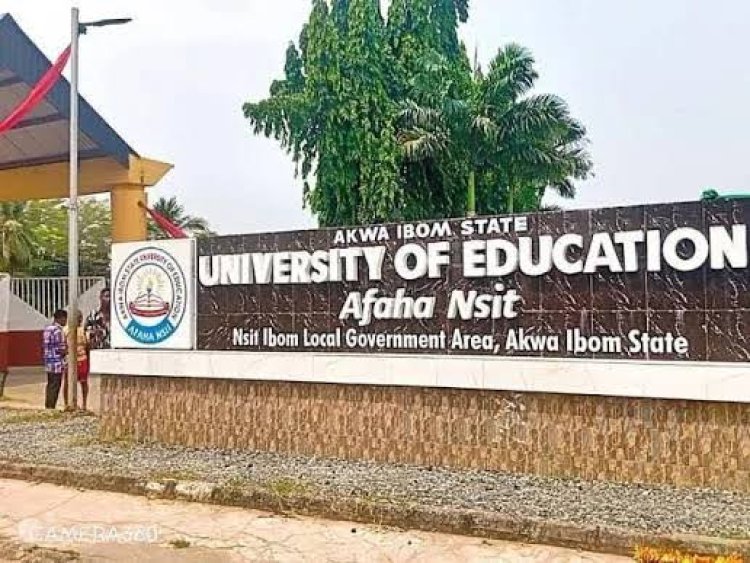
Eno also announced the upgrade of the former Akwa Ibom State College of Education, Afaha Nsit, into the Akwa Ibom State University of Education and appointed Prof. Philip Afaha as its pioneer Vice-Chancellor. The appointment was subsequently confirmed by the new university.
The governor said education remained a major component of his administration’s ARISE development agenda.
He cited the construction and furnishing of 38 model primary schools, including at least one in each of the state’s 31 local government areas, as part of the administration’s interventions. According to him, the schools are solar-powered and equipped with facilities including libraries, sick bays, ICT infrastructure and teachers’ residences.
He also said the state had released ₦15bn as a matching grant to the State Universal Basic Education Board and continued to pay examination fees for students sitting the West African Senior School Certificate Examination and NECO examinations.
According to Eno, the state has so far registered about 172,000 candidates for the examinations.
The governor, however, said the education emergency would not be limited to government intervention, stressing that teachers would also be required to meet higher standards of accountability.
“I want our teachers to be held accountable in teaching our students. I want them to continue doing training and retraining. I want our teachers to be in schools and stay in schools. A lot of reforms must come in. To whom much is given, much is expected,” he said.
He also pledged to pursue further digitisation of the state’s education system and improve standards across the sector.
The emergency declaration is the second major sector-wide emergency announced by Eno’s administration, following the state of emergency declared in the health sector in September 2025.
With the new measures, the state is now expected to translate the emergency declaration into a detailed reform programme, particularly in areas of teaching quality, teacher deployment, learning outcomes, school infrastructure and accountability.