Autistic Children Face Bullying, Exclusion as Experts Demand Government Action
Experts have raised concerns over the bullying, stigmatisation and exclusion of autistic children in Nigeria, calling on parents, teachers, caregivers and government authorities to strengthen inclusive education and protect the rights of neurodivergent persons.
 judithhh

Experts have condemned bullying and discrimination against autistic children in Nigeria, urging parents, teachers and government to promote inclusive education and protect their rights.
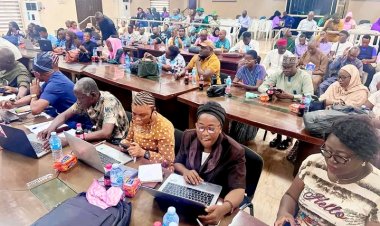
They made the call at an autism and neurodivergent caregivers’ training organised by Hope Alive Educational Centre in partnership with Autism Caregiver Training Institute at the Lagos Chamber of Commerce and Industry Conference Centre, Ikeja, Lagos, on Thursday.
The training, which had about 30 participants joining physically and virtually, brought together teachers, parents, caregivers and professionals to discuss ways of understanding and supporting children with autism and other neurodevelopmental conditions.
The Founder of Hope Alive Educational Centre, Adeyinka Adeyefa, said the training was informed by the need to protect the rights of people with autism, particularly following a video she saw of a young man living with autism and Down syndrome being brutalised by police officers who did not understand his condition.
Adeyefa, a human rights lawyer, explained that some autistic people engage in repetitive movements, known as stimming, including pacing, shaking their hands and other repetitive behaviours, which could be misunderstood by people unfamiliar with the condition.
She said, “There is no way we can protect these people’s rights when we don’t even understand them. Everybody is not like you. There are people who are different and whose brains are not wired the same way yours are.
“You need to put that peculiarity into perspective when dealing with these people so that you don’t infringe on their rights and so that we can create an inclusive society for them.”
She said the differences should be recognised in the education and health sectors, adding that some autistic people might prefer lying on the floor, holding objects or screaming, behaviours that could be wrongly interpreted as abnormal.
Adeyefa said some children with autism were not accepted into regular schools, while only a few specialised centres could cater to their needs, with the cost of tuition making access difficult for many families.
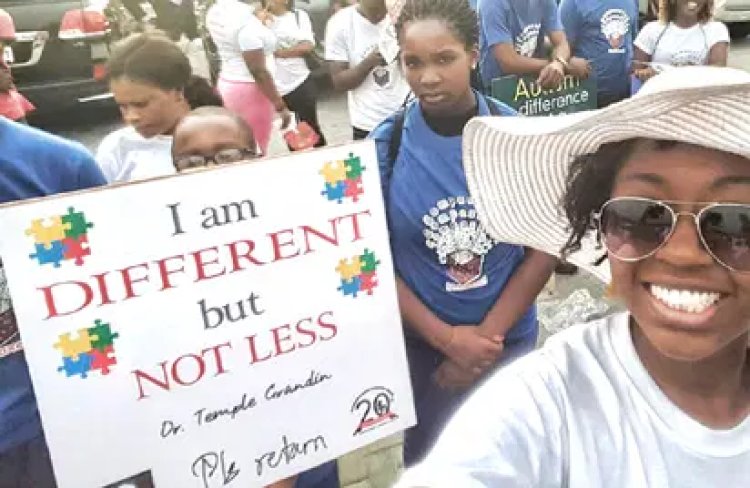
She called for deliberate government action to translate awareness into inclusive educational policies, noting that the Minister of Education had earlier urged schools to become autism-aware and inclusive.
Adeyefa said her organisation planned to organise more training sessions for parents, teachers and caregivers, as well as specialised awareness programmes for police officers and other professionals who interact with neurodivergent persons.
She also called for government intervention to make diagnostic and support services more affordable, noting that the fear of stigma prevented some parents from seeking professional assessments for their children.
According to her, “autism is not a condition that can be cured but one that requires appropriate support and management to help affected persons develop their abilities.”
She added that parents and teachers needed to understand that autistic children might process instructions differently and require shorter, simpler instructions and more time to respond.
Also speaking, a professional caregiver, Mayowa Adeeyo, said every child needed to be understood individually, noting that some children learnt better through audio, pictures, videos or games.
She urged parents to observe their children from birth and look out for possible developmental differences, including delays in speech, responses when called and repetitive use of words or phrases.
Adeeyo said, “Autism is not a disease. Appropriate support is needed; you need to understand their needs.
“Look out for their communication pattern, social interaction pattern and difficulty in paying attention to things. If parents miss the signs, teachers and caregivers should take note and tell their parents.
“Autism is not contagious, not due to vaccines, not due to parental background, and it is not spiritual or a curse.”
She expressed concern that the number of caregivers available to support children with special needs was declining, warning that they could become scarce in the next year.
Another professional autism teacher, Basudha Modak, cautioned parents and caregivers against making hasty judgments about autistic children’s communication abilities.
She said they should give the children sufficient time to process information and respond during conversations, warning that ignoring them or assuming they were slow could worsen their behaviour.
Modak said, “Parents and caregivers should do more in trying to understand autistic children. You have to give them time to respond during conversations. Some of them need minutes to respond to questions.
“Make communication accessible. Communication is important; understand what they are trying to communicate. The goal is not to hide their differences but to support their wellbeing, communication and participation in society.
“The child is not the problem to be fixed, but the barriers around the child.”
Another autism teacher, Barbara Lebo, called for urgent training of schoolteachers in inclusive education.
She urged the government to make budgetary provisions for training teachers to handle neurodivergent children and establish more autism centres across the country.
A legal practitioner, Tessy Osakwe, said existing laws protected the dignity and rights of persons with disabilities, warning against beating, humiliating or mocking children because of their characteristics.
She said, “You can’t abuse persons with disabilities. Section 34 of the 1999 Constitution protects the dignity of human persons. There is also the Disability Act. Don’t allow their classmates to mock them.”
Similarly, a speech therapist, Goodness Udeokolo, warned against bullying neurodivergent children, urging parents to embrace them and seek professional support, including speech therapy and behavioural analysis.
She said, “Value them, find the best strategy to deal with them; be proud of them; don’t bully them. Don’t start any treatment without proper diagnosis.
“Parents should embrace them. You adapt to their own interest, not expect them to adapt to your own interests.”