FCAIB Provost Advocates Practical Organic Agriculture to Address Food Insecurity, Climate Change and Youth Unemployment
The Provost of the Federal College of Agriculture, Ibadan (FCAIB), Prof. Jonathan Atungwu, has called for a deliberate shift from agricultural knowledge to practical application, enterprise development and economic prosperity, noting that organic agriculture holds enormous potential to address Nigeria’s pressing challenges of food insecurity, climate change and youth unemployment.
 Philip22
The Provost of the Federal College of Agriculture, Ibadan (FCAIB), Prof. Jonathan Atungwu, has called for a deliberate shift from agricultural knowledge to practical application, enterprise development and economic prosperity, noting that organic agriculture holds enormous potential to address Nigeria’s pressing challenges of food insecurity, climate change and youth unemployment.
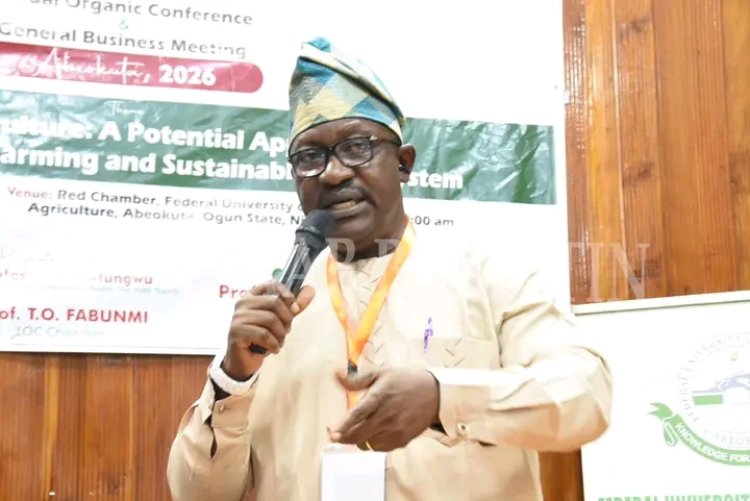
Prof. Atungwu made the call while delivering the keynote address at the opening ceremony of the 19th Annual Organic Conference and General Business Meeting of the Organic Agriculture Professionals in Tertiary Institutions in Nigeria (OAPTIN), hosted by the Federal University of Agriculture, Abeokuta (FUNAAB), on Monday, November 16, 2026.
A former Dean of the College of Plant Science and Crop Production (COLPLANT), FUNAAB, and a distinguished alumnus of the University, he spoke on the theme, “Organic Agriculture for Food Security, Climate Resilience and Youth Enterprise, From Knowledge to Practice, From Practice to Prosperity.”
He identified food and nutrition insecurity, climate change and youth unemployment as three major challenges confronting Nigeria and other African countries. He noted that food shortages, post-harvest losses, malnutrition, irregular rainfall, flooding and drought continued to undermine agricultural productivity despite the continent's enormous agricultural potential.
According to him, organic agriculture offers a practical, science-based approach to addressing these challenges through improved soil health, biodiversity conservation, protection of water resources, production of safe and nutritious food, and employment creation across the agricultural value chain.
Reflecting on OAPTIN's 22-year journey, the Provost identified five strategic areas for strengthening the organic agriculture movement. These include the Community Organic Box Scheme (COBS), customised journal publications, OAPTIN Summer School, Work, Earn and Learn Programme (WELP), and youth empowerment through practical agricultural entrepreneurship.
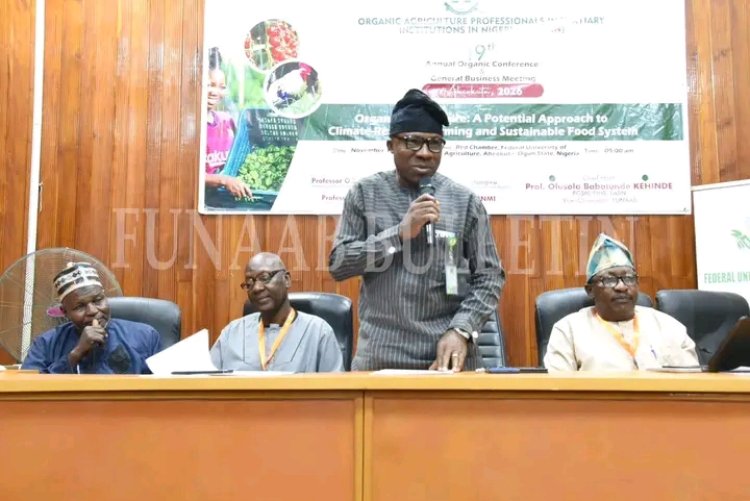
He also advocated increased investment in research on soil health, biopesticides, biofertilisers, climate-resilient farming, post-harvest management, value addition and digital organic agriculture.
Prof. Atungwu proposed a strategic framework of one institution, one Community Organic Box Scheme hub, one organic enterprise and one adopted community to accelerate the adoption of organic agriculture.
He further called for the integration of organic agriculture into national agricultural policies, extension services, school feeding programmes and government budgets, stressing that research must translate into farmer-friendly solutions, viable businesses and measurable improvements in livelihoods.
He concluded that Nigeria possessed the resources and capacity to become a major supplier of safe and nutritious food, emphasising that achieving this ambition required deliberate action to build climate resilience, empower young people and promote sustainable national development.
The conference, themed “Organic Agriculture: A Potential Approach to Climate-Resilient Farming and Sustainable Food System,” also featured remarks by the Vice-Chancellor of FUNAAB and National Coordinator of OAPTIN, Prof. Babatunde Kehinde.
Prof. Kehinde commended the Association's National Executive Committee for sustaining its vision despite prevailing economic and socio-political challenges. He expressed confidence that the Abeokuta edition would strengthen deliberations on climate-smart strategies, ecological processes, biodiversity conservation and efficient resource utilisation.
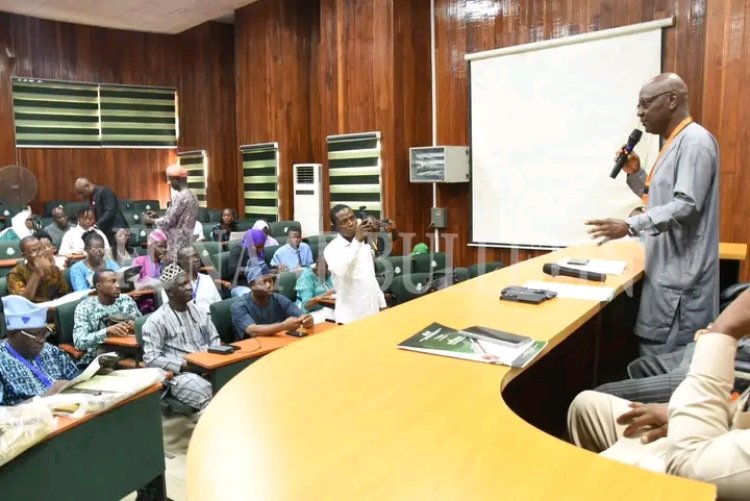
Represented by the Deputy Vice-Chancellor, Academic, Prof. Olusegun Idowu, the Vice-Chancellor highlighted OAPTIN's capacity-development initiatives and celebrated the impact of the Work, Earn and Learn Programme (WELP), established in 2009 to nurture a new generation of organic agriculture practitioners.
He disclosed that the programme had trained 267 youths and six University staff members through a 13-week combination of theoretical lectures, practical farm experience and entrepreneurship development. He added that its modules had reached up to 5,000 students during their Farm Practical Year.
Several beneficiaries, he noted, had established organic enterprises or secured employment in major organic farms.
Prof. Kehinde urged members to intensify advocacy, translate research into products, prototypes, patents and policies, and strengthen collaborations, particularly through partnerships such as OAPTIN's engagement with the Association of Organic Agriculture Practitioners of Nigeria (NOAN) and the Knowledge Centre for Organic Agriculture (KCOA).
Earlier, the Interim National Coordinating Scientist, Prof. Victor Olowe, while presenting an overview of the conference, described organic agriculture as the fastest-growing sector of agriculture globally. He commended OAPTIN for sustaining its annual conferences as platforms for knowledge sharing and professional development.
Meanwhile, the conference featured discussions on several contemporary issues, including Climate-Smart Organic Agriculture, Artificial Intelligence in Organic Agriculture, Sustainable Pest and Disease Management, and Gender Dynamics in Organic Agriculture.
A major highlight of the event was the launch of the Journal of Organic Agriculture and Environment (JOAEN), facilitated by Prof. Eyitayo Makinde, to strengthen scholarly publications, research visibility and knowledge dissemination.
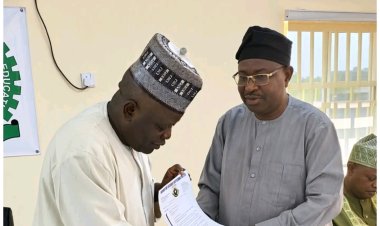
The event also featured the presentation of certificates to 20 outstanding graduating trainees of WELP, alongside plenary sessions.
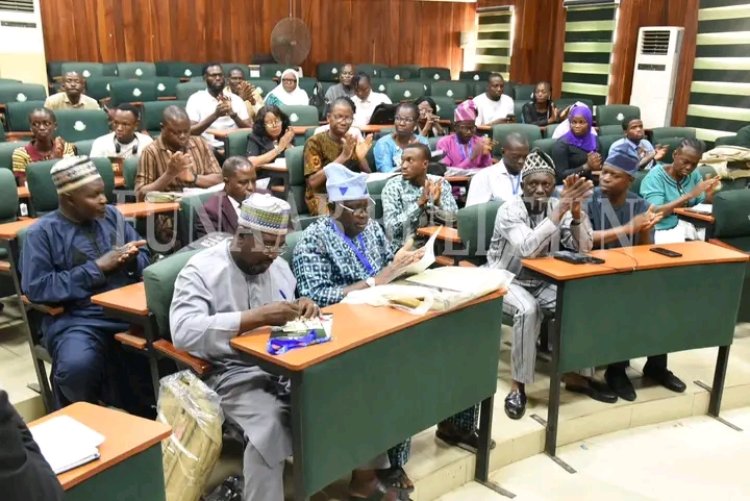
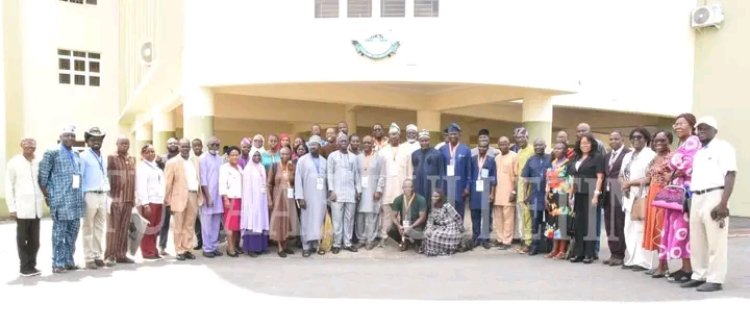
Present at the opening session were the Founding Father of OAPTIN and Organic Agriculture in Nigeria, Prof. Isaac Aiyelaagbe; Dean, College of Agricultural Management and Rural Development (COLAMRUD), Prof. Emmanuel Fakoya; Dean, COLPLANT, Prof. Bolarinwa Senjobi; Chairman, Local Organising Committee (LOC), Prof. Thomas Fabunmi; and Head, Scientific/Technical Sub-Committee, OAPTIN 2026, Prof. Oluwakemi Irekhore, alongside other distinguished academics and stakeholders.