
Federal Government Begins Skills Training for 777 Nigerian Youths Under IDEAS Project
The Federal Government has commenced technical and vocational skills training for 777 young Nigerians in Abuja under the third cohort of the World Bank-funded IDEAS Project.
 judithhh

Federal Government has commenced technical and vocational skills training for 777 young Nigerians in Abuja under the third cohort of the Innovation Development and Effectiveness in the Acquisition of Skills (IDEAS) Project.
The training, implemented through seven accredited Training Service Providers (TSPs) in the Federal Capital Territory, was formally flagged off at the Abuja Trade and Convention Centre.
The World Bank-funded IDEAS Project is designed to expand access to quality technical and vocational education and training, strengthen skills delivery institutions and improve employment outcomes for young Nigerians.
Across its various cohorts, the project is expected to train about 80,000 young Nigerians nationwide.
Under the third cohort, beneficiaries will undergo competency-based training aligned with the National Skills Qualification (NSQ) framework before progressing to industry internships and employment support.
The 777 Abuja beneficiaries are being trained in areas including digital and creative media, beauty and cosmetology, construction and building trades, agriculture and agribusiness, among other vocational fields.
Speaking at the ceremony, the First Deputy President of the Abuja Chamber of Commerce and Industry (ACCI) and Chairman of the ACCI Business, Entrepreneurship, Skills and Technology (BEST) Centre, Prof Adesoji Adesugba, said the programme was responding to the growing need to equip young Nigerians with skills relevant to the labour market.
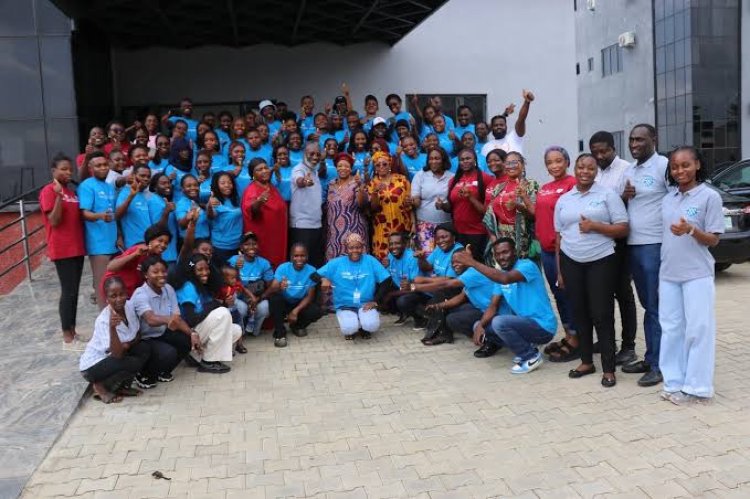
“Our economy does not need more certificates. It needs more competence. That is why this programme is deliberately practical. By the end of it, each trainee will hold not just a certificate, but a portfolio of real work,” Adesugba said.
He urged the beneficiaries to take full advantage of the training, noting that the programme had provided course fees, equipment, facilities and instruction to support their participation.
Adesugba encouraged the trainees to continue practising after the programme and deploy their skills through formal employment, freelancing or entrepreneurship.
Representing the National Board for Technical Education (NBTE), Builder Lawrence Gabriel, External Quality Assurance Manager, said trainees would undergo competency assessments before being awarded National Skills Qualification certificates.
Gabriel stressed that the programme was designed to measure what participants could actually do rather than merely the certificates they obtained
He noted that rapid technological changes were transforming the labour market, making practical and adaptable skills increasingly important for young people seeking employment and other economic opportunities.
The training forms part of broader efforts under the IDEAS Project to strengthen Nigeria’s technical and vocational education system and improve the connection between skills development and labour market demand.
For the Abuja beneficiaries, the programme is expected to provide practical training, industry exposure and pathways into employment or self-employment as they complete their respective courses.