FUNAAB Concludes Four Specialised Agricultural Training Courses for Liberian Professionals
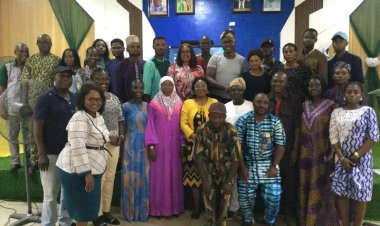
The Federal University of Agriculture, Abeokuta (FUNAAB), through the Centre of Excellence in Agricultural Development and Sustainable Environment (CEADESE), has strengthened its contribution to international agricultural capacity development with the successful completion of four specialised International Short Courses for agricultural professionals from the Central Agricultural Research Institute (CARI), Republic of Liberia.
 Philip22

The Federal University of Agriculture, Abeokuta (FUNAAB), through the Centre of Excellence in Agricultural Development and Sustainable Environment (CEADESE), has strengthened its contribution to international agricultural capacity development with the successful completion of four specialised International Short Courses for agricultural professionals from the Central Agricultural Research Institute (CARI), Republic of Liberia.
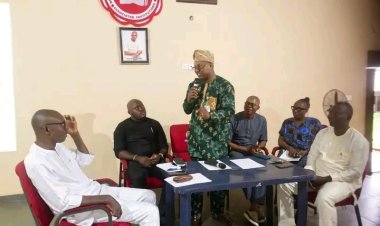
The five-day intensive training, comprising 40 contact hours, focused on Cassava Production, Seed Agronomy, Research Methods, and Seed Quality Testing and Understanding Laboratory Tools. The courses equipped participants with practical knowledge and technical competencies relevant to their professional responsibilities.
Designed to bridge the gap between theory and practice, the programmes featured expert lectures, technical demonstrations, field exercises, laboratory practicals, case studies, group assignments, problem-solving sessions and professional discussions aimed at developing transferable workplace skills.
The Cassava Production course exposed participants to improved production systems, variety selection, quality planting materials, soil and nutrient management, pest and disease control, climate-smart practices, harvesting, postharvest management, processing and value addition.
The Seed Agronomy course covered seed biology, crop establishment, reproductive biology, field inspection, genetic purity, isolation requirements, rouging, crop management, harvesting and seed production planning.
The Research Methods course developed competencies in research problem identification, literature review, research design, sampling, experimental design, data management, statistical analysis, research ethics and scientific writing.
Participants in the Seed Quality Testing and Understanding Laboratory Tools course received hands-on training in physical purity, moisture determination, germination, viability, seed vigour and seed health testing. The course also featured practical demonstrations on the appropriate operation, calibration, maintenance and troubleshooting of laboratory equipment.
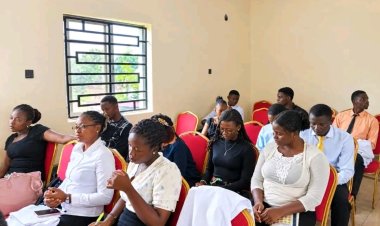
The practical orientation of the training was appreciated by participants, who noted that the combination of classroom instruction and hands-on activities enhanced their understanding and provided skills that could be immediately applied in their respective workplaces.
Beyond technical capacity development, the programmes provided opportunities for professional networking and knowledge exchange, with participants and facilitators exploring prospects for collaboration in research, training, agricultural enterprise development and technology transfer.
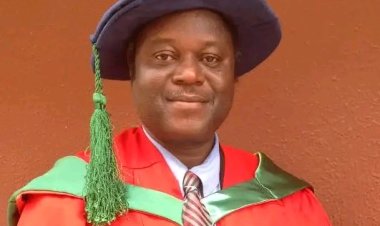
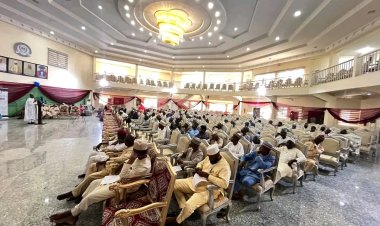
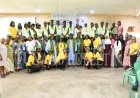
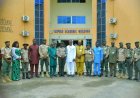
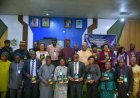
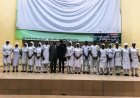
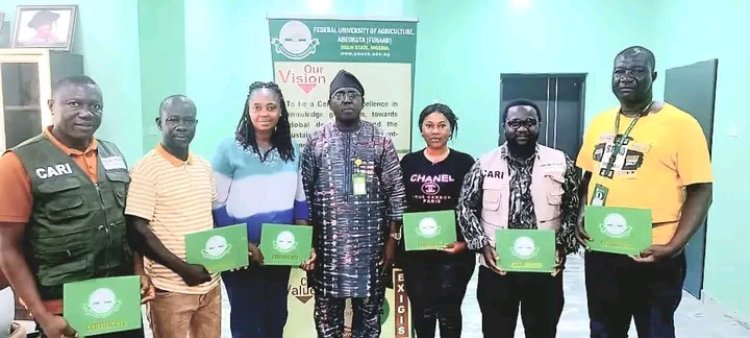
At the closing ceremony, participants who fulfilled the programme requirements received Certificates of Completion/Participation for 40 Contact Hours, presented by the Vice-Chancellor, Professor Babatunde Kehinde.
The ceremony also recognised the contributions of participants, facilitators, organisers and supporting institutions to the success of the programmes.
The Vice-Chancellor appreciated the participants for their active engagement throughout the training and encouraged them to sustain their relationship with FUNAAB for future training opportunities, research collaboration and professional development.
The completion of the four specialised courses further demonstrates FUNAAB's capacity to deliver practical, high-quality and internationally oriented agricultural training while strengthening its role as a hub for agricultural knowledge, innovation, capacity development and international collaboration.