
FUNAAB Researcher Unveils Plant-Based Weapon Against Poultry Infections
FUNAAB Researcher Unveils Plant-Based Weapon Against Poultry Infections
 UmarFarouk123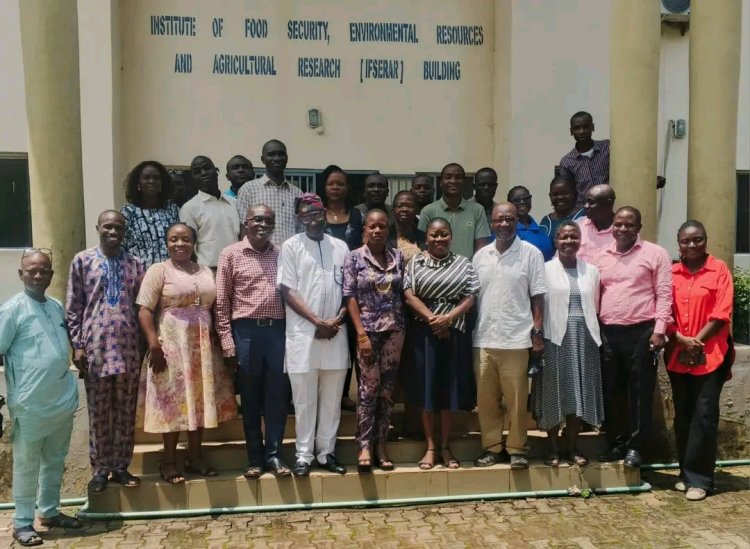
The Federal University of Agriculture, Abeokuta (FUNAAB) has recorded another research breakthrough with findings indicating the potential of African Parquetina (_Parquetina nigrescens_) as a plant-based alternative to conventional antibiotics in poultry production.
The findings were presented by Dr. Wuraola Adegun during a research presentation titled "Does African Parquetina (Parquetina nigrescens) Possess Haematopoietic and Antimicrobial Properties on Salmonella Typhimurium-Challenged Broiler Chickens?" held at the Institute of Food Security, Environmental Resources and Agricultural Research (IFSERAR) Laboratory on October 6, 2026. The programme was chaired by Prof. Olubukola Adenubi, a distinguished authority in Veterinary Pharmacology.
Dr. Adegun said the study was prompted by increasing prevalence of bacterial infections, particularly Salmonella, in poultry production, as well as growing concerns over antimicrobial resistance resulting from excessive and inappropriate use of antibiotics in livestock.
She explained that _P. nigrescens_ contains bioactive phytochemicals, including saponins, alkaloids, tannins, flavonoids, terpenoids and cardiac glycosides, which could contribute to its antimicrobial, antioxidant and immunomodulatory properties.
The study, involving 320 broiler chicks, evaluated the in-vitro and in-vivo antimicrobial activity of the plant extract, its effects on haematological parameters and its influence on gastrointestinal microbial populations in Salmonella Typhimurium-challenged birds.
According to the findings, _P. nigrescens_ inhibited Salmonella Typhimurium in-vitro, with inhibition increasing at higher concentrations of the extract. Its administration also influenced red and white blood cell counts, neutrophils, lymphocytes and other haematological parameters, suggesting potential benefits for blood formation and immune response.
Dr. Adegun further reported that the extract reduced microbial loads under certain administration conditions, noting that route and frequency of administration were important factors in determining effectiveness. She concluded that the plant showed considerable potential as a low-cost phytobiotic for managing bacterial infections in broiler chickens, while calling for further research to establish safety, dosage and practical application.
In his closing remarks, the Director of IFSERAR, Prof. Kazeem Bello, commended Dr. Adegun for the quality of her presentation and challenged her to advance the research by developing _P. nigrescens_ into a feed-grade product convenient for farmers. He also encouraged collaboration among small-ruminant researchers to explore similar applications in sheep and goats.
Prof. Bello disclosed that the Institute would record its recent research presentations for broadcast on FUNAAB Radio 89.5FM, thereby making research outputs accessible to a wider audience. He also urged Research Fellows to take advantage of the two-week open call for proposals by submitting multidisciplinary research projects capable of advancing the Institute's research mandate.
The research reflects FUNAAB's commitment to developing sustainable agricultural solutions that promote food security, animal health and responsible production practices.