FUNAAB Strengthens Digital Education Through Training on Blackboard Learning Management System
The Federal University of Agriculture, Abeokuta (FUNAAB), has stepped up efforts to improve digital education delivery through a capacity-building programme designed to equip academic staff with the skills needed to develop and deploy interactive lecture materials using the Blackboard Learning Management System (LMS).
 Philip22
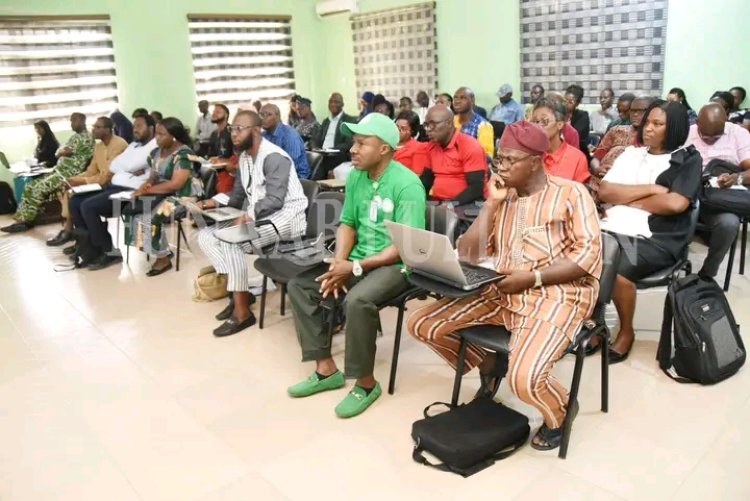
The Federal University of Agriculture, Abeokuta (FUNAAB), has stepped up efforts to improve digital education delivery through a capacity-building programme designed to equip academic staff with the skills needed to develop and deploy interactive lecture materials using the Blackboard Learning Management System (LMS).
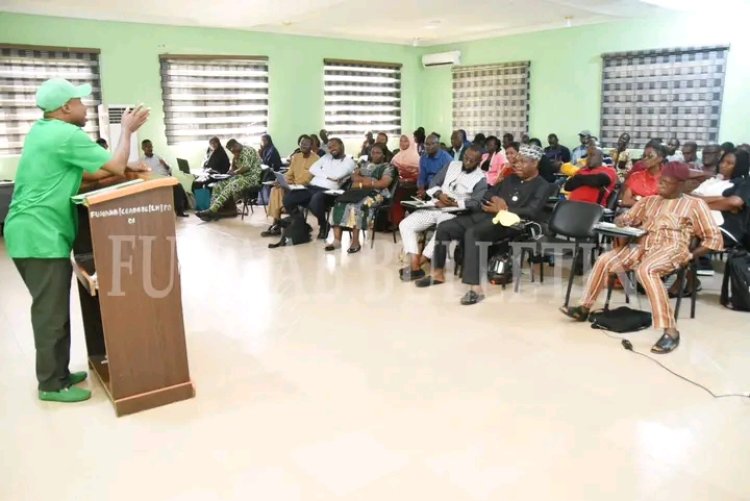
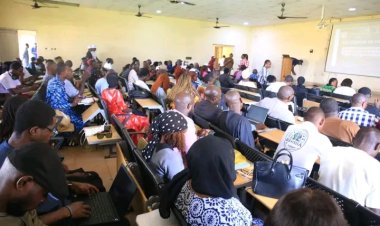
The one-day training, held on November 11, 2026, at the Conference Room of the Centre of Excellence in Agricultural Development and Sustainable Environment (CEADESE), focused on strengthening lecturers' capacity for Open and Distance Learning (ODL), blended learning and technology-driven academic instruction.
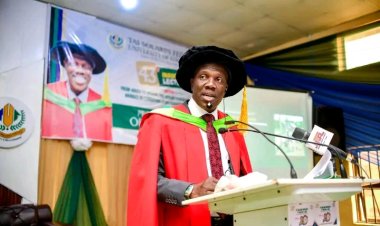
Declaring the programme open, the Vice-Chancellor, Prof. Babatunde Kehinde, represented by the Deputy Vice-Chancellor (Academic), Prof. Olusegun Idowu, reiterated the University's commitment to expanding access to quality education.
He encouraged academic staff to embrace Artificial Intelligence (AI) and other emerging digital technologies to improve teaching, research and learning outcomes.
Prof. Kehinde described the establishment of Open and Distance Learning as a strategic initiative aimed at widening access to university education and providing flexible learning opportunities for prospective students, regardless of their geographical locations and individual circumstances.
He noted that achieving the global goal of inclusive education by 2030 would require universities to adopt innovative learning models capable of responding to the evolving needs of learners.
The Vice-Chancellor also identified the provision of a dedicated computer laboratory equipped with at least 50 functional workstations as one of the essential requirements for obtaining the necessary ODL licence. He stressed that the facility must be exclusively reserved for ODL activities.

Addressing the issue of institutional development, Prof. Kehinde emphasised the importance of adequate funding in sustaining educational standards, upgrading infrastructure and maintaining institutional competitiveness.
He urged members of the University Community to sustain FUNAAB's position as the seventh-best university globally and the leading university of agriculture in Africa through continuous improvements in teaching, research and the overall learning environment.
On the increasing relevance of Artificial Intelligence, the Vice-Chancellor described AI as an indispensable technology transforming several sectors, including education, research, banking, programming and robotics.
He encouraged lecturers to explore its potential in enhancing academic delivery but cautioned against its indiscriminate use, noting that it could undermine academic integrity and produce misleading information, particularly when users lack the skills to develop appropriate prompts and critically evaluate AI-generated content.
Earlier, in his welcome address, the Director of the Directorate of Academic Information Systems (DACIS), Prof. Olusegun Folorunso, noted that the rapid advancement of digital technologies was significantly reshaping teaching and learning in higher education.
He stressed the need for universities to strengthen their capacity to adopt innovative approaches that would improve academic delivery and enhance the learning experience.
Prof. Folorunso described the Blackboard Learning Management System as an effective platform for supporting Open and Distance Learning, blended learning and technology-enhanced classroom instruction.
He explained that effective deployment of the platform goes beyond uploading lecture notes, emphasising the need to develop well-structured, interactive and engaging instructional materials.
According to him, effective digital lecture materials should incorporate:
-
Clearly defined course objectives.
-
Learning outcomes.
-
Multimedia resources.
-
Assessment activities.
-
Opportunities for meaningful student engagement.
He explained that incorporating these elements would promote effective, interactive and learner-centred instruction.
The DACIS Director further stated that the training was designed to equip participants with practical digital tools and instructional techniques for making course content more accessible, interactive and engaging.
He urged academic staff to apply the knowledge and skills acquired during the programme to improve their teaching methods and provide better learning experiences for students.
Prof. Folorunso added that the success of the training should not be determined by attendance alone but by the extent to which participants utilise the knowledge gained to transform teaching and learning across the University.
The initiative underscores FUNAAB's commitment to strengthening digital education, promoting innovative teaching methods and expanding access to quality university education.