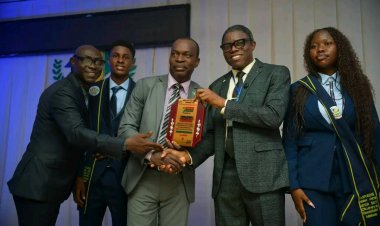
KWASU, RUDN University Sign MoU to Strengthen Science and Educational Collaboration
Kwara State University (KWASU), Malete, and the People's Friendship University named after Patrice Lumumba (RUDN University), Russia, have signed a Memorandum of Understanding (MoU) to strengthen cooperation in science and education
 Philip22
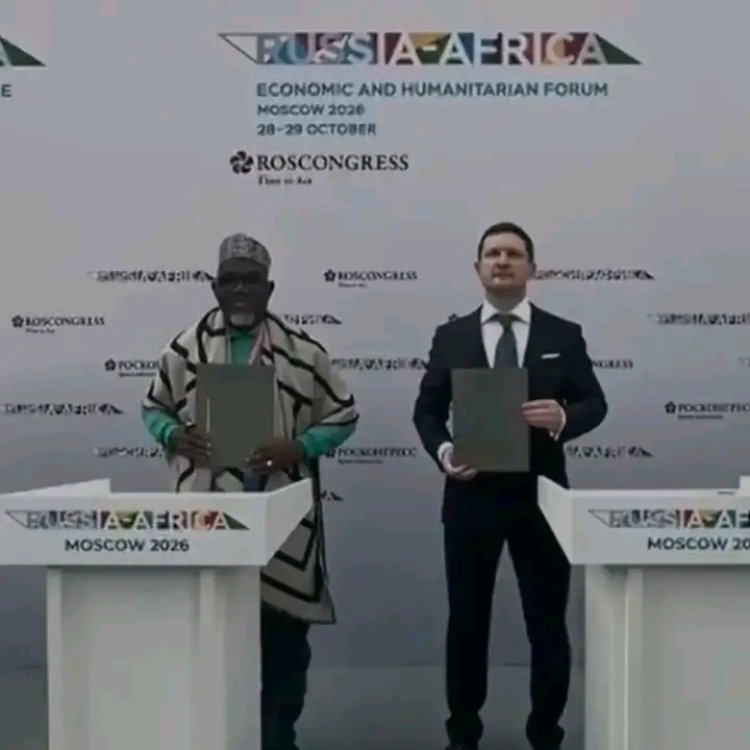
Kwara State University (KWASU), Malete, and the People's Friendship University named after Patrice Lumumba (RUDN University), Russia, have signed a Memorandum of Understanding (MoU) to strengthen cooperation in science and education.
The agreement is designed to promote mutual interests in research, development, education, training, technology transfer and knowledge dissemination on a long-term, non-commercial basis.
The MoU was signed in Russia on October 29, 2026. KWASU was represented by its Vice-Chancellor, Professor Shaykh-Luqman Jimoh, while the Vice-Rector for International Affairs of RUDN University, Marina O. Rekets, signed on behalf of the Russian institution.
The partnership will promote international collaboration across the faculties, institutes, academies, libraries and administrative units of both universities, with the aim of strengthening their institutional resources and capabilities.
Under the agreement, both institutions will implement academic mobility programmes for undergraduate and postgraduate students, as well as scientific and teaching staff. They will also facilitate joint research projects, provide mutual support for the establishment of new academic programmes, exchange information and undertake joint publication activities.
Other areas of cooperation include organising conferences and workshops, as well as developing subject-oriented classes in Russian language and pre-university training centres. The institutions will also establish and utilise resource centres for training and other activities in specialised fields of study and Russian language learning.
The agreement further provides for assistance in organising and conducting RUDN University's Open Olympiads for foreign citizens, developing youth and student cooperation, and adopting a cluster approach to education in priority fields of study through offline and online learning technologies.
It also creates opportunities for reciprocal student and staff exchanges, alongside training programmes for administrative and technical personnel of both universities.