FUNAAB VC Commissions Seed Gene Bank, Rehabilitated Tissue Culture Laboratory at PBST Department
FUNAAB VC Commissions Seed Gene Bank, Rehabilitated Tissue Culture Laboratory at PBST Department
 UmarFarouk123
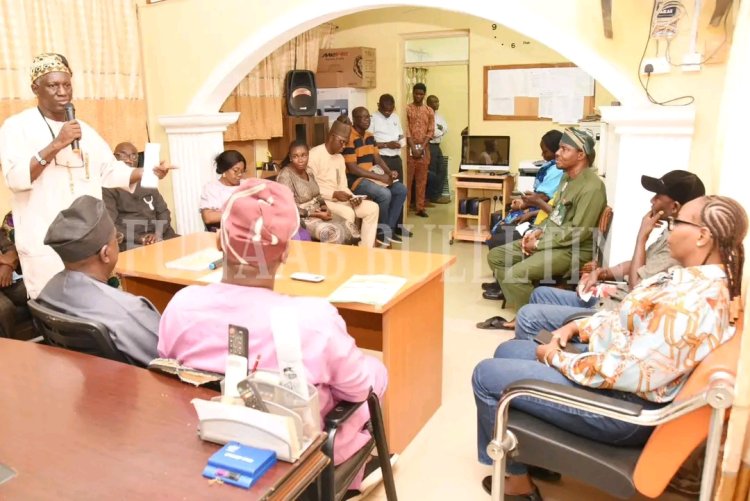
The Vice-Chancellor of the Federal University of Agriculture, Abeokuta (FUNAAB), Prof. Babatunde Kehinde, has restated his Administration's commitment to strengthening research infrastructure, promoting agricultural innovation and advancing food security with the commissioning of a Seed Gene Bank and a rehabilitated Tissue Culture Laboratory at the Department of Plant Breeding and Seed Technology (PBST), College of Plant Science and Crop Production (COLPLANT).
Commissioning the facilities on November 25, 2026, Prof. Kehinde described the development as a strategic investment in the University's research capacity, particularly in the conservation of valuable plant genetic resources and the advancement of modern agricultural practices.
The Vice-Chancellor dedicated the Seed Gene Bank to Scientists, students of the College and researchers from other institutions, expressing confidence that the facility would serve as an important resource for research, teaching, training and the preservation of endangered and valuable plant varieties. He also unveiled a commemorative board showcasing the Department's Best Graduating Students from 2000 to 2025.
Congratulating the Department on the achievement, Prof. Kehinde commended Prof. Francis Showemimo for bringing together the team of lecturers who successfully secured the Tertiary Education Trust Fund (TETFund) National Research Fund (NRF) grant that facilitated the project.
While expressing satisfaction with the successful completion of the project, the Vice-Chancellor charged the current and incoming Heads of Departments to ensure the effective management, maintenance and sustainability of the facilities. He particularly emphasised the need for uninterrupted power supply to the Seed Gene Bank, including weekends and public holidays, to prevent fluctuations in storage conditions that could compromise the quality and viability of preserved seeds.
Prof. Kehinde also encouraged other Heads of Departments to patronise the facility and incorporate its use into students' practical training and research activities. He assured the Department that the University would consider expanding the Gene Bank as demand and utilisation increased.
Earlier, the Dean, COLPLANT, Prof. Bolarinwa Senjobi, described the Seed Gene Bank as a strategic facility for safeguarding valuable plant genetic resources, particularly endangered and inaccessible varieties, against the growing threats of climate change and food insecurity. He urged the Department to extend its benefits to other institutions, farmers and the wider society.
In his presentation, the HoD, PBST, disclosed that the Seed Gene Bank was established through the NRF grant secured by the Department's lecturers. He explained that the scope of the project was expanded beyond its original design to accommodate the needs of a wider community of researchers and other stakeholders.
Prof. Showemimo further disclosed that the facility was equipped with an air-conditioning system, a dehumidifier, a water-managed fan and other essential installations. He stated further that additional equipment provided through TETFund included an irrigation system, adding that a Seed Science specialist would oversee the facility, while a modest service fee would be charged to users to support its maintenance and sustainability.