
Nigerian Universities Must Digitise or Risk Obsolescence, Says UNILAG Director
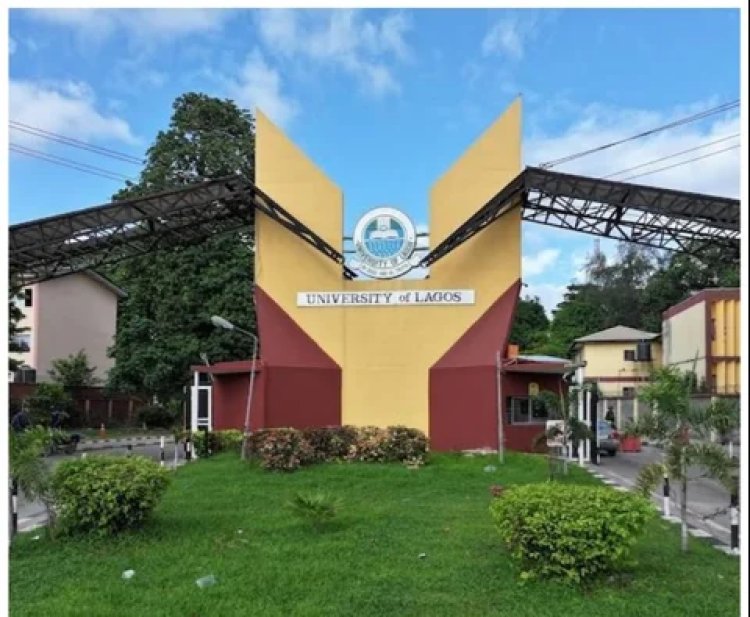
Director of the Office of Advancement at the University of Lagos, Dr. Taiwo Ipaye, has called on Nigerian universities to fully digitise their administrative processes, warning that institutions that fail to embrace digital transformation risk becoming inefficient and obsolete.
 judithhh

Dr. Taiwo Ipaye has urged Nigerian universities to digitise administrative processes, adopt AI-driven systems, and invest in digital skills to improve efficiency, governance, and future readiness.
Director, Office of Advancement, University of Lagos, Dr Taiwo Ipaye has urged Nigerian universities to fully digitise their administrative processes, warning that institutions that fail to embrace digital transformation risk becoming inefficient and obsolete.
Ipaye made the call while delivering the second Registry Discourse at Trinity University, held at the varsity’s campus, Yaba, Lagos, where she spoke on the theme, “Digital Disruption and the Registry Workforce: Rethinking Roles, Repositioning Capacity and Building Future Readiness.”
She said the era of paper-based administration was rapidly giving way to technology-driven systems, stressing that university registries must reposition themselves as drivers of institutional excellence rather than merely administrative support units.
She said, “This is the age of digital disruption and machine learning with the use of Artificial Intelligence in virtually every area of our operations. The registry workforce cannot afford to be left behind. We must rethink our roles, reposition capacity and build for future readiness,” she said.
“The registry workforce must build future readiness. The characteristics of future-ready registry systems include fully digitised workflows, integrated and centralised data systems, use of AI and automation in decision-making processes.”
She argued that university registries should move beyond traditional paper-based operations to fully digitised workflows supported by integrated data systems, automation and artificial intelligence.
“The implication is clear: organisations that fail to adapt risk inefficiency, redundancy and eventual obsolescence,” she said.
Ipaye noted that routine administrative duties such as filing, stamping documents and manual data entry were increasingly being automated, creating demand for new competencies in data management, information governance and digital systems administration.
“The workforce is shifting from task execution to system management and data oversight. Employees are no longer just processors of information but custodians of digital systems and data integrity,” she said.
According to Ipaye, the COVID-19 pandemic demonstrated that universities could rapidly adapt to digital technologies, with virtual learning platforms and online communication tools becoming permanent features of higher education administration.
“The pandemic showed us that universities, and their administrative backbone – the registry – can change rapidly when exigency demands it. The future is already here with us,” she said.
She urged universities to prioritise staff development and training and have a specific budget for such training.
She added that it was imperative for the National Assembly and the Nigeria Universities Commission to embrace digitisation in their request for documents from tertiary institutions rather than requesting tons of photocopies for appearances before committees.
Ipaye said institutions should digitise their processes from admission to graduation.
She identified the digital skills gap as one of the biggest threats confronting university administration, attributing it to the rapid pace of technological advancement, inadequate training and resistance to change.
“Success in a digital environment is determined not by the number of employees but by the quality of their skills and adaptability,” she added.
The former registrar urged universities to invest in continuous staff training, digital infrastructure and change management to prepare administrative personnel for emerging technologies.
She also recommended that institutions adopt cloud-based systems, conduct regular skills audits and strengthen policies on data protection and digital governance.
“Future readiness is not a one-time achievement but an ongoing intentional process of adaptation and innovation,” she said.
Concluding her lecture, Ipaye said the future relevance of university registries would depend on their ability to embrace innovation while preserving the profession’s core values.
“Digital disruption is not merely a technological shift; it is a workforce transformation challenge. The registry workforce must evolve from traditional administrative roles to dynamic, technology-enabled functions.
“Ultimately, the success of digital transformation depends not just on technology, but on the ability of people to adapt, learn and lead within a rapidly changing environment,” she said.
Chairman of the event and Vice Chancellor of Chrisland University, Prof Oyedunni Arulogun, stressed that embracing digital innovation was imperative.
She stressed that universities must acquire new digital competencies, leverage technology, and identify emerging technologies needed for registry operations.
“You can’t afford to be fixated on old ways. Be open-minded; develop practical approaches for sustained relevance of the registry. A resilient, future-ready workforce is crucial now in universities,” Arulogun said.
Vice Chancellor, Trinity University, Prof Clement Kolawole said it had become expedient for every worker to be conversant with technology to retain their jobs.
Registrar of the host university, David Oyejide, stressed that the Registry must not only anticipate change but also adapt to change to remain relevant.
“I am sure we will be challenged to rethink our roles, reposition our strategies, and embrace innovation to remain relevant to be effective custodians of institutional records, processes, and governance,” Oyejide said.
The event saw a policewoman in Yaba Divisional Headquarters, Inspector Justina Omogbai, awarded by the university for commitment to the welfare of school children in the Yaba community.
Oyejide said, “Inspector Justina Rita Omogbai has consistently gone out of her way to assist school children in ensuring that they are punctual and dress well as they go to school.
“Her actions reflect the true spirit of service and community responsibility that we should all aspire to embody. In a world where it is often easy to remain within the boundaries of our designated roles, Inspector Justina Rita Omogbai has chosen to extend her care and concern to the children who are the future of our society.
“Her dedication to ensuring that children arrive at school punctually and in proper dress is not merely about discipline; it is about instilling values of responsibility, respect, and self-worth in young minds. These values are foundational to the development of competent, confident, and responsible citizens.”