UNIZIK Shares Institutional Mentorship Model at Global Neglected Tropical Diseases Conference in Rwanda
 Philip22
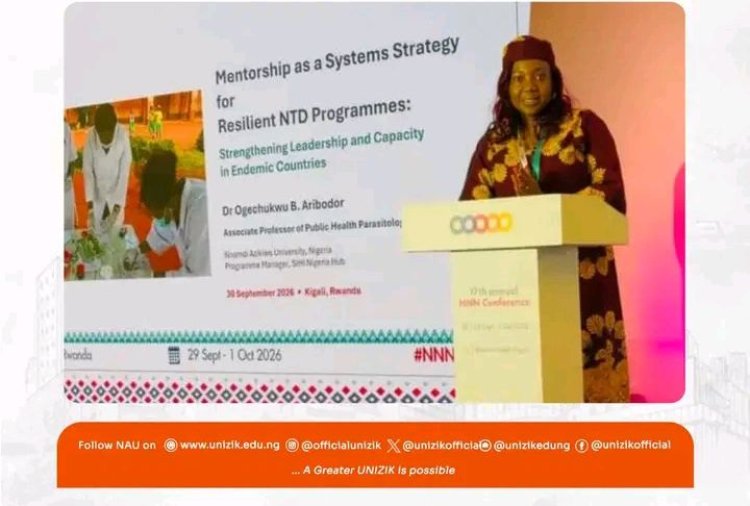
Nnamdi Azikiwe University (UNIZIK), Awka, Anambra State, has presented its institutional mentorship experience at the 17th Annual Neglected Tropical Disease NGO Network (NNN) Conference in Kigali, Rwanda, highlighting strategies for strengthening research capacity and developing future leaders in endemic countries.
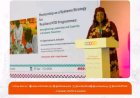
The university’s experience was presented by Dr Ogechukwu Benedicta Aribodor, an Associate Professor of Public Health Parasitology in the Department of Zoology, Faculty of Biosciences.
Aribodor discussed UNIZIK’s implementation of the WHO/TDR HERMES Mentorship Guide, a framework designed to strengthen mentorship and career development within research institutions.
In her presentation, titled “Mentorship as a Systems Strategy for Resilient NTD Programmes: Strengthening Leadership and Capacity in Endemic Countries,” she explained how the university adapted the HERMES framework to its institutional context.
She highlighted an approach that integrates structured mentorship, practical support, equity, research capacity strengthening and institutional ownership to establish a sustainable system for developing researchers and future leaders.
Drawing on lessons from UNIZIK’s experience, Aribodor stressed that mentorship should extend beyond informal relationships and become a deliberate, structured and sustainable institutional strategy for nurturing the next generation of researchers and leaders.
She also linked effective mentorship to the long-term sustainability of neglected tropical disease (NTD) programmes, emphasising the need to establish leadership pipelines in countries where the diseases are endemic.
According to her, “country ownership requires leadership pipelines.”
Aribodor also serves as Programme Manager of the Social Innovation in Health Initiative (SIHI) Nigeria Hub and is a member of the WHO/TDR HERMES 2.0 Leadership Team. Her participation in the conference was supported by WHO/TDR.
The presentation highlighted UNIZIK’s contribution to international discussions on mentorship, research capacity development, leadership and global health, while underscoring the university’s commitment to building sustainable institutional systems for research and innovation.