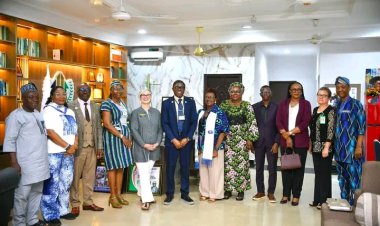
African Countries Urged to Develop Indigenous Language AI at ICAIR 2026
Experts at the Sixth International Conference on Artificial Intelligence and Robotics (ICAIR 2026), organised by the University of Lagos (UNILAG), have urged African countries to develop artificial intelligence systems capable of understanding indigenous languages and cultural contexts to promote digital inclusion.
 judithhh

Experts at ICAIR 2026 urge African countries to develop AI systems that understand indigenous languages, promote digital inclusion and strengthen local innovation.
They warned that the limited representation of African languages in digital platforms, online content and AI training datasets was excluding millions of people from the benefits of emerging technologies.
The call was made in a communiqué issued at the end of the three-day conference organised by the Machine Intelligence Research Group, Faculty of Computing and Informatics, University of Lagos (UNILAG), Akoka, Lagos.
According to the communiqué signed by the Chairman of the Local Organising Committee, Dr Sennaike Oladipupo, the conference brought together academics, researchers, technology professionals, policymakers, industry leaders and students from Nigeria and beyond to discuss the opportunities and challenges of AI and robotics in Africa.
Participants stressed that incorporating African indigenous languages into AI systems was essential for equitable digital participation and sustainable technological development. They urged research institutions to develop locally relevant datasets that reflect African languages, cultures and socioeconomic realities.
The conference also called on African governments to invest in home-grown AI solutions, digital infrastructure, local research and computing facilities to reduce the continent's dependence on foreign-developed technologies.

The communiqué highlighted inadequate digital infrastructure, unreliable electricity, limited research funding, insufficient computing resources and the migration of skilled professionals as major obstacles to Africa's AI development.
Participants further expressed concern over Africa's limited control over the economic value generated from its data, noting that much of the storage, processing and commercial benefits accrued to foreign technology companies.
At a panel discussion on Data Sovereignty in Africa: Economic Value, Quality of Service and the Future of Research, stakeholders called for stronger data governance, investment in local data centres, domestic internet traffic exchange and indigenous software development.
The Managing Director of Source Microfinance Bank Limited, Akanimoh Ojo, emphasised the need for stronger data governance and local analytical capacity to enable African institutions to control and benefit from their data.
Similarly, Nigeria's National Coordinator for the Alliance for Affordable Internet, Olusola Teniola, advocated investment in local data centres and domestic internet infrastructure to improve connectivity, create employment and strengthen technological independence.
The Chief Executive Officer of Semicolon, Sam Immanuel, urged young Africans to move beyond consuming digital products and develop the skills needed to create technologies that address local challenges.
He also stressed the importance of practical training, critical thinking and independent problem-solving, cautioning young professionals against excessive dependence on AI tools for coding and other technical tasks.
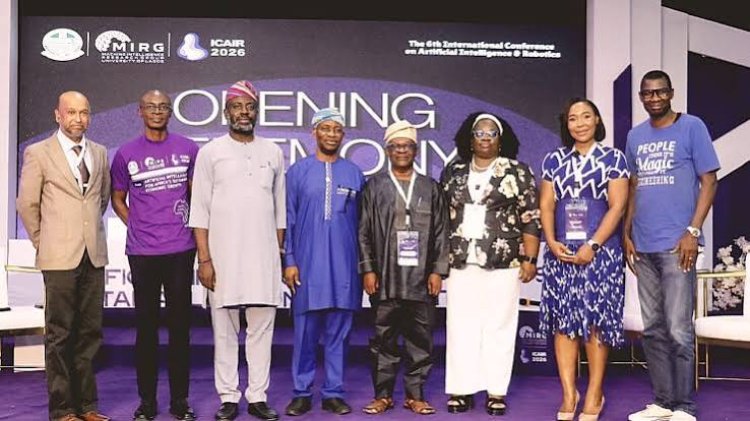
Delivering the keynote address, Professor Kanshukan Rajaratnam of Stellenbosch University, South Africa, identified inadequate infrastructure, limited research investment and the migration of skilled professionals as major challenges facing Africa's AI development.
He argued that meaningful AI adoption must go beyond importing foreign technologies, urging African countries to develop quality local datasets and systems that understand their languages and cultural contexts.
Rajaratnam also called for stronger collaboration among governments, universities and industries to build sustainable innovation ecosystems. On AI safety, he emphasised the need for proper testing, evaluation, accountability and human oversight.
In a goodwill message, the Vice-Chancellor of UNILAG, Prof. Folasade Tolulope Ogunsola, represented by the Deputy Vice-Chancellor (Academics and Research), Prof. Matthew Olusoji Ilori, highlighted the widening technological gap between Africa and developed economies.
She urged African governments and universities to invest in local technological capacity and empower young people to develop innovative solutions.
Earlier, Oladipupo described AI as a transformative technology with significant potential to improve agriculture, healthcare, education and other critical sectors. However, he warned against continued dependence on imported technologies, calling for solutions that reflect Africa's priorities and realities.
The conference also highlighted the importance of developing skilled technology professionals through advanced technical training, practical experience and stronger university-industry partnerships.
Participants identified opportunities for AI and machine learning in agriculture, including crop-yield prediction, intelligent monitoring and multilingual advisory systems to support farmers and improve food security.
In healthcare, they highlighted AI-powered diagnostic systems, disease prediction and data-driven health services, while in education, they identified opportunities in intelligent tutoring systems, multilingual learning platforms and personalised educational technologies.
The experts also stressed that AI development must be guided by transparency, accountability, human values and the public interest. They called for rigorous evaluation and real-world testing to ensure that AI systems deliver reliable results.
With approximately 300 research submissions from researchers and students across several universities, ICAIR 2026 provided a platform for academic exchange, interdisciplinary collaboration and discussions on practical applications of artificial intelligence and robotics.

In its recommendations, the conference urged African governments to prioritise AI in national development plans and increase investment in research, innovation, digital infrastructure and indigenous technology.
Universities and research institutions were also encouraged to strengthen AI research, collaborate with industry and government, and translate academic findings into practical solutions.
The private sector and development partners were urged to support local innovation, provide computing infrastructure and invest in technology enterprises addressing African challenges.
The conference concluded that Africa's future in the global technology industry would depend not only on adopting emerging technologies but also on its ability to develop, own and control solutions that create economic value and improve people's lives.