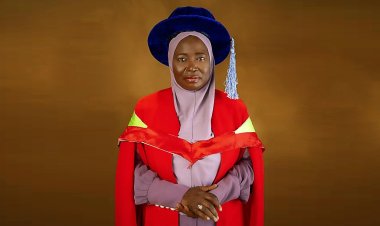
Fountain University Professor Labo-Popoola Urges Government to Tackle Educational Inequality, Seeks Better Facilities, Teachers and Digital Access
A Professor of Language Education at Fountain University, Osogbo, Professor Serifat Labo-Popoola, has urged governments and educational institutions to address inequalities in school facilities, teacher availability, learning resources and digital access to improve learning outcomes in Nigeria.
 judithhh
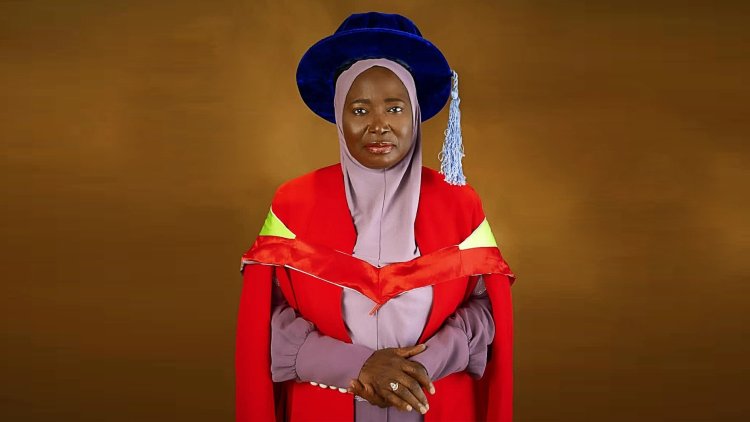
Fountain University Professor Serifat Labo-Popoola urges government to tackle inequalities in school facilities, teacher availability and digital access to improve education in Nigeria.
A Professor of Language Education at Fountain University, Osogbo, Serifat Labo-Popoola, has called on governments and educational institutions to address inequalities in school facilities, teacher availability, learning resources and digital access to improve learning outcomes in Nigeria.
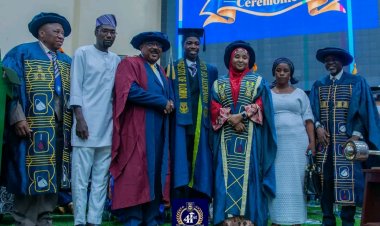
She made the call while delivering her inaugural lecture, titled “Inside the English Learning Ecosystem: The Combined Power of Schools, Teachers, Learner Behaviours and Digital Tools,” at the university’s ninth inaugural lecture on Friday.
Labo-Popoola said effective English Language Education required more than classroom teaching, noting that school conditions, teacher quality, learners’ behaviour, access to technology and educational policies were interconnected factors influencing students’ academic performance.
She urged governments and educational institutions to prioritise equitable access to educational opportunities, particularly for learners in disadvantaged schools and communities.
“Government and educational institutions should give priority to reducing disparities in school conditions, staffing, learning resources, digital access and opportunities for participation,” she said.
The professor also called for stronger connections between academic research, educational policies and classroom practices to ensure that research findings translated into practical improvements in teaching and learning.

She said, “Research-policy-practice linkages in English Language Education should be more deliberately connected to policy formulation, institutional decision-making and classroom practice.”
According to her, educational policies must recognise the relationship between school conditions, teacher quality and learner behaviour, stressing that interventions should address the factors collectively rather than treating them as separate challenges.
Labo-Popoola explained that students’ academic performance was influenced by several interconnected factors, including school population, student-to-classroom ratio, student-teacher ratio, motivation, study habits and access to learning resources.
She noted that the availability of digital technology did not automatically translate into improved learning outcomes, observing that although many teachers had internet-enabled mobile phones, only a few used them for instructional purposes.
The don attributed the limited adoption of technology in some classrooms partly to inadequate school facilities, adding that teachers needed appropriate resources, skills and institutional support to integrate digital tools effectively into teaching.
She also highlighted the importance of learners’ motivation and study habits, citing research findings which showed that motivated students performed substantially better in English Language.
On educational equity, Labo-Popoola drew attention to the challenges facing disadvantaged learners, particularly girls whose educational opportunities were affected by poverty, child labour, early marriage and teenage pregnancy.
She argued that providing access to schools was insufficient without addressing the social and economic conditions that enabled children to remain in school and benefit from education.

The professor further examined the relationship between language, technology and sustainable development, emphasising the need to strengthen indigenous languages while improving English Language Education.
She concluded that English Language Education was a complex and interconnected enterprise, explaining that students’ learning and academic achievements were shaped by the interaction of human resources, school environments, technology and educational policies.
The inaugural lecture was chaired by the Vice-Chancellor of Fountain University, Prof Olayinka Kareem.
Highlighting Labo-Popoola’s contributions to academic development, Kareem said, “Professor Serifat Olubunmi Labo-Popoola has supervised four PhD projects, five master’s dissertations and 20 undergraduate projects.”