FUNAAB VC Presents Certificates to 2026 IBR Awardees, Strengthens Research Capacity
The Vice-Chancellor of the Federal University of Agriculture, Abeokuta (FUNAAB), Professor Babatunde Kehinde, represented by the Deputy Vice-Chancellor, Development, Professor Olawale Dairo, has presented certificates to the 2026 Institutional-Based Research (IBR) awardees.
 Philip22
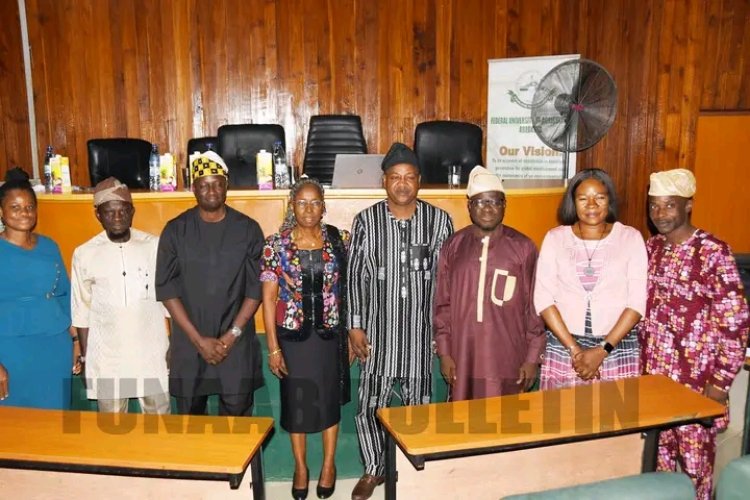
The Vice-Chancellor of the Federal University of Agriculture, Abeokuta (FUNAAB), Professor Babatunde Kehinde, represented by the Deputy Vice-Chancellor, Development, Professor Olawale Dairo, has presented certificates to the 2026 Institutional-Based Research (IBR) awardees.
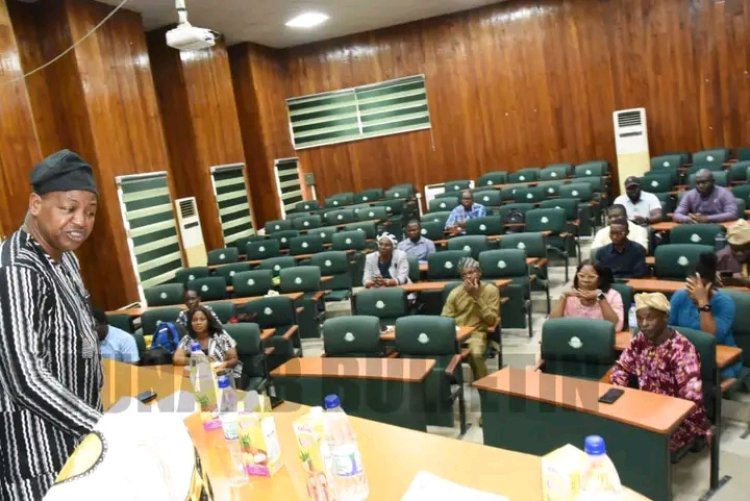
The presentation was part of the University’s efforts to strengthen the researchers’ capacity through practical strategies for research excellence, effective project implementation and impactful research outcomes.
The certificate presentation formed part of a one-day capacity-building workshop organised by the Directorate of Research, Innovation and Partnerships (DRIP) on September 22, 2026.
The workshop was designed to equip the 2026 IBR awardees with the knowledge and skills required to effectively plan, implement, manage and complete their research projects while maximising their outcomes.
Participants at the workshop included the 2026 IBR awardees, professors and relevant University officials. The programme featured sessions on research ethics and conduct, financial accountability, effective project implementation and strategies for maximising research outcomes.
Professor Dairo, who served in two capacities at the event, delivered a presentation titled “Research Conduct and Ethics: Sponsors’ Requirements.”
In the presentation, he identified six key principles guiding researchers at FUNAAB: autonomy and respect, justice, beneficence, fidelity, non-maleficence and academic freedom.
Dairo also stressed the importance of accountability in the management of research funds. He noted that funded researchers were expected to maintain dedicated project accounts, ensure restricted use of funds, render proper financial reports and accept personal liability where applicable.

He identified delayed approval, failure to meet quarterly reporting deadlines, mixing project funds with personal or departmental accounts, treating fund retirement as the end of the research process, and making changes to approved research protocols or research teams without notifying the University Research Ethics Committee (UREC) and Institutional Committee on Research (ICR) as major pitfalls that could undermine research grants.
According to him, adherence to sound research ethics and financial accountability is critical to successful project implementation.
He added that compliance with established procedures would enhance researchers’ credibility and contribute to the sustainability of future research funding.
Speaking on “Maximising Research Outcomes,” Professor Helen Bodunde explained that research outcomes go beyond the data generated during a project to include new knowledge, practical applications, measurable changes and policy contributions arising from research.
Bodunde urged researchers to establish specific and time-bound objectives, develop detailed work plans, adopt adaptive timelines and ensure effective allocation of available resources.
She also identified effective team coordination and risk management as essential components of successful research implementation.
The professor advised researchers to clearly define the roles and responsibilities of team members and hold regular meetings to monitor progress and address emerging challenges.
She further urged them to identify potential risks early enough and develop appropriate mitigation strategies.
Bodunde also encouraged researchers to continuously evaluate their outcomes, properly close completed projects and disseminate their findings to relevant stakeholders in order to maximise the impact and wider benefits of their research.
Earlier, the Director of DRIP, Professor Oluwagbemiga Adeleye, welcomed participants and appreciated the University Management for its support towards strengthening research capacity at FUNAAB.
Adeleye noted that the workshop was designed to provide the 2026 IBR awardees with practical guidance for the successful execution, management and completion of their research projects.
The programme culminated in the presentation of certificates to the 2026 IBR awardees.
Adeleye also appreciated the University Management, resource persons and participants for their contributions to the success of the workshop.