Igbinedion University Inaugural Lecture Calls for Fiscal Reforms to Address Nigeria's Development Challenges
Nigeria has been urged to undertake comprehensive fiscal reforms, ensure equitable resource allocation and strengthen financial accountability across its three tiers of government to address longstanding development challenges.
 Philip22

Nigeria has been urged to undertake comprehensive fiscal reforms, ensure equitable resource allocation and strengthen financial accountability across its three tiers of government to address longstanding development challenges.

The call was made by Professor Blessing Ose Oligbi, Deputy Vice-Chancellor (Academic and Research) of Igbinedion University, Okada, while delivering the institution's 28th Inaugural Lecture on Thursday, 19 November 2026.
The lecture, titled “Deficit Paradox: Fiscal Decentralisation and Development in Nigeria’s Federation,” examined why Nigeria, despite its abundant natural and financial resources and substantial public expenditure, continues to experience persistent development challenges.
Professor Oligbi, a Professor of Public Sector and Development Economics, argued that effective fiscal decentralisation should bring governance closer to the people by ensuring that public resources are generated, allocated and utilised efficiently.
However, she observed that successive government budgets and substantial public expenditures had failed to produce corresponding development outcomes, exposing structural weaknesses in Nigeria's fiscal system and public financial management.
She further explained that although fiscal decentralisation is intended to promote economic stability and strengthen accountability at the state and local government levels, many states remain heavily dependent on federal allocations and devote excessive portions of their resources to recurrent expenditure.
She warned that development spending without corresponding revenue-generating powers and financial discipline could undermine rather than strengthen subnational governments.

Among her major recommendations, Professor Oligbi called for the following measures:
- Strict enforcement of the Fiscal Responsibility Act.
- Greater transparency in public financial management.
- Full implementation of direct funding to local governments.
- Publication of clear payment schedules for local government allocations.
- Public availability of transparent fiscal data for every state and local government area.
She also urged state governments to broaden their revenue bases through lawful means, comply with existing fiscal regulations, restrict borrowing to properly evaluated projects and publish comprehensive debt profiles to strengthen public accountability.
Professor Oligbi stressed that effective fiscal decentralisation must extend beyond the distribution of financial resources. According to her, it requires institutional capacity, revenue autonomy and robust accountability mechanisms capable of translating public funds into tangible development outcomes.
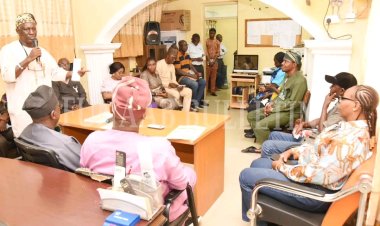
Speaking at the event, the Vice-Chancellor of Igbinedion University, Professor Lawrence Ikechukwu Ezemonye, PhD, FAS, who chaired the occasion, described the lecture's subject as timely and particularly relevant to Nigeria's prevailing economic challenges.
He observed that the relationship between fiscal policy, resource distribution and grassroots development remained a pressing national concern. He expressed confidence that the lecture would stimulate meaningful discussions and provide practical recommendations for policymakers.
In an interview, Deacon Comrade Lawrence Isiraojie, who represented the Vice-Chancellor of Ambrose Alli University, Professor Eunice Omonzejie, commended Professor Oligbi for her scholarly presentation.

He expressed satisfaction with the quality of the lecture and noted that she had represented her alma mater creditably.
The inaugural lecture reinforced Igbinedion University's commitment to promoting research and intellectual discourse that address Nigeria's development challenges.
Its recommendations also highlighted the need for federal, state and local governments to move beyond budgetary allocations and expenditure figures towards measurable development outcomes driven by fiscal discipline, transparency and the effective utilisation of public resources.