LASU, Immigration Service Seek Stronger Collaboration to Tackle Border Security Challenges
Lagos State University and the Nigerian Immigration Service have called for stronger cooperation among researchers, policymakers, security agencies and border communities.
 judithhh

LASU and NIS have called for stronger collaboration among researchers, policymakers, security agencies and border communities to improve border security and African integration
The call was made at the 2026 annual conference of the African Borderlands Research Network (ABORNE), held in Ikeja, Lagos, with the theme, “The Connected Borderlands: Socio-Cultural Integration and the Centrality of Policy, Research and Security.”
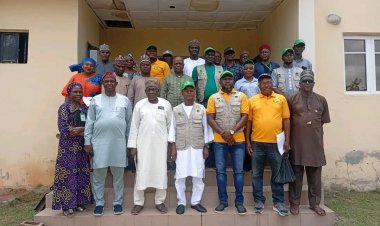
The conference, co-hosted by LASU and the NIS, brought together scholars, policymakers, security practitioners and other stakeholders to discuss border management, migration, security, regional integration and the socio-economic realities of border communities.
Speaking at the event, LASU Vice-Chancellor, Prof. Ibiyemi Olatunji-Bello, said borderlands should be viewed as living spaces where people, cultures, languages, markets and histories intersect, rather than simply as territorial boundaries.
She noted that Lagos was a suitable location for the conference because of its strategic position along the Lagos-Abidjan corridor and its importance to trade, movement and regional integration.

Olatunji-Bello highlighted LASU’s commitment to border studies through its Bachelor of Arts programme in Border and Migration Studies, stressing the need for a new generation of experts who understand the links between borders, livelihoods, identity, security and human mobility.
She also described the university’s partnership with the NIS as important to effective border governance, noting that research, practice and policy must work together.
In her address, NIS Comptroller-General, Kemi Nandap, said border management was undergoing major changes due to technological advancement, changing migration patterns, regional integration and emerging security threats.
She said traditional patrols and document checks were no longer enough to address challenges such as human trafficking, migrant smuggling, identity fraud, organised crime, terrorism and cyber-enabled threats.
According to her, the NIS is combining technology, intelligence, professional experience and inter-agency cooperation to strengthen border security. She cited electronic passports, biometric verification, automated passport processing and e-gates among the measures introduced to modernise Nigeria’s border management system.
However, Nandap stressed that technology alone could not guarantee effective border security and called for greater involvement of border communities, describing them as important partners whose local knowledge could support early warning and security efforts.
She also said Nigeria’s border policies must balance security with the ECOWAS principles of free movement, legitimate trade and the livelihoods of border communities.
Representing the Minister of Interior, the Senior Special Adviser on Policy, Dr Kareem Oladokun, said effective border management required stronger partnerships between government institutions, universities, security agencies and development partners.
He urged researchers to focus on producing knowledge that anticipates emerging challenges and translates into practical policy solutions.
Representing Lagos State Governor Babajide Sanwo-Olu, Commissioner for Tertiary Education, Tolani Sule, said the conference demonstrated the importance of universities engaging with real-world challenges. He noted that border and migration studies had become increasingly important because they intersect with security, trade, economic development, public health, employment, climate change and human rights.
Chairman of ABORNE Chiefs, Prof. Paul Nugent, said the network, established in 2007, had grown into an international platform for research on Africa’s borderlands. He said issues including migration, urbanisation, climate change, cross-border trade, public health and insecurity were increasingly concentrated in border regions.
The conference also recognised the contributions of Professor Emeritus Anthony Asiwaju, whose research has significantly advanced the understanding of African borders as spaces of interaction, exchange, identity and contestation rather than merely territorial dividing lines.