LASU VC Professor Badejo Outlines Vision to Make LASU Africa's Most Consequential City University
The newly appointed Vice-Chancellor of Lagos State University (LASU), Professor Ayodeji Badejo, has unveiled an ambitious development agenda focused on research productivity, student welfare, staff accountability and institutional sustainability.
 judithhh
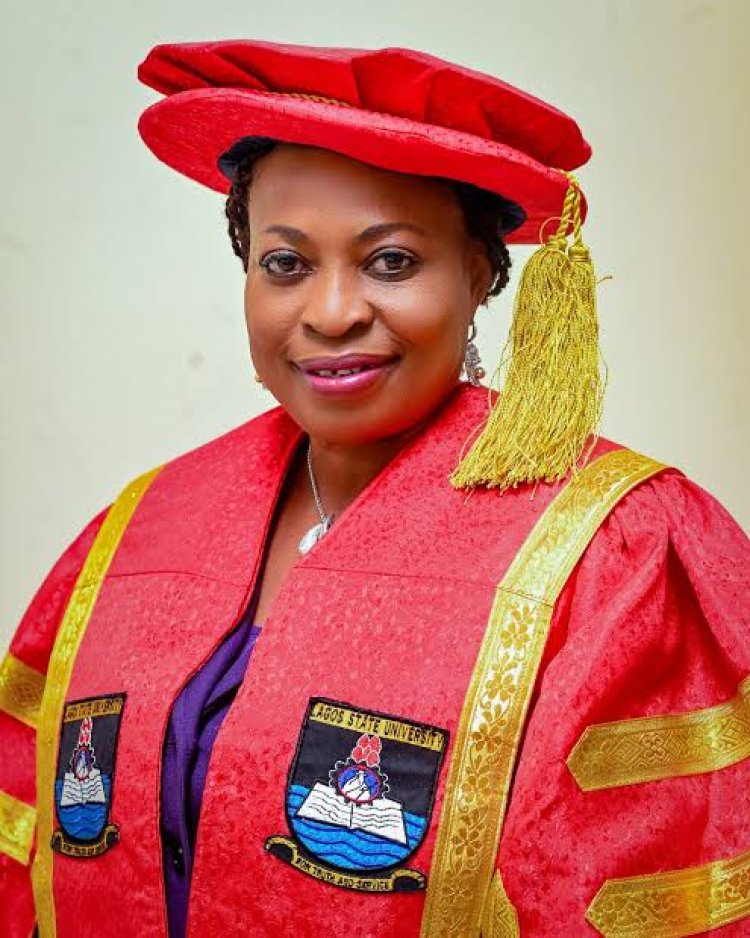
Vice-Chancellor of Lagos State University (LASU), Professor Ayodeji Badejo, has identified research productivity, student welfare, staff accountability and institutional sustainability as key priorities in her administration’s plan to reposition the university.
Badejo outlined the priorities at her inaugural Senate meeting on Thursday at the institution’s main campus in Ojo, where she urged academics and university administrators to focus less on institutional size and more on the value LASU delivers to society.
She said the university must move beyond being recognised for its large student population and growing infrastructure to becoming an institution whose contributions are essential to Lagos State and the wider society.
The Vice-Chancellor disclosed that 84,326 candidates selected LASU as their first-choice institution in the current admission cycle, making it Nigeria’s most preferred university for the second consecutive year. The university currently has more than 85,000 students across its campuses in Ojo, Ikeja, Epe and Badagry.
While acknowledging the institution’s growth since its establishment in 1983, Badejo said its achievements in enrolment, programme accreditation and infrastructure must be matched by stronger research output and measurable contributions to development.
She identified low research income, inadequate classrooms and laboratories in relation to the student population, and the need for clarity on staff entitlements among the issues requiring attention.

Among the measures she proposed is a system that will give every staff member a confidential statement of verified entitlements within her first 100 days in office. She also pledged to publish annual performance reports and establish a clear institutional strategy to ensure that development plans continue beyond individual administrations.
On student welfare, Badejo proposed assigning an academic adviser to every student, establishing a University Counselling and Wellbeing Centre and creating a Student Opportunity Fund.
She also called for a stronger focus on graduate employability and student completion rates, arguing that the university should measure its performance not only by the resources it commits but also by the outcomes it produces.
The Vice-Chancellor further urged the university to strengthen research and innovation that address practical societal challenges. She said LASU should pursue the ambition of becoming Africa’s most consequential city university rather than limit its aspirations to being Nigeria’s leading state university.
Badejo also called for greater participation in Senate deliberations, particularly from senior academics who had stopped attending meetings. She urged them to return and contribute their experience to institutional decision-making, while encouraging younger scholars to work with established professors.
“A Senate without its elders is a Senate condemned to repeat its mistakes,” she said.
She described the Senate as the university’s intellectual centre and assured members that her administration would respect its statutory role. According to her, proposals requiring Senate consideration would be presented with supporting evidence, while dissenting views would be given room during deliberations.
Badejo also called for an end to divisions among the university’s campuses and different groups, insisting that all members of the institution must work towards a common purpose.

“There is no separate LASU for Ojo, Ikeja, Epe or Badagry, no old or new LASU, and no management or Senate LASU,” she said, adding that the university must be treated as one institution.
She said her administration would be assessed through tangible outcomes, including the completion of an academic quality audit, delivery of staff entitlement statements, publication of annual performance reports and increased participation of senior professors in Senate meetings.
Acknowledging that previous administrations had also presented ambitious plans, Badejo urged members of the university community to judge her leadership by what it delivers.
“We can manage the university we inherited or we can build the university the next generation deserves. I choose to build,” she said.