Medical Lecturers Raise Alarm Over Nigeria’s Plan to Increase Medical Student Admissions
The Medical and Dental Consultants Association of Nigeria, UCH Ibadan chapter, has warned the Federal Government that increasing medical student admissions without expanding infrastructure and recruiting more lecturers could affect the quality of medical education.
 judithhh

MDCAN UCH Ibadan has warned against increasing medical school admission quotas without corresponding improvements in infrastructure, facilities and teaching staff.
The warning comes amid the Federal Government’s plan to increase admission capacity in Nigeria’s medical schools as part of efforts to address the country’s shortage of doctors and strengthen human-resource development in the health sector. However, the lecturers cautioned that expanding student numbers without first improving institutional capacity could place additional pressure on already stretched medical training facilities.
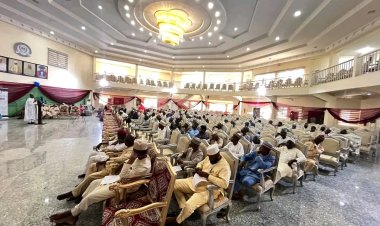
Chairman of MDCAN, UCH Chapter, Dr Oluseyi Akande, raised the concern in Ibadan during the association’s biennial press briefing held as part of its 2026 Annual General Meeting.
Akande specifically pointed to the College of Medicine, University of Ibadan, where, according to him, the structures required to accommodate the growing number of medical students were not yet ready, despite an increase in admissions since the previous year. He therefore called for the Federal Government to accelerate infrastructure projects and strengthen monitoring to ensure that approved interventions are completed within schedule.
The lecturers also stressed the need for additional recruitment of medical lecturers and other academic and clinical personnel. According to the association, increasing the number of students without increasing the number of qualified professionals responsible for teaching, supervision and practical training could undermine the quality of medical education.
The warning comes at a time when the Federal Government is pursuing a significant expansion of medical training. Recent government plans have targeted an increase in annual medical student admissions to about 20,000 within the next three years, reflecting concerns over Nigeria’s doctor-to-patient ratio and the need to produce more health professionals.
While expanding admission opportunities could improve access to medical education and eventually increase the supply of doctors, the development raises an important quality-assurance question: whether Nigeria’s medical schools have sufficient lecture theatres, laboratories, teaching hospitals, accommodation, equipment and qualified lecturers to train substantially larger cohorts.
Medical education is particularly dependent on practical exposure and supervised clinical experience. Unlike many programmes that can accommodate additional students through expanded classroom capacity alone, medical training requires access to laboratories, clinical departments, specialist equipment, teaching hospitals and sufficient patient exposure under qualified supervision.
The concern also aligns with the Federal Government’s broader effort to strengthen accreditation and quality assurance across tertiary institutions. Education Minister Dr Tunji Alausa recently warned institutions against presenting borrowed staff, equipment or facilities during accreditation exercises and said the government was moving towards continuous, digital and evidence-based monitoring of institutional capacity.
For medical schools, the implication is that increased admission should be accompanied by verifiable investment in infrastructure and human resources rather than being treated simply as an increase in the number of available spaces.
The MDCAN position therefore highlights the need for a balanced expansion strategy—one that increases opportunities for qualified candidates while protecting the quality of training received by future doctors.
Nigeria’s shortage of medical professionals remains a major concern, particularly amid the migration of trained doctors and other health professionals. Producing more doctors could help strengthen the country’s health system, but inadequate training facilities could create another challenge if graduate numbers increase without corresponding improvements in competence and practical exposure.
The immediate task for government and medical training institutions, therefore, is to ensure that admission expansion moves together with infrastructure development, recruitment of lecturers and clinical personnel, modern teaching equipment and stronger accreditation monitoring.
For prospective medical students, the issue is ultimately about more than gaining admission. It is about ensuring that the institution they enter has the facilities, teachers and clinical environment required to provide the rigorous training necessary to become competent medical professionals.
As Nigeria seeks to expand its medical workforce, the MDCAN warning provides an important reminder that increasing the number of students must not come at the expense of the quality of doctors the country produces.