TASFUED Trains TIS Teaching Staff on Modern Teaching, Classroom Management
TASFUED Trains TIS Teaching Staff on Modern Teaching, Classroom Management
 UmarFarouk123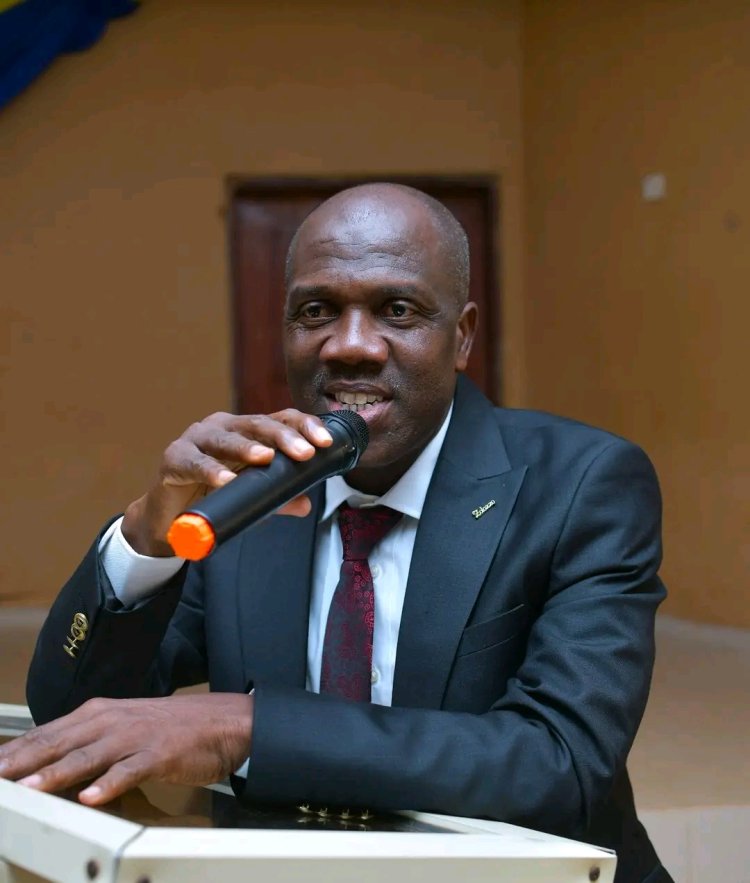
Tai Solarin Federal University of Education, TASFUED, Ijagun, has charged teaching staff members of the Tai Solarin Federal University of Education International School, Igbeba, to embrace continuous learning, innovation and professionalism as essential tools for remaining effective in today’s rapidly changing educational environment.
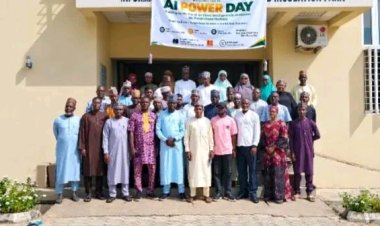
The charge was given at a teaching staff workshop organised to strengthen teaching effectiveness and equip teachers with contemporary approaches to classroom management, student engagement and professional practice.
Declaring the workshop open on behalf of the Vice-Chancellor, Prof. Samuel Oladipo MNPA, CMCPN, MCAN, FIELPN, the Deputy Vice-Chancellor (Academics), Prof. Rotimi Ettu, said that the changing nature of students and the emergence of technologies such as artificial intelligence have made continuous professional development imperative for educators.
He noted that students were increasingly adept at accessing and applying new technologies, warning that teachers who failed to keep their knowledge up to date risked losing relevance in the classroom.
“Training is one of the key components of learning. You can't know it all; nobody knows it all. We learn daily; new things emerge daily,” Prof. Ettu said.
He urged participants to apply the knowledge gained from the workshop to improve teaching and learning when students return to campus, stressing that teaching methods must evolve in response to changing educational realities.
The Director, Centre for Information and Technology Enhanced Learning, CITEL, Prof. Adebola Awofodu, in his keynote address, identified innovation and professional work ethics as critical requirements for effective teaching.
He described the classroom as a strategic environment for shaping the future of society, stressing that the quality of teaching had far-reaching implications for the character, aspirations and intellectual development of young people.
Prof. Awofodu challenged participants to go beyond content delivery by adopting teaching strategies that stimulate curiosity, develop critical thinking, utilise technology appropriately and accommodate diverse categories of learners.
He, however, clarified that innovation did not mean discarding established practices, but improving and adapting them to remain relevant and effective.
On professionalism, he emphasised punctuality, preparation, fairness, respect, confidentiality and commitment to duty as indispensable attributes of an effective educator.
He warned that innovative strategies without professional conduct could not guarantee sustainable results, urging lecturers to recognise the lasting influence their words and actions could have on students.
The two-day workshop also featured a session on “Effective Classroom Management and Engagement Strategies”, delivered by the Director, Directorate of Academic Planning and Quality Assurance, DAPQA, Prof. Jimoh Owoyele.
Prof. Owoyele stated that the session was designed to refresh teachers’ understanding of classroom management while equipping them to respond to the peculiarities of contemporary learners.
“The students of today are not the same as the students of yesterday, just as the students of tomorrow may not be the same as the students of today,” he said.
He identified structure, relationship and engagement as the three essential conditions for effective classroom management.
According to him, clear classroom routines, appropriate seating arrangements and consistent enforcement of rules provide the structure required for an orderly learning environment.
He stressed that positive teacher-student relationships were equally important, urging lecturers to protect the dignity of every learner and avoid judging students solely by their current academic performance.
Prof. Owoyele further advocated active student participation in the learning process, noting that well-engaged students were less likely to become disruptive.
He encouraged teachers to explore approaches such as the flipped classroom, in which students are given a framework for a topic and encouraged to research and develop the content themselves.
The DAPQA Director also urged them to understand the developmental characteristics of adolescent learners, particularly their need for identity, belonging, competence and autonomy.
He emphasised that teachers must establish appropriate boundaries while creating an environment where students feel respected, accepted and confident enough to participate in learning.
In his closing remarks, the Deputy Vice-Chancellor, Academics, Prof. Rotimi Ettu, reiterated the need for teachers to remain dynamic, noting that contemporary students had unprecedented access to information and could readily challenge their teachers.
He noted that the University would continue to promote staff development and use students’ academic performance and feedback as important indicators for assessing the effectiveness of teaching and learning.
The workshop reaffirmed TASFUED’s commitment to building a highly competent, innovative and professionally grounded academic workforce capable of delivering quality education and preparing students for the demands of the contemporary world.