UI Receives Accreditation Team From the World Health Organisation
UI Receives Accreditation Team From the World Health Organisation
 UmarFarouk123
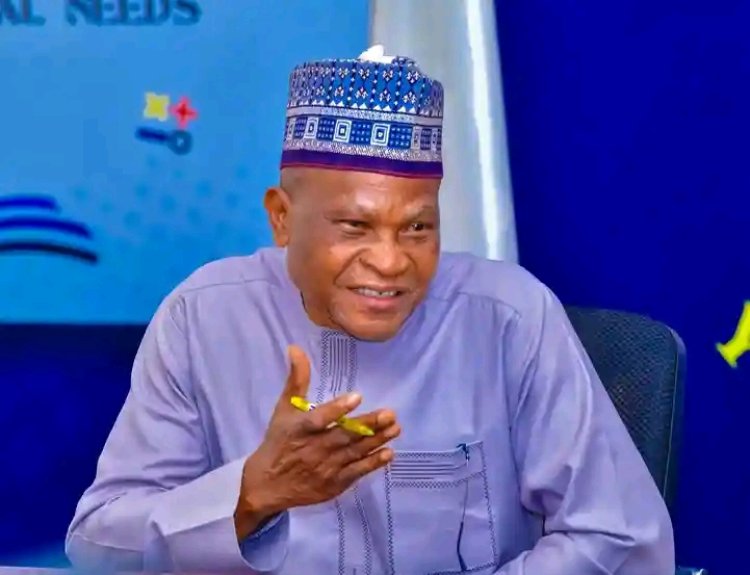
The University of Ibadan Virology Laboratory for Global Polio Sequencing, Department of Virology, has received an accreditation team from the World Health Organisation (WHO).
The accreditation followed a two-week WHO visit to the Department of Virology, which included an international training programme on advanced poliovirus sequencing and a comprehensive accreditation exercise.
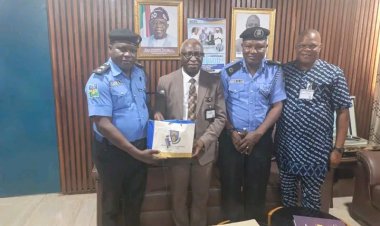
The Dean of Science, Professor I. A. Oladosu while receiving the WHO team on behalf of the 13th Vice-Chancellor, Professor Kayode O. Adebowale mni, FAS, fspsp, during a courtesy visit to the office of the Vice-Chancellor, expressed appreciation for the organisation’s support to the Department of Virology.
He reaffirmed that the university was willing to support areas identified for improvement, particularly data management, risk management and laboratory infrastructure.
Professor Oladosu expressed delight that UI had been certified as one of the centres for poliovirus sequencing, describing the development as a significant recognition of the University’s contributions to polio surveillance and eradication.
He further assured the WHO team that the University would continue to provide the necessary institutional support to strengthen the laboratory and its operations.
The Dean noted that the University remains proud of its graduates and their contributions to global scientific and public health efforts.
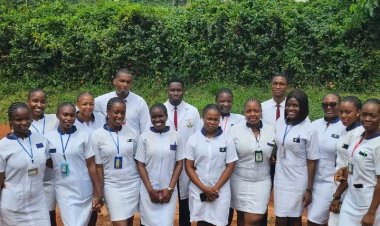
The WHO Regional Polio Laboratory and Environmental Surveillance Coordinator for the Polio Eradication Programme, Dr Jude Anfumbom Kfutwah, said the international training programme on advanced poliovirus sequencing focused on equipping poliovirus laboratory experts from five African countries with advanced sequencing skills.
He explained that poliovirus was more complex than many other viruses because of the need to distinguish among different virus types, vaccine-related viruses and other variants based on their mutations and other characteristics.
According to him, the training was successfully completed, with participating experts returning to their respective countries after acquiring the required skills.
Dr Kfutwah said the second phase of the visit focused on assessing the UI laboratory against the quality indicators of the Global Polio Laboratory Network.
He noted that Africa has 16 poliovirus laboratories serving 47 countries, with Nigeria hosting two of them in Maiduguri and Ibadan, adding that the two laboratories in Nigeria account for about 60 percent of the samples analysed within the African network, underscoring their importance to polio surveillance and eradication efforts.
The Polio Eradication expert disclosed that the UI laboratory has been assessed across all relevant sections and was accredited for the next 12 months, explaning that the accreditation meant the laboratory could continue to diagnose poliovirus samples received from across Nigeria and, through the global network, samples referred from other parts of the world.
However, the WHO team identified some areas requiring improvement, particularly in the timeliness of sequencing, procurement processes, data management and waste management.
He explained that procurement, delays in customs clearance and regulatory requirements had affected the timely availability of some laboratory materials adding that discussions had been held with relevant authorities to address the challenges.
He disclosed that an electronic inventory monitoring system is being introduced to improve the management of laboratory supplies, expressing optimism that procurement-related challenges would improve within the next few months.
He said the laboratory had made considerable progress but needed to harmonise its data with the WHO and the Ministry of Health having noted that the closure of the 2025 poliovirus data was still outstanding and needed to be addressed.
The WHO representative also called for improved waste management facilities, particularly additional autoclave capacity and a standard incinerator capable of safely handling the volume of infectious and non-infectious waste generated by the laboratory.
He said the volume of work handled by the laboratory made appropriate waste management infrastructure essential, adding that the current incinerator did not meet the required standards.
Dr Jude commended the personnel of the Department of Virology for their expertise, professionalism and adherence to international standards in poliovirus diagnosis.
He said the results generated by the laboratory had been checked and cross-checked and that the personnel were capable of supporting poliovirus diagnosis anywhere within the global network.
Earlier, the acting Head of the Department of Virology, Dr A.B. Onoja said that the department had hosted the WHO team for two weeks, with the first week devoted to advanced molecular biology and sequencing training.
He described sequencing as a state-of-the-art component of genomics and said that experts from different African countries participated in the training.
Dr Onoja said the second week was devoted to the accreditation exercise to determine the laboratory’s readiness to continue testing samples received from across Nigeria as part of the National Polio Laboratory and the Global Polio Laboratory Network.
Courtesy: UI DIRECTORATE OF PUBLIC COMMUNICATION