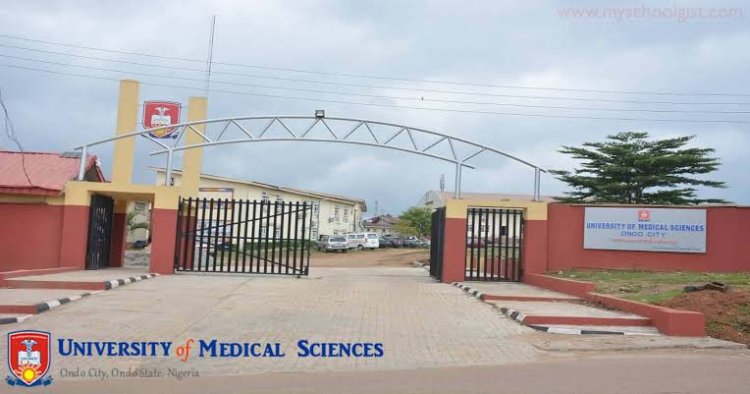
UNIMED Ondo Researchers Make Stanford–Elsevier World Top 2% Scientists List
The University of Medical Sciences (UNIMED), Ondo, has achieved international recognition after five of its researchers were named in the 2026 Stanford–Elsevier World Top 2% Scientists list under the Single-Year Scientific Impact category, based on citation impact for 2025.
 judithhh
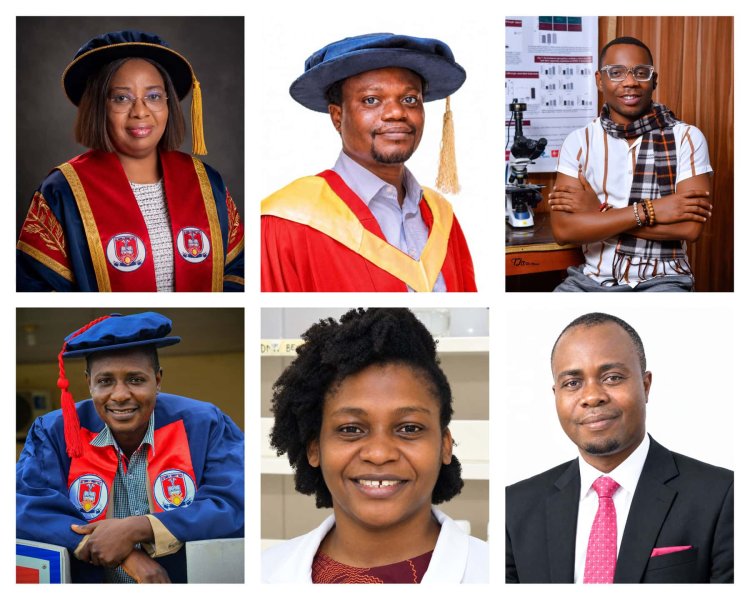
UNIMED Ondo celebrates five researchers named in the 2026 Stanford–Elsevier World Top 2% Scientists list as student Oluwatayo Michael wins an innovation award in London.
The University of Medical Sciences (UNIMED), Ondo, has recorded another significant milestone in research excellence, with five of its researchers named in the 2026 Stanford–Elsevier list of the world top two percent scientist under the Single-Year Scientific Impact category, based on citation impact for the 2025 calendar year.
The recognition, according to a statement released by the Public Relations Officer of the university, Mr Isaac Oluyi underscores the university’s growing international research visibility and its commitment to advancing scientific knowledge, innovation and evidence-based solutions to societal challenges.
Oluyi gave the names of the five distinguished researchers as Dr Olumuyiwa James Peter of the department of Mathematical and Computer Sciences, Dr Omamuyovwi M. Ijomone of the department of Anatomy, Dr Oyetunde T. Oyeyemi and Dr Aniefiok John Udoakang, both of the department of Biosciences and Biotechnology and Dr Olorunsola I. Adeyomoye of the department of Physiology.
Congratulating the researchers, the Vice-Chancellor of the university, Prof Ebunoluwa Adejuyigbe, described their inclusion in the prestigious global ranking as a source of pride for the university and a testament to the quality and growing impact of research undertaken by its academic community.
“This recognition is a remarkable achievement for the University of Medical Sciences, Ondo. It reflects the dedication, intellectual rigour and commitment of our researchers to producing scientific knowledge that contributes meaningfully to humanity. Their success reinforces our belief that investment in research, innovation and academic excellence is essential to the advancement of society,” the Vice-Chancellor said.
Adejuyigbe congratulated the five researchers, their collaborators and research team, noting that their achievement would serve as an inspiration to other academics and emerging scholars within the university.
She reaffirmed the university’s commitment to creating an enabling environment for high-quality research, fostering strategic collaborations and supporting scholarly contributions that address pressing local and global challenges.
The Stanford–Elsevier database, developed using standardised citation indicators derived from Scopus, assesses researchers’ scientific impact through a range of metrics, including citations, authorship contributions and field-specific indicators. The Single-Year category highlights research impact within a particular calendar year.
The Central Office for Research and Development (CORD) at UNIMED also congratulated the researchers, describing the recognition as evidence of the university’s expanding scholarly influence and the growing contribution of its researchers to global scientific advancement.
CORD encouraged academic staff and researchers to sustain the pursuit of impactful research, strengthen interdisciplinary and international collaborations, and translate research outcomes into practical solutions for healthcare, science and societal development.
Oluyi said the achievement further reinforces UNIMED’s ambition to consolidate its position as a leading institution for medical and health sciences education, research and innovation in Nigeria.
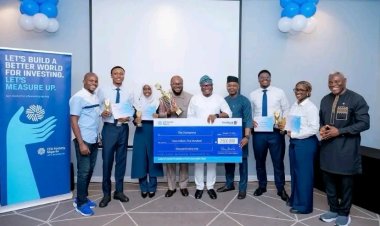
Meanwhile, a student of the University of Medical Sciences, Ondo, Oluwatayo Ayodele Michael of the department of Physiotherapy has emerged recipient of the NBTI NextGen Innovator Award at an international showcase held at ExCeL London, United Kingdom
Michael received the award for his innovation, UniThread EcoHusk, which transform discarded cocoa pod husks into biochar-based filtration materials for treating textile wastewater.
The innovation offers a sustainable approach to reducing harmful pollutants before they enter rivers and other water bodies, addressing environmental contamination at its source. By promoting cleaner water and healthier communities, the technology also has the potential to reduce exposure to pollution-related health risks.
The international showcase attracted hundreds of innovators, policymakers, investors, industry stakeholders and government dignitaries, including the Honourable Minister of Innovation, Science and Technology, Dr Kingsley Tochukwu Udeh, SAN, and the Registrar of the Joint Admissions and Matriculation Board (JAMB), Professor Segun Aina. Representatives of the Commonwealth Investment Network and the British High Commission were also present.
Reacting to the achievement, the Vice-Chancellor of UNIMED, Ondo, Professor Ebunoluwa Adejuyigbe, congratulated Michael on the international recognition, describing it as a proud moment for the university and a testament to the ingenuity, creativity and problem-solving capacity of Nigerian youths.
“We are immensely proud of Oluwatayo Ayodele Michael for this outstanding achievement. Winning the NBTI NextGen Innovator Award on an international platform in London demonstrates that the ingenuity of our young people can produce solutions capable of addressing critical challenges facing humanity. His achievement brings honour to UNIMED and Nigeria as a whole,” the Vice-Chancellor said.
Professor Adejuyigbe noted that UniThread EcoHusk exemplified the importance of research, creativity and innovation in tackling environmental challenges and protecting public health.
“What makes this innovation particularly commendable is its practical approach to environmental sustainability. By converting discarded cocoa pod husks into useful filtration materials, Michael has demonstrated how locally available resources can be transformed into solutions that promote cleaner water, healthier communities and a more sustainable environment. This is the kind of creative, impact-driven thinking we encourage among our students and researchers at UNIMED,” she added.
The Vice-Chancellor further encouraged students and young researchers to embrace interdisciplinary collaboration, entrepreneurship and research-driven innovation, stressing that universities have a vital role to play in developing solutions to local and global challenges.
She reaffirmed UNIMED’s commitment to academic excellence, research and innovation that translate knowledge into practical benefits for society.
Michael’s recognition highlights the growing potential of Nigerian innovators to harness indigenous resources and appropriate technologies to address pressing environmental concerns. By giving discarded agricultural waste a new purpose in wastewater treatment, UniThread EcoHusk demonstrates how innovation can support environmental protection, resource recovery and public health.