ACU Professor Advocates Balanced International Legal Protection for the Natural Environment
The Head of the Department of Public and International Law, Ajayi Crowther University (ACU), Oyo, Prof. Gaius Okwezuzu, has called for a balanced international legal framework that guarantees the protection of the natural environment both during peacetime and armed conflicts.
 Philip22
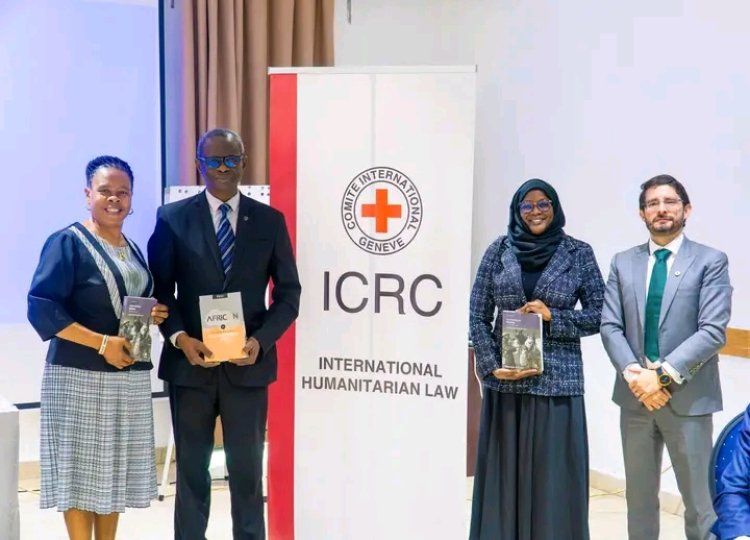
The Head of the Department of Public and International Law, Ajayi Crowther University (ACU), Oyo, Prof. Gaius Okwezuzu, has called for a balanced international legal framework that guarantees the protection of the natural environment both during peacetime and armed conflicts.
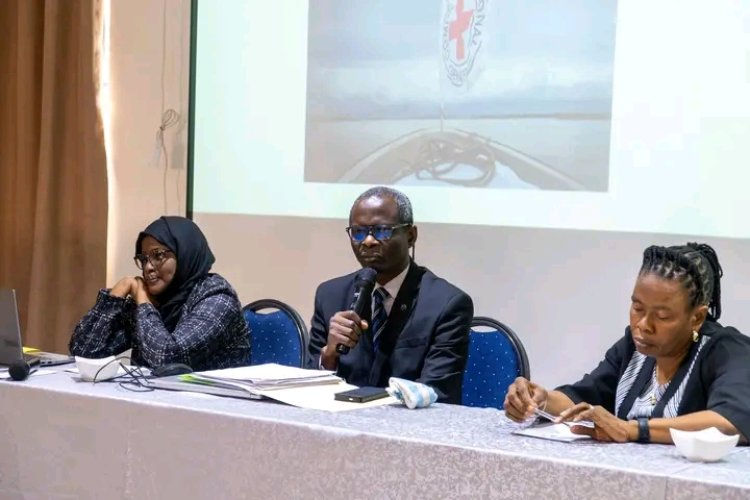
He raised concerns over what he described as the lopsided provisions for environmental protection under existing international law, stressing the need for a comprehensive approach that safeguards the natural environment at all times.
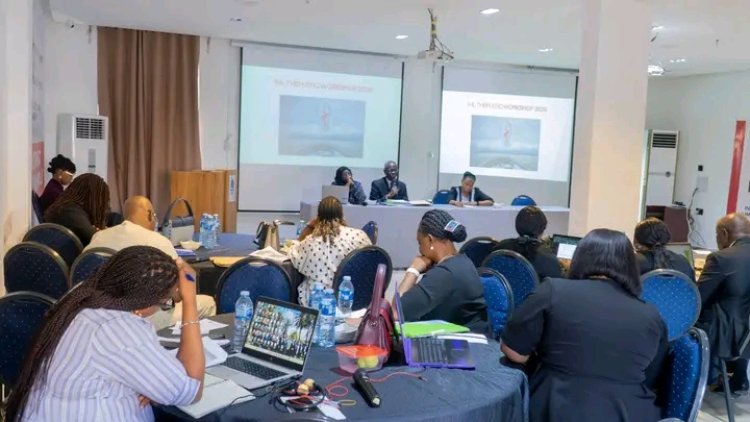
Prof. Okwezuzu, a renowned Nigerian environmental law expert and Executive Director of End Ecocide Nigeria, made the call while chairing the first session of the 2026 Annual Thematic Workshop on International Humanitarian Law (IHL) for Academics and Practitioners, themed "Protection of the Natural Environment during Armed Conflict."
The workshop was held in Abuja from Wednesday, November 11, to Thursday, November 12, 2026, and was co-organised by the International Committee of the Red Cross (ICRC), the Nigerian Institute of Advanced Legal Studies (NIALS), and the Society of International Humanitarian Law (IHL) Teachers.
In his presentation, Prof. Okwezuzu observed that the natural environment of Earth, humanity's only life-bearing planet, faces severe and multiple threats. He explained that, on the one hand, industrial activities during peacetime pose significant environmental dangers, while on the other, various means and methods of warfare inflict devastating damage during armed conflicts.
He maintained that the natural environment must enjoy adequate protection under international law, irrespective of whether a country is at peace or engaged in armed conflict.
Tracing the historical development of international environmental criminal law, the legal scholar recalled that, in 1947, the United Nations General Assembly mandated the International Law Commission (ILC) to prepare "a draft Code of Offences against the Peace and Security of Mankind", which served as a precursor to the Rome Statute and remained on the Commission's agenda for several years.
He explained that the Crime of Ecocide was initially envisaged as the fifth Crime against Peace, alongside the Crimes of Genocide, Crimes against Humanity, War Crimes and the Crime of Aggression, under the jurisdiction of the International Criminal Court, as provided for in Article 5 of the Rome Statute.
According to him, the original intention behind the proposed environmental protection provisions was to establish a comprehensive framework that would criminalise ecocide both during peacetime and armed conflicts.
However, he noted that the effort to include ecocide committed during peacetime in the Rome Statute became highly contentious and was strongly opposed by states with significant military, economic and political influence globally.
"Unfortunately, the effort to include the provision for the crime of ecocide at peacetime was sagged in controversy and proved to be highly contentious, as it was vehemently opposed by States that are globally powerful militarily, economically, and politically. The provision was therefore eventually shot down and excluded from the Rome Statute, adding that what survived was only ecocide as a war crime as contained in Article 8.2.b.iv of the Rome Statute," Prof. Okwezuzu noted.
He, however, expressed optimism about renewed global efforts to secure the recognition and inclusion of the Crime of Ecocide in the Rome Statute, noting that the campaign was gaining traction internationally.
The legal scholar concluded that the major challenge was not the absence of laws protecting the natural environment during armed conflicts, but rather the lack of political will to enforce existing legal provisions.
He consequently recommended a balanced approach to environmental protection under international law, with adequate safeguards applicable both during peacetime and armed conflicts.
The session on the Protection of the Natural Environment during Armed Conflict also featured Prof. Theresa Akpoghome, Deputy Vice-Chancellor and former Dean of Law, Benson Idahosa University, Benin City, and the winner of the 2026 Henry Dunant Field Prize, Dr. Maryam Abdulkadir of Baze University, Abuja.
Other sessions featured contributions from distinguished academics and professionals.
The workshop was declared open by James Matthews, Deputy Head of Delegation, ICRC, Nigeria, alongside Prof. Ibrahim Abikan, Director-General, Nigerian Institute of Advanced Legal Studies, Abuja, and Prof. Afeisimi Badaiki, SAN, President, Society of IHL Teachers.
The two-day workshop attracted participants from diverse professional backgrounds, including distinguished academics and practitioners from various universities, the military and government institutions, such as the Ministry of Defence, Ministry of Justice and National Space Research and Development Agency.