AE-FUNAI Hosts International Conference on Indigenous Languages, Technology and Innovation
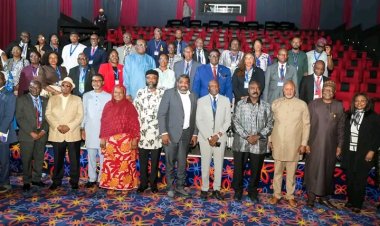
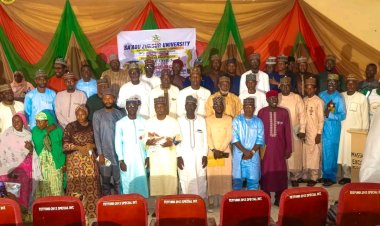
The Department of Linguistics and Nigerian Languages at Alex Ekwueme Federal University, Ndufu-Alike (AE-FUNAI), in collaboration with the Society for Igbo Studies (SIS), has hosted its second international conference with the theme, "Tech Meets Tongue: Indigenous Knowledge and Future Innovations."
 Philip22
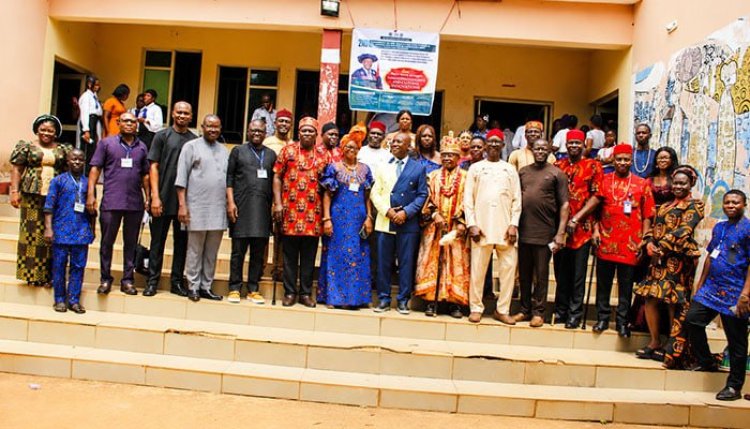
The Department of Linguistics and Nigerian Languages at Alex Ekwueme Federal University, Ndufu-Alike (AE-FUNAI), in collaboration with the Society for Igbo Studies (SIS), has hosted its second international conference with the theme, "Tech Meets Tongue: Indigenous Knowledge and Future Innovations."
The conference brought together academics, researchers, language experts, policymakers, and cultural enthusiasts from various disciplines to examine the role of indigenous languages and knowledge systems in an era of rapid technological advancement.
Declaring the conference open, the Vice-Chancellor of AE-FUNAI, Professor Daniel Nwachukwu, described the event as timely, noting the growing global interest in indigenous knowledge and artificial intelligence.
According to him, the conference challenges stakeholders to reposition indigenous languages as essential tools for driving technological advancement, creativity, and national development rather than viewing them as relics of the past.
Professor Nwachukwu highlighted the University's commitment to promoting indigenous languages through its IRUKA Centre, which focuses on research and digital innovation to ensure the Igbo language thrives in emerging technological fields such as artificial intelligence, natural language processing, and digital content development.
He stressed that universities have a responsibility not only to preserve cultural heritage but also to transform indigenous knowledge into valuable resources for education, entrepreneurship, innovation, and sustainable development. He added that technology should strengthen indigenous languages rather than replace them and commended the Department of Linguistics and Nigerian Languages and the Society for Igbo Studies for promoting academic excellence and cultural preservation.
Presenting the lead paper titled "Tech Meets Tongue: Indigenous Knowledge and Future Innovations," Professor Monday C. Onukawa underscored the importance of indigenous knowledge systems in achieving sustainable development and driving future innovations.
He argued that indigenous languages are valuable intellectual assets capable of supporting innovation in education, healthcare, governance, agriculture, and digital communication. According to him, meaningful innovation should combine modern scientific knowledge with indigenous knowledge systems to produce solutions that are environmentally sustainable, culturally relevant, and responsive to local realities.
Professor Onukawa also advocated greater investment in language technologies, including artificial intelligence, machine translation, speech recognition systems, digital dictionaries, educational software, and language documentation. He called on governments, universities, and technology developers to collaborate in ensuring African languages remain relevant in the digital economy.
Delivering the keynote address on "Indigenous Knowledge and Future Innovation: An Epistemological Perspective," Dr. Sopuruchi Abo described indigenous knowledge as a legitimate and dynamic system capable of addressing contemporary global challenges.
He noted that African indigenous knowledge embodies generations of experience in medicine, agriculture, environmental management, conflict resolution, education, and community development. Dr. Abo challenged the notion that valid knowledge originates only from Western scientific traditions, emphasizing that indigenous epistemologies provide context-specific solutions to societal problems.
He called for increased investment in indigenous research, digital preservation of oral traditions, and curriculum reforms that recognise indigenous knowledge as an essential component of higher education and scientific inquiry.
In his remarks, the Dean of the Faculty of Arts, Professor Arua O. Omaka, described language as the foundation of every civilisation and a vital instrument for preserving the identity and values of society. He encouraged participants to deepen interdisciplinary collaboration and research capable of addressing contemporary challenges while reaffirming the Faculty's commitment to promoting African languages and indigenous knowledge.
Earlier, the Head of the Department of Linguistics and Nigerian Languages, Professor Ifeoma Nweze, described the conference as a landmark event, noting that its theme reflects the urgent need to bridge indigenous knowledge with modern technological innovations.
She urged scholars to develop innovative approaches to documenting, preserving, and digitising Nigerian languages while fostering collaborations capable of influencing language policy, research, and technological development.
Also speaking, the President and Coordinator of the Society for Igbo Studies, Dr. Gerald O. Nweya, reaffirmed the Society's commitment to promoting Igbo language, literature, culture, and scholarship globally. He stressed that preserving indigenous languages requires collective efforts involving governments, universities, communities, and technology experts.
The conference concluded with a renewed call for stronger collaboration among academia, policymakers, technology developers, and cultural institutions to preserve indigenous knowledge while leveraging innovation, positioning African languages as critical tools for sustainable development in the 21st century.