COREN Commences Outcome-Based Accreditation of UNIMAID Engineering Programmes
COREN Commences Outcome-Based Accreditation of UNIMAID Engineering Programmes
 UmarFarouk123
The Council for the Regulation of Engineering in Nigeria, COREN, has commenced an Outcome-Based Education, OBE, accreditation visitation to the engineering programmes at the University of Maiduguri, UNIMAID, in order to align Nigerian engineering education with global best practices.
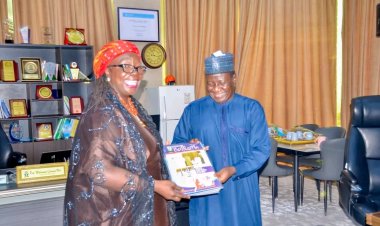
Receiving the COREN delegation at the Muhammadu Buhari Senate Building, the Vice-Chancellor, Professor Muhammed Laminu Mele, represented by the Deputy Vice-Chancellor, Academic Services, Professor Mohammed Ahmed Waziri, assured the accreditation team of the university’s unalloyed support. Professor Waziri reiterated Management's commitment to ensuring a transparent, seamless, and successful assessment of its engineering faculties.
Speaking during the visitation, the Team Lead, Engr. Prof. Abdulkarim Nasir, emphasized that the central objective of the OBE model is to ensure that students are transformed into competent, innovative, and ethically grounded professionals equipped with a solid mastery of engineering fundamentals.
Prof. Nasir described the adoption of the OBE model as a significant milestone that will drastically enhance the quality, proficiency, and global competitiveness of Nigerian engineers.
"COREN is a proud member of the Federation of Engineering Institutions of Asia and the Pacific, FEIAP. This membership provides a unique opportunity for Nigerian engineering graduates to practice in more than 26 countries across Africa, Asia, and the Pacific," he disclosed.
To sustain this dynamic standard, he urged the university to cooperate fully with COREN's ongoing initiative to index all engineering students. He requested that institutions regularly submit their student intake and graduation data to aid the development of a comprehensive national engineering education database.
Furthermore, Prof. Nasir highlighted COREN’s dedication to fostering stronger collaborations between academia and industry. He noted that the Council continues to sponsor Train-the-Trainer programmes, curriculum reviews, student internships, and industry-driven research projects through the Committee of Deans of Engineering and Technology of Nigerian Universities, CODET. He urged the Vice-Chancellor to consistently support the Deans in participating in these strategic platforms.
Dispelling any anxieties regarding the visitation, the Team Lead clarified that the exercise is not a fault-finding or punitive mission, but rather a strategic partnership for continuous institutional improvement and capacity building.
"The process will be firm but fair," Prof. Nasir assured. "Our team comprises highly experienced professionals drawn from both academia and the industry who are committed to carrying out this assignment meticulously and objectively to present an accurate assessment."