Former JAMB Spokesman Emmanuel Alabi Reveals How Awolowo’s Free Education Opened Doors for Him
Western Region free education
 judithhh
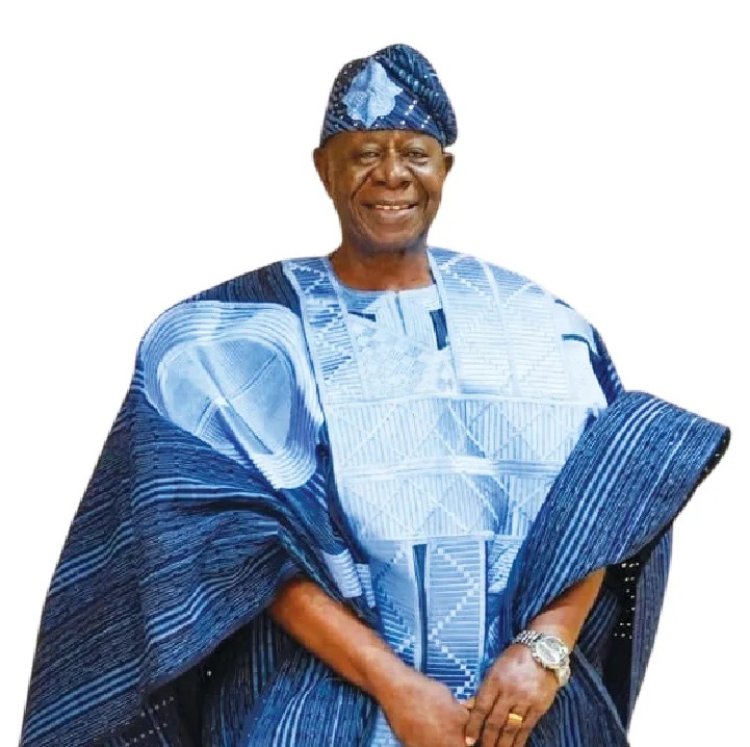
Pastor Emmanuel Alabi recounts how Awolowo’s free education policy gave him access to schooling and shaped his journey from rural Oyo to public service.
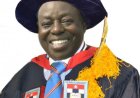
At 80, Pastor Emmanuel Alabi, a former spokesman for the Joint Admissions and Matriculation Board (JAMB), has reflected on how the free education policy introduced in the Western Region under the leadership of Chief Obafemi Awolowo opened the door to formal education and ultimately shaped the course of his life.
Alabi, who spoke in an interview published by The PUNCH, recalled growing up in Okeho, Kajola Local Government Area of Oyo State, in an environment where access to basic infrastructure was limited. He said his childhood community had no electricity, pipe-borne water or tarred roads and was largely agrarian.
Against that background, Alabi described his opportunity to receive Western education as a major turning point. He said he was among the relatively few people in his community who benefited from the free education introduced in the Western Region in 1955 by the then Premier, Chief Obafemi Awolowo.
“I was privileged to be one of the few people who received Western education,” Alabi recalled, attributing the opportunity to the free education programme introduced by the regional government.
His account provides a personal illustration of how education policies can extend their impact beyond immediate school enrolment by shaping individual careers and subsequent contributions to society.
Alabi’s early life was spent in a rural community where educational resources were also limited. He recalled that although Okeho had several public schools, there was no public library to support students’ learning. Those who needed educational materials sometimes had to travel approximately 90 kilometres to Ibadan to obtain them.
He also remembered a childhood environment with limited recreational facilities, noting that school football pitches and scheduled traditional festivals were among the few forms of recreation available to young people at the time.
Despite these limitations, his educational journey continued. After primary school, he attended Baptist Secondary Modern School, Okeho, where Geography and Elementary Mathematics became among his favourite subjects.
His academic interest in the subjects continued at Baptist College, Iwo, where he undertook a three-year teacher-training programme. He subsequently passed the two subjects at both the General Certificate of Education Ordinary and Advanced levels.
Looking back, Alabi said the training he received at Baptist College, Iwo, had a lasting influence on his life. His eventual journey into journalism, public service and ministry demonstrates the way educational opportunities can create pathways far beyond the classroom.
His story also highlights the importance of access to education for children from rural and economically constrained backgrounds. In his case, the availability of free education helped remove a financial barrier at a time when formal education was not easily accessible to many young people in rural communities.
Beyond the policy itself, Alabi identified perseverance, discipline, service and faith as values that continued to guide him throughout his life. He said these lessons were shaped by his experiences at different stages of his journey.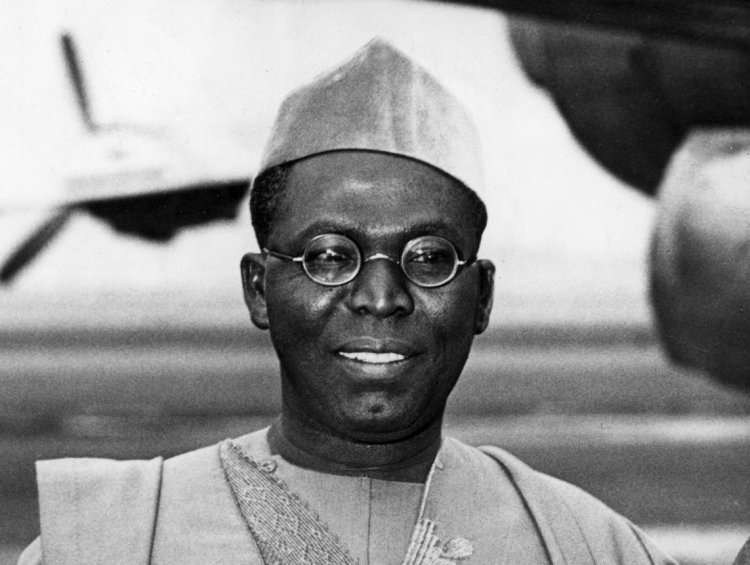
His parents, although illiterate, also played significant roles in shaping his understanding of responsibility and integrity. He described his father as a customary court judge and farmer who was known for his fearlessness and truthfulness, while his mother was a produce buyer who became influential in the community.
Alabi’s recollection offers an important historical perspective on Nigeria’s education system, particularly the transformative potential of policies designed to widen access to schooling. His experience demonstrates that the impact of an education policy can be measured not only by the number of students admitted into schools at the time, but also by the lives and careers those students subsequently build.
More than seven decades after the Western Region introduced its free education programme, stories such as Alabi’s continue to provide context for contemporary debates about access, affordability and the social purpose of public education in Nigeria.
For an 80-year-old who went from a rural childhood in Okeho to a career that included public service and national responsibilities, the memory of that educational opportunity remains personal and consequential.
His story ultimately raises a question that remains relevant to Nigeria’s education system today: when financial barriers are removed and children are given genuine access to quality education, how many lives can be transformed across generations?