FULokoja Professor Says Africa's Underdevelopment Is Driven by Leadership Failures, Not Colonialism Alone
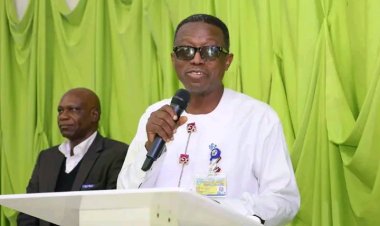
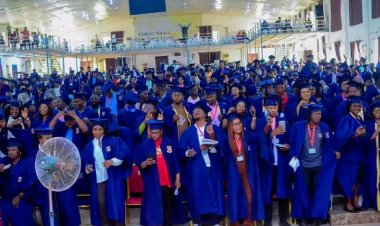
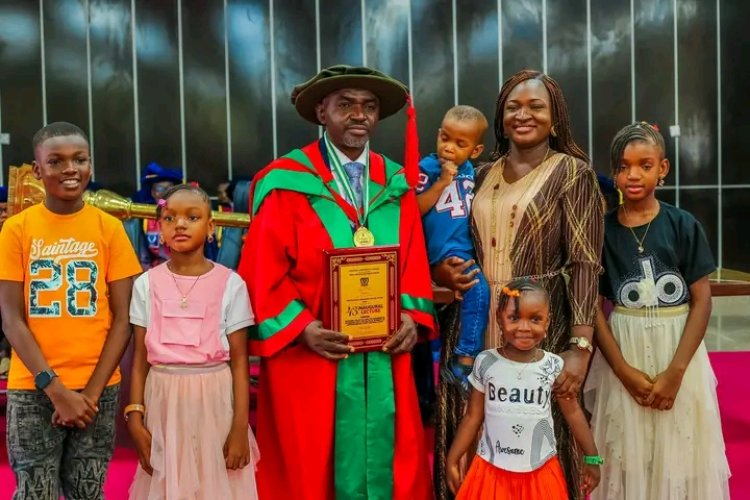
The Federal University Lokoja (FUL) has hosted its 43rd Inaugural Lecture, where Professor Abraham Musa Peter challenged long-held views on Africa's development, arguing that the continent's persistent underdevelopment can no longer be attributed solely to colonialism but also to the actions of post-independence leaders and institutions.
 Philip22
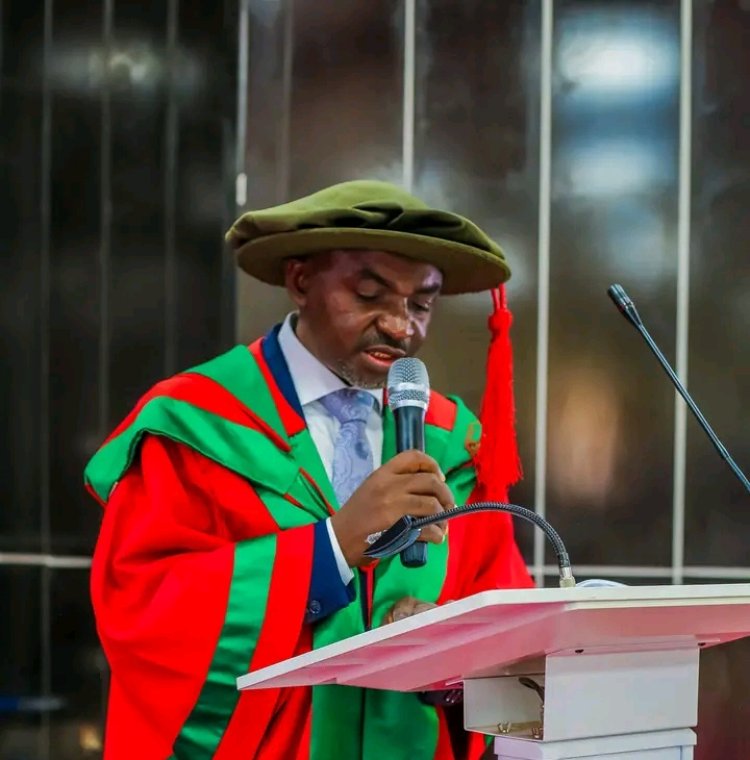
The Federal University Lokoja (FUL) has hosted its 43rd Inaugural Lecture, where Professor Abraham Musa Peter challenged long-held views on Africa's development, arguing that the continent's persistent underdevelopment can no longer be attributed solely to colonialism but also to the actions of post-independence leaders and institutions.
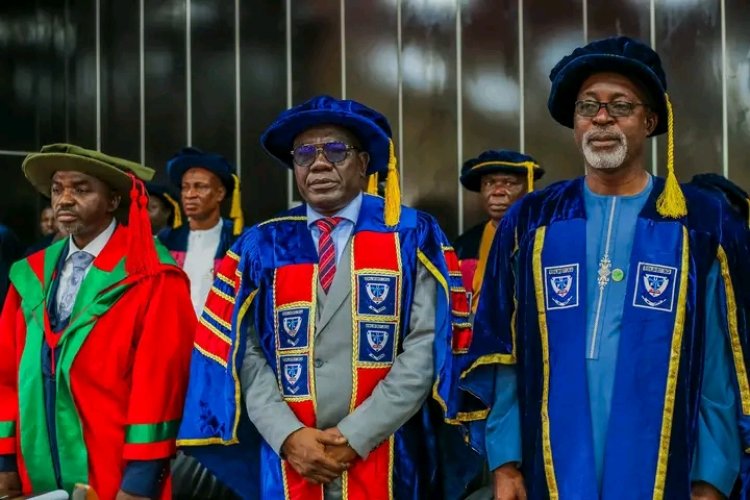
Delivering the lecture titled, "Between the Ritual and the Ingredients: An Inquiry into the Political Economy of Governance in a Post Colonial State," Professor Peter said many African countries have retained the extractive governance structures inherited from colonial administrations, limiting development, social justice, accountability, and human security.
He argued that Africa has increasingly become an active participant in its own underdevelopment through poor leadership, elite domination, weak institutions, corruption, policy inconsistency, and the prioritization of private interests over public welfare.
According to the political economist, while many African countries regularly conduct elections, operate under constitutions, and maintain democratic institutions, these have largely become rituals that fail to deliver the essential ingredients of genuine development. He identified those ingredients as justice, prosperity, accountability, human development, and responsive governance.
Professor Peter cited Nigeria as an example of this contradiction, noting that despite its vast mineral resources, agricultural potential, youthful population, and position as one of Africa's largest economies, millions of citizens continue to grapple with poverty, unemployment, insecurity, inadequate healthcare, educational challenges, and decaying infrastructure.
He maintained that Nigeria's development crisis cannot be fully understood without examining the nature of the post-colonial state, whose institutions were originally designed for control and resource extraction rather than development and public welfare.
According to him, successive political elites have largely preserved and reproduced these structures, resulting in governance systems that often serve elite interests while neglecting the needs of ordinary citizens.
As part of his recommendations, Professor Peter called for comprehensive reforms aimed at transforming the state into a genuinely developmental institution. He advocated stronger institutions, ethical leadership, economic diversification, youth empowerment, democratic deepening, security sector reforms, and increased investment in education, innovation, and civic participation.
He also urged universities to play a more active role in influencing public policy through research, innovation, critical inquiry, and civic education, stressing that scholarship should help shape solutions to societal challenges.
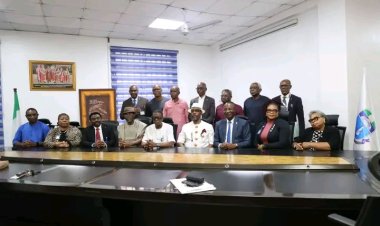
Speaking at the event, the Vice Chancellor of the Federal University Lokoja, Professor Gbenga Solomon Ibileye, echoed the lecture's central message, emphasizing the need for African societies to move beyond symbolic democratic practices and focus on achieving tangible development outcomes.
Drawing on the lecture's "rituals and ingredients" metaphor, Professor Ibileye said countries may possess abundant natural resources and well-established institutions but still fail to achieve meaningful progress if the foundations of good governance and accountability are absent.