FUTES-IYIN Inaugural Lecture Highlights Nigeria’s Untapped Bitumen Potential for Cheaper, Durable Roads
A university don, Engr. Prof. Moses Ogundipe, has urged the Federal Government to prioritise the exploration and refining of Nigeria’s largely untapped natural bitumen resources, noting that their utilisation could reduce road construction costs, improve infrastructure delivery and stimulate economic growth.
 Philip22
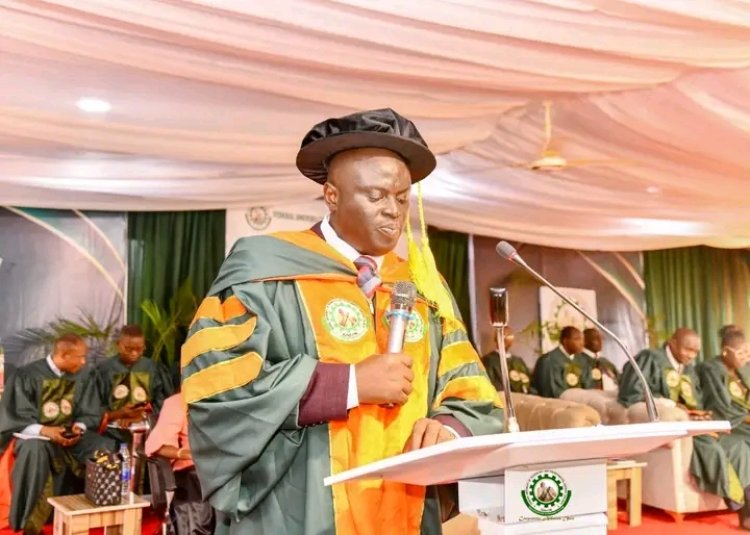
A university don, Engr. Prof. Moses Ogundipe, has urged the Federal Government to prioritise the exploration and refining of Nigeria’s largely untapped natural bitumen resources, noting that their utilisation could reduce road construction costs, improve infrastructure delivery and stimulate economic growth.
Ogundipe made the call while delivering the maiden inaugural lecture of the Federal University of Technology and Environmental Sciences, Iyin-Ekiti (FUTES-IYIN), titled “Paving the Way to Sustainability: Asphalt Innovations for Safe and Durable Road Pavement.”
The professor, whose lecture examined sustainable approaches to road pavement planning, design, construction and maintenance in Nigeria, identified the country's natural bitumen deposits as a strategic resource that could strengthen domestic asphalt production and reduce dependence on external supplies.
He recommended that the government, in collaboration with the private sector, initiate deliberate efforts towards exploring and refining the nation's bitumen resources.
According to him, developing local bitumen production would guarantee a cheaper and more reliable supply of the major binding material used in asphalt concrete, while creating employment opportunities and generating wider economic benefits.
Ogundipe also called for increased investment in sustainable pavement technologies, particularly Stone Mastic Asphalt (SMA), which he said offers greater resistance to rutting, a common form of road pavement failure in Nigeria.
He urged the government, through relevant ministries, departments and agencies, to collaborate with universities and industry stakeholders to review existing road construction specifications and incorporate sustainable materials capable of delivering more durable infrastructure.
The don further advocated the integration of Life Cycle Costing and Life Cycle Assessment into public procurement and tender evaluation processes. He noted that road construction contracts should reward contractors who adopt sustainable local materials and technologies.
He stressed that infrastructure policies should be guided by reliable research and comprehensive data rather than individual opinions. He therefore recommended regular collection and analysis of information on road construction, pavement distress, failures and maintenance.
The professor also called for the establishment of a national pavement test track equipped with Heavy Vehicle Simulators to facilitate accelerated testing of innovative pavement materials and assess their performance under different conditions.
Identifying inadequate research funding and weak collaboration between academia and industry as major obstacles to translating research findings into practical development, Ogundipe urged the government to increase funding for research and development.
He also called for stronger partnerships among universities, professional engineering bodies and industries, as well as the provision of modern facilities and qualified personnel to support effective engineering training in higher institutions.
Earlier, while introducing the guest lecturer, the Vice-Chancellor of FUTES-IYIN, Prof. Gbenga Aribisala, highlighted the importance of inaugural lectures as platforms for advancing scholarship, sharing knowledge and addressing societal challenges.
He noted that universities must go beyond their traditional responsibility of awarding degrees by generating research-driven solutions to national development challenges.
“At FUTES-IYIN, we believe that the relevance of a university is measured not only by the quality of its academic programmes but also by its ability to provide practical solutions to the challenges facing society. This inaugural lecture reflects our commitment to knowledge that can translate into meaningful national development,” Aribisala said.
He added that the institution would continue to encourage research, innovation and collaborations aimed at addressing pressing challenges in infrastructure, technology and environmental sustainability.
The Vice-Chancellor further described the inaugural lecture as an important platform for intellectual engagement, expressing confidence that the ideas and recommendations presented would stimulate further research and inform policy decisions.