
UI DVC Urges Student Innovators to Develop Solutions to Real-World Problems
The Deputy Vice-Chancellor, Research, Innovation and Strategic Partnerships of the University of Ibadan, Professor Simisola O. Akintola, has challenged student innovators to focus on developing solutions to real-life problems while building their ventures on integrity and trust.
 Philip22

The Deputy Vice-Chancellor, Research, Innovation and Strategic Partnerships of the University of Ibadan, Professor Simisola O. Akintola, has challenged student innovators to focus on developing solutions to real-life problems while building their ventures on integrity and trust.
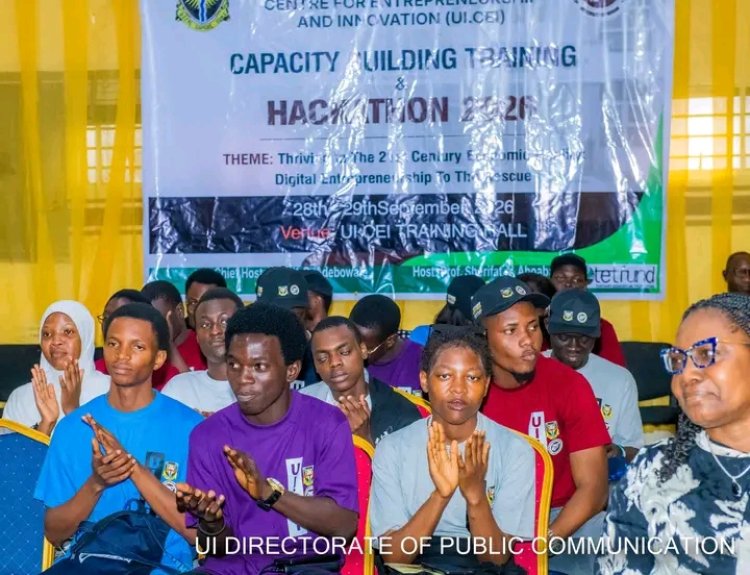
Professor Akintola gave the charge while representing the Vice-Chancellor, Professor Kayode O. Adebowale, at a TETFund Capacity Building Training and Hackathon for Student Innovators organised by the University of Ibadan Centre for Entrepreneurship and Innovation (UI-CEI).
The programme, themed “Thriving in the 21st Century Economic Reality: Digital Entrepreneurship to the Rescue,” was organised to equip students with practical skills in entrepreneurship, innovation and the digital economy.
Professor Akintola described the initiative as an opportunity to demonstrate the potential of the current generation of students. She also commended the Director of UI-CEI, Professor Sherifat A. Aboaba, for her efforts in promoting entrepreneurship and innovation among students.
She said the theme of the programme reflected the economic and employment challenges facing Nigeria and other parts of the world, including the changing nature of work, rising living costs and the diminishing expectation that academic qualifications alone would guarantee employment.
According to her, individuals must increasingly rely on their skills, creativity and ability to create value and develop solutions to existing problems.
The DVC pointed out that today's generation has access to technological resources that were unavailable to previous generations, particularly smartphones and digital platforms that can connect innovators with opportunities, customers and markets around the world.
She urged the participants to take advantage of these technologies to develop products and services capable of addressing genuine needs in society.
Professor Akintola identified three key principles that should guide the innovators: solving real problems, protecting their innovations and maintaining integrity throughout the process of building their ventures.
She explained that successful businesses often originate from practical challenges that require solutions, citing the transformation of banking services through digital financial platforms as an example of how innovation can respond to everyday needs.
The Deputy Vice-Chancellor further advised the student innovators to protect their intellectual property, stressing that codes, brands, designs and data possess significant value.
She encouraged them to understand the importance of copyright, trademarks, patents and confidentiality, while also respecting the intellectual property and confidential information belonging to other individuals and organisations.
On the issue of integrity, Professor Akintola urged the participants to be transparent and truthful in their dealings with themselves, customers and investors. She described trust as an important form of currency in the digital economy.
She reaffirmed the University of Ibadan's commitment to research and innovation capable of producing practical solutions and creating economic opportunities, rather than simply turning out graduates seeking employment.
Professor Akintola assured the participants that her office was prepared to support them during the early stages of developing their ideas. She encouraged them to accept constructive feedback and continue refining their innovations after the conclusion of the hackathon.
The Director of the Centre for Entrepreneurship and Innovation, Professor Sherifat Adeyinka Aboaba, described the programme as a significant milestone for the Centre, saying its mandate was to create an ecosystem that would help students transition from job seekers to job creators.
She disclosed that the capacity-building component of the programme began with training sessions covering digital marketing, app development and strategies for accessing venture funding.
Professor Aboaba revealed that the innovation challenge attracted 56 applications, with 40 applicants progressing through the initial screening stage.

The shortlisted entries comprised:
- 16 GreenTech ideas
- 10 EdTech ideas
- 14 HealthTech ideas
She explained that six teams, with two selected from each of the three thematic areas, were eventually chosen to pitch their innovation ideas during the hackathon.
The teams were assessed by judges, who also provided feedback on their respective ideas and approaches.
Professor Aboaba expressed appreciation to TETFund for funding the capacity-building programme and to the university management for approving the use of part of the training funds to organise the hackathon.
At the conclusion of the pitching session, Enegram emerged as the overall winner, while Easy Attendance came second and REWEC placed third.
Orascope, PharmaXR and CheckIn finished fourth, fifth and sixth respectively.
Cash prizes in different categories were presented to the six finalist teams.

The hackathon gave the participating student innovators an opportunity to test their ideas, receive expert assessment and feedback, and explore practical ways of transforming innovative concepts into viable solutions capable of generating social and economic value.