RSU Champions Urban Greening with Tree-Planting Exercise
RSU Champions Urban Greening with Tree-Planting Exercise
 UmarFarouk123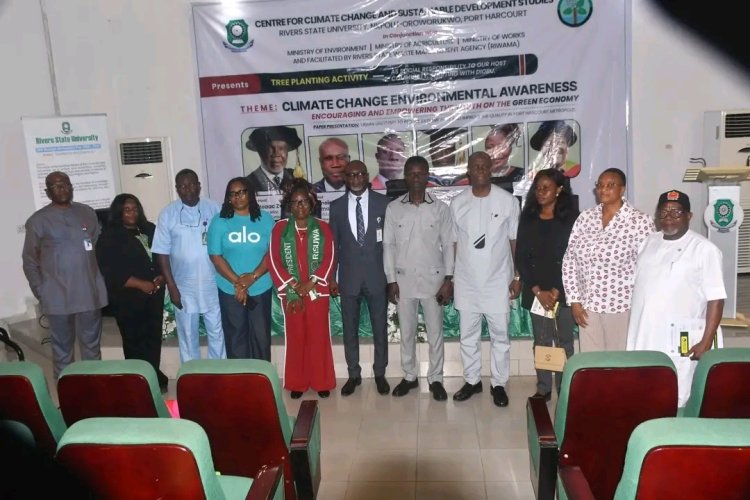
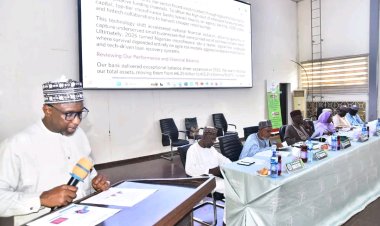
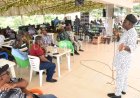
The Rivers State University (RSU), Nkpolu-Oroworukwo, Port Harcourt, on Tuesday, September 29, 2026, reaffirmed its commitment to environmental sustainability as scholars, government officials, environmental experts and other stakeholders converged at the Vice-Chancellor's Conference Hall, Senator Francis Ella Administrative Building, for a public lecture on urban greening.
The event, organised by the Centre for Climate Change and Sustainable Development Studies, Rivers State University, focused on practical strategies for addressing rising temperatures, flooding, deforestation and deteriorating air quality in Port Harcourt and its environs.
The lecture also highlighted the relevance of urban greening to the achievement of the United Nations Sustainable Development Goals (SDGs), particularly SDG 3 (Good Health and Well-being), SDG 11 (Sustainable Cities and Communities), SDG 13 (Climate Action) and SDG 15 (Life on Land).
Declaring the event open, the Vice-Chancellor of the University, Professor Isaac Zeb-Obipi, commended the Centre for organising the programme.
The Vice-Chancellor said the initiative demonstrated the University's commitment to environmental stewardship at a time when communities are confronted with mounting challenges, including deforestation, perennial flooding, air pollution and the impacts of climate change.
According to him, the programme was not merely symbolic but provided practical and measurable approaches to achieving a cleaner, healthier and more sustainable environment in Port Harcourt and Rivers State.
The Vice-Chancellor, who was represented by the Deputy Vice-Chancellor (Administration), Professor Blessing Jaja, assured participants that the University's management, staff and students would continue to provide intellectual leadership and foster community partnerships in addressing environmental and climate-related challenges.
In his welcome address, the Director of the Centre for Climate Change and Sustainable Development Studies, Professor Sodienye A. Abere, welcomed participants to what he described as the Centre's maiden tree-planting initiative within host communities and beyond.
Professor Abere recalled that the Centre was established on January 18, 2023, with a mandate that combines academic learning with practical action on climate change and sustainability.
He described the initiative as a starting point for wider environmental outreach across Rivers State and beyond, stressing the importance of collaboration among the university, government institutions, communities and other stakeholders.
He particularly acknowledged the Ministry of Urban Development and Planning and other partners for their support, noting that the tree-planting campaign would prioritise economic and environmentally beneficial trees based on the needs of host communities.
The high point of the event was a paper presentation by Professor K. E. Opara, titled: "Urban Greening to Reduce Extreme Heat and Improve Air Quality in Port Harcourt Metropolis: The Role of Stakeholders."
In a detailed presentation, Professor Opara raised concerns over the rapid loss of tree cover in Port Harcourt as a result of unplanned urbanisation, infrastructural expansion and inadequate land-use planning.
He noted that the changing urban landscape was contributing to increased heat, poor air circulation and environmental health risks, with air pollution arising from sources including vehicular emissions, industrial activities and gas flaring.
Professor Opara argued that urban greening through strategic tree planting, the creation of green belts, rooftop gardens and the preservation of wetlands could provide practical nature-based solutions for reducing urban heat and improving air quality.
He explained that vegetation can contribute to urban cooling while also supporting biodiversity, reducing environmental degradation and improving the quality of life of residents.
His recommendations aligned closely with SDG 11, which promotes inclusive, safe, resilient and sustainable cities and communities, as well as SDG 13, which calls for urgent action to combat climate change and its impacts.
Professor Opara called on government institutions, the private sector, traditional institutions, youth organisations, civil society groups and residents to take ownership of the urban greening agenda.
He recommended mass tree planting along streets, around schools and markets and in residential communities; stronger enforcement of environmental planning laws; integration of green infrastructure into urban development plans; and sustained public awareness of the economic, environmental and health benefits of a green economy.
The lecture also featured goodwill messages from government ministries and agencies, with representatives pledging support for the University's environmental initiative.
The Permanent Secretary, Rivers State Ministry of Environment, Tamoialadieokuma Ishmael (Esq.), represented by Dr. Nimi Elele, advocated increased tree planting across the state to provide healthier, cleaner and more comfortable environments for residents.
She maintained that a greener Port Harcourt was achievable if tree planting became a deliberate government policy as well as a sustained community culture.
The initiative, she noted, would also contribute to healthier communities, thereby supporting the objectives of SDG 3 on Good Health and Well-being.
Similarly, the Permanent Secretary, Rivers State Ministry of Agriculture, represented by the Director, Forestry Department, Mrs. Mercy Iboroma, spoke on youth engagement and empowerment.
She encouraged young people to embrace agriculture and opportunities within the green economy, noting that sustainable agriculture could provide employment, entrepreneurship and other economic opportunities for youths.
She expressed the ministry's readiness to collaborate with the University and host communities on tree planting and other initiatives aimed at promoting a viable green economy.
The Director of the Rivers State Waste Management Agency (RIWAMA), Dr. Ibimina Wokoma, also expressed the agency's readiness to partner with the University and other stakeholders in addressing environmental challenges.
Dr. Wokoma pledged the agency's support in creating an enabling environment for tree planting and improving waste management, noting that both measures are important components of a sustainable urban environment.
Effective waste management and sustainable consumption and production are also central to the broader sustainability agenda, particularly SDG 11 and SDG 12 (Responsible Consumption and Production).
Speaking on behalf of women in the University community, the President of the Rivers State University Women Association (RISUWA) and wife of the Vice-Chancellor, Dr. Victoria Zeb-Obipi, thanked the organisers for convening the programme.
She underscored the importance of tree planting and environmental sustainability in building a green economy, stressing that women have an important role to play in nurturing, protecting and sustaining the environment for future generations.
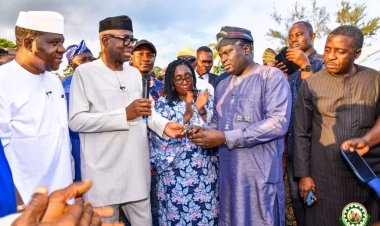
The lecture was followed by a tree-planting exercise led by the Vice-Chancellor's representative, the Permanent Secretary of the Ministry of Environment, the Managing Director of RIWAMA and the President of RISUWA.