WACA Holds ORCID Workshop at Rivers State University to Boost Research Visibility and Impact
WACA Holds ORCID Workshop at Rivers State University to Boost Research Visibility and Impact
 UmarFarouk123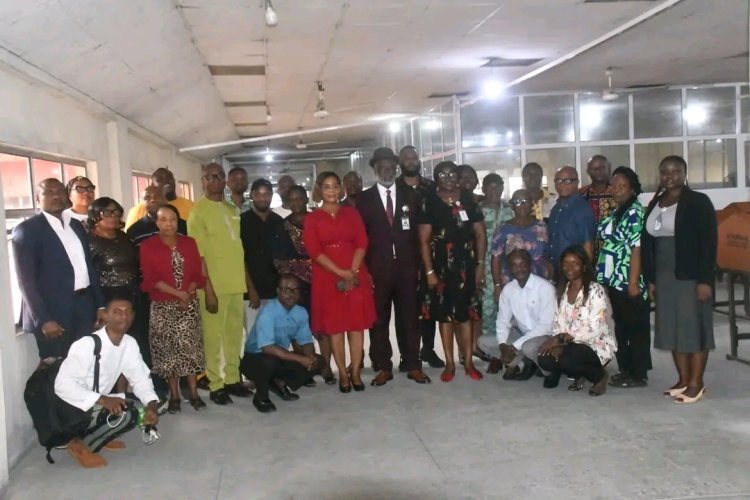
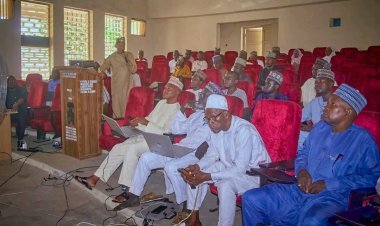
The West and Central Africa (WACA) Regional Network, in collaboration with the Central Library of Rivers State University (RSU), has organised a workshop aimed at strengthening research visibility, attribution and global recognition for African researchers.
The workshop, with the themed “How an ORCID Improves Research Visibility and Attribution for African Researchers,” held on Tuesday, September 1, 2026, at the Central Library, Rivers State University.
Declaring the workshop open, the Vice-Chancellor of RSU, Prof. Isaac Zeb-Obipi, commended the University Librarian, Dr Juliet C. Alex-Nmecha, and her team for organising the programme.
The Vice-Chancellor noted that initiatives of this nature were important in equipping members of the University community with contemporary tools and knowledge required to remain relevant in an increasingly digital and competitive academic environment.
He urged participants to pay close attention to the presentations and practical sessions, stressing the importance of using available digital platforms to improve the visibility, accessibility and impact of their research outputs.
Prof. Zeb-Obipi further emphasised the University's commitment to promoting quality research and ensuring that the intellectual contributions of its scholars receive local and international recognition. He encouraged participants to apply the knowledge gained from the workshop in their research and academic engagements.
Earlier in her welcome remarks, the University Librarian, Dr Juliet C. Alex-Nmecha, explained that the workshop was organised to help researchers understand the importance of establishing and maintaining a strong digital research identity.
She noted that research goes beyond publishing academic works, stressing that such works must also be discoverable and properly attributed in the digital space. According to her, increased research visibility enhances not only the recognition of individual researchers but also the visibility and reputation of their institutions.
Dr Alex-Nmecha further explained that greater research visibility can strengthen university rankings, institutional credibility, collaboration, citation, networking and other opportunities for academic advancement.
She described ORCID (Open Researcher and Contributor ID) as a unique and persistent digital identifier that distinguishes researchers and connects them with their scholarly contributions. According to her, ORCID helps establish a reliable academic identity and reduces challenges associated with similar names, name changes and inaccurate attribution of publications.
The lead facilitator and speaker, Dr Sotonye Ndem-Orji of Donald E. U. Ekong Library, University of Port Harcourt, took participants through the relevance and practical application of ORCID in contemporary research.
Dr Ndem-Orji highlighted the growing importance of digital identity in academic environments, particularly as researchers publish across different journals, databases, platforms and institutional repositories. She demonstrated how researchers can create and maintain their ORCID profiles and use the identifier to establish a consistent link between their identities and scholarly outputs.
She encouraged participants to view ORCID not merely as another online registration requirement but as an important tool for building a credible and visible research profile. She explained that a persistent researcher identifier makes it easier for publishers, institutions, funding bodies, collaborators and other members of the academic community to accurately identify researchers and associate them with their scholarly contributions.
The workshop also featured practical and interactive sessions, during which participants sought clarification on issues relating to research identity, publication attribution, visibility and the effective management of scholarly profiles.