FUNAAB Professor Urges NAFDAC, SON to Strengthen Food Quality Enforcement
A Professor of Food Quality Control and Assurance at the Federal University of Agriculture, Abeokuta (FUNAAB), Prof. Mojisola Adegunwa, has called on the National Agency for Food and Drug Administration and Control (NAFDAC) and the Standards Organisation of Nigeria (SON) to strengthen the enforcement of food quality standards through rigorous monitoring, effective regulation and strict compliance mechanisms to protect public health and address malnutrition.
 Philip22
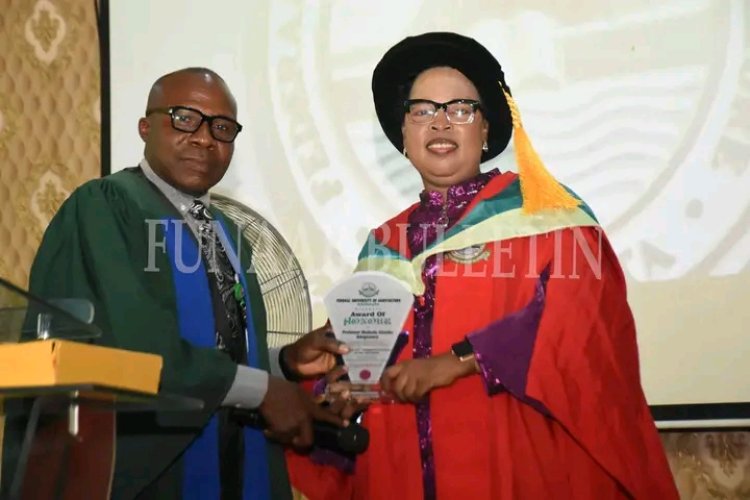
A Professor of Food Quality Control and Assurance at the Federal University of Agriculture, Abeokuta (FUNAAB), Prof. Mojisola Adegunwa, has called on the National Agency for Food and Drug Administration and Control (NAFDAC) and the Standards Organisation of Nigeria (SON) to strengthen the enforcement of food quality standards through rigorous monitoring, effective regulation and strict compliance mechanisms to protect public health and address malnutrition.
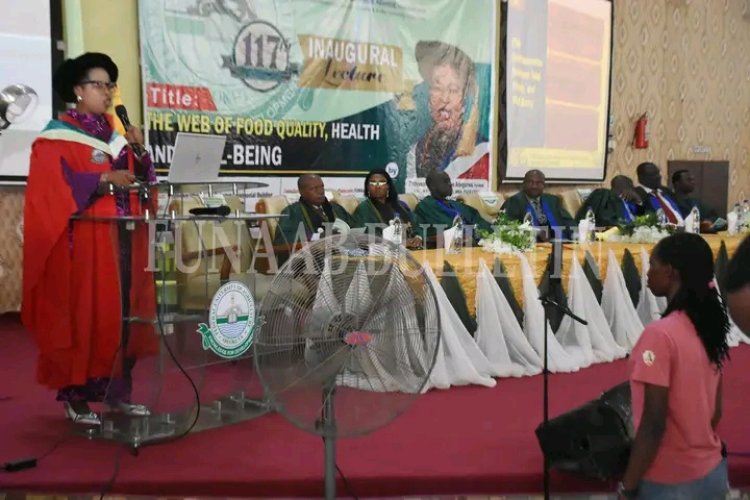
She also urged governments, research institutions and private-sector stakeholders to intensify local food fortification, promote the use of biofortified crops and scientifically validate indigenous food processing methods to improve nutrition, strengthen food security and advance sustainable development in Nigeria.
Prof. Adegunwa, a distinguished scholar in the Department of Hospitality and Tourism, College of Food Science and Human Ecology (COLFHEC), made these recommendations on October 28, 2026, while delivering FUNAAB's 117th Inaugural Lecture, titled “The Web of Food Quality, Health and Well-Being,” at the Prof. Oluwafemi Olaiya Ceremonial Building.
She explained that food quality goes beyond what consumers eat, covering every stage of the food system, from agricultural production and processing to preservation, storage, transportation, marketing, preparation and consumption.
According to her, weaknesses at any of these stages could compromise food safety and nutritional value, with serious consequences for individual health, community well-being and national development.
The Professor identified the development of nutritionally enriched foods from locally available raw materials as an important opportunity to combat malnutrition and reduce food insecurity. She stressed that scientific principles must guide food processing and production to guarantee safety and nutritional effectiveness.
On food safety, she emphasised the need for effective training and regular monitoring of food handlers to minimise contamination risks and ensure compliance with established standards, including Hazard Analysis and Critical Control Points (HACCP).
She added that capacity-building programmes for small- and medium-scale food operators would improve hygiene, strengthen consumer confidence and reduce the incidence of foodborne illnesses.
Prof. Adegunwa also advocated increased use of indigenous crops and locally sourced ingredients in developing functional foods. She noted that their beneficial phytochemicals possess antioxidant and antimicrobial properties that could support human health when appropriately incorporated into scientifically developed food products.
She called for the integration of traditional food processing techniques, such as fermentation and dehydration, with modern scientific innovations to preserve nutrients and improve food quality.
Explaining the benefits of fermentation, she said the process could reduce anti-nutritional factors such as phytates and tannins, thereby improving the bioavailability of essential minerals.

The Inaugural Lecturer further urged governments and private-sector stakeholders to expand local food fortification initiatives and improve farmers' access to biofortified crops, including iron-rich beans and vitamin A maize, to address micronutrient deficiencies and improve public health.
She stressed that research institutions should prioritise the scientific validation of indigenous food processing practices to establish their nutritional benefits, improve safety and preserve valuable traditional knowledge.
Prof. Adegunwa also called for sustained public sensitisation and nutrition education programmes targeting food handlers, processors, households and communities. She noted that improved nutrition literacy and hygienic practices were essential to encouraging healthier food choices from an early age.
Earlier, the Vice-Chancellor, Prof. Babatunde Kehinde, represented by the Deputy Vice-Chancellor (Academic), Prof. Olusegun Idowu, highlighted the importance of research in assessing and improving food quality through appropriate processing, fortification and enrichment, particularly using roots, tubers and underutilised crops.
He commended Prof. Adegunwa for her expertise and advocacy in promoting the nutritional enhancement of traditional foods in Nigeria.

The lecture attracted several dignitaries, including the immediate past Vice-Chancellor of FUNAAB, Prof. Felix Kolawole Salako; Executive Director of the Nigerian Stored Products Research Institute (NSPRI), Prof. Lateef Sanni; and Global Alumni President, Otunba Bolaji Gbadamosi.
Also in attendance were members of the University's Governing Council, former Principal Officers and other eminent personalities from within and outside the University.