Federal University Lokoja Signs Two MoUs with Kogi State College of Education, Ankpa
The Federal University Lokoja (FUL) has signed two Memoranda of Understanding (MoUs) with Kogi State College of Education, Ankpa (KSCOEA), to establish a study centre for converting eligible Higher National Diploma (HND), Pass and Third Class qualifications into corresponding undergraduate degrees and provide a framework for academic affiliation in specified degree programmes.
 Philip22
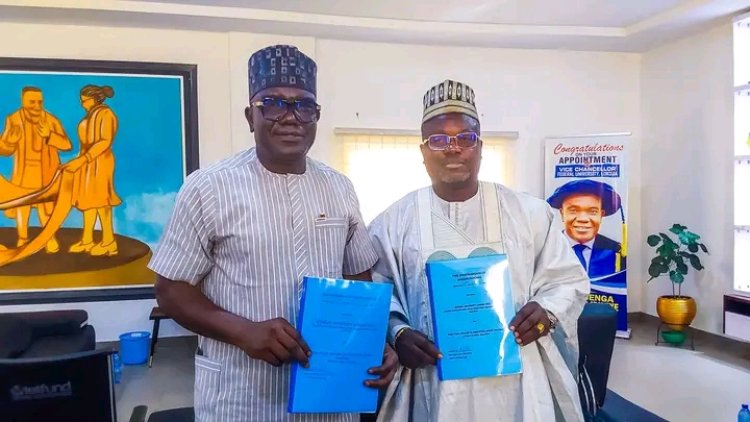
The Federal University Lokoja (FUL) has signed two Memoranda of Understanding (MoUs) with Kogi State College of Education, Ankpa (KSCOEA), to establish a study centre for converting eligible Higher National Diploma (HND), Pass and Third Class qualifications into corresponding undergraduate degrees and provide a framework for academic affiliation in specified degree programmes.

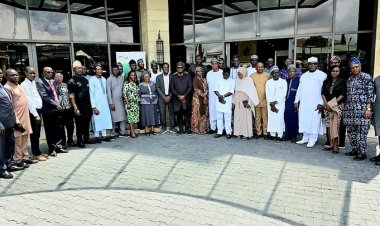
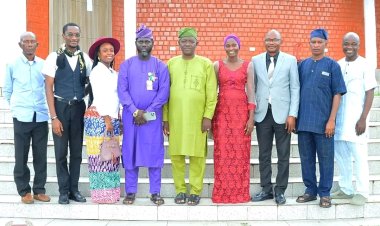
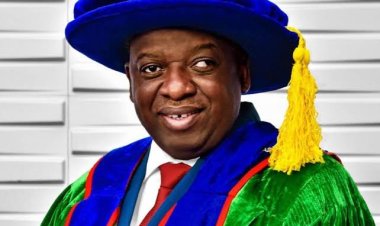
The agreements were signed at the university’s Felele Campus in Lokoja, with the Vice-Chancellor, Professor Gbenga Solomon Ibileye, describing the arrangements as consistent with FUL’s vision of extending its academic expertise to institutions within its catchment area.
Both MoUs are subject to the necessary regulatory authorisation from the National Universities Commission (NUC).
Speaking at the ceremony, Professor Ibileye said the proposed collaboration aligned with his vision for the university. He also commended the Provost of KSCOEA, Dr Paul Femi Fashagba, for his commitment to the process.
“When the Provost mentioned the possibility of having a partnership with us, I did not hesitate to say that what you were asking aligned with my vision for Federal University Lokoja. Indeed, it should have been the University asking you for this partnership,” he said.
The Vice-Chancellor recalled that discussions began shortly after his appointment and that the university conducted preliminary assessments before finalising the agreements.
He explained that the university insisted on completing the necessary procedures and properly documenting the terms to prevent avoidable disputes during implementation.

“Institutions are governed by regulations and processes. If institutions do not follow those regulations and requirements faithfully, today's smiles and laughter may degenerate into arguments and contention,” Professor Ibileye said.
He added that the agreements would provide a framework for resolving disagreements amicably and sustaining a productive relationship between the two institutions.
The Vice-Chancellor assured the college that FUL’s academic standards and quality assurance mechanisms would govern the programmes operated under the arrangements.
“The quality of the degrees that we offer here on our main campus will be the same quality of degrees offered there,” he said.
Professor Ibileye further noted that partnering with a university located close to the college would facilitate coordination in teaching, examinations, moderation and other academic activities.
“It is better for Federal University Lokoja to be the parent institution for your College rather than for you to outsource a university far away,” he said, adding that proximity would make it easier for both institutions to address issues that might arise during implementation.
Earlier, the Provost of KSCOEA, Dr Paul Femi Fashagba, described the signing as a historic achievement for the college and expressed appreciation to the Vice-Chancellor and the university management for accepting the proposal.

He recalled that shortly after Professor Ibileye’s appointment, he approached the Vice-Chancellor to discuss the possibility of establishing a mutually beneficial relationship between the institutions.
Dr Fashagba said the university subsequently directed its officials to engage with the college, assess its capacity and identify areas for collaboration.
Explaining the arrangements, the Provost said the partnership covered academic affiliation and the establishment of a study centre through which selected degree programmes would be made available for the conversion of diplomas and other eligible qualifications.
He added that the university assessed the college and found it suitable for the partnership, after which both institutions examined potential areas of collaboration and documented their agreements.

The report provided ends before the details of the study centre arrangement are completed.