KWASU Professor Advocates Deliberate Investment in Women Farmers for Agricultural Transformation
KWASU Professor Advocates Deliberate Investment in Women Farmers for Agricultural Transformation
 UmarFarouk123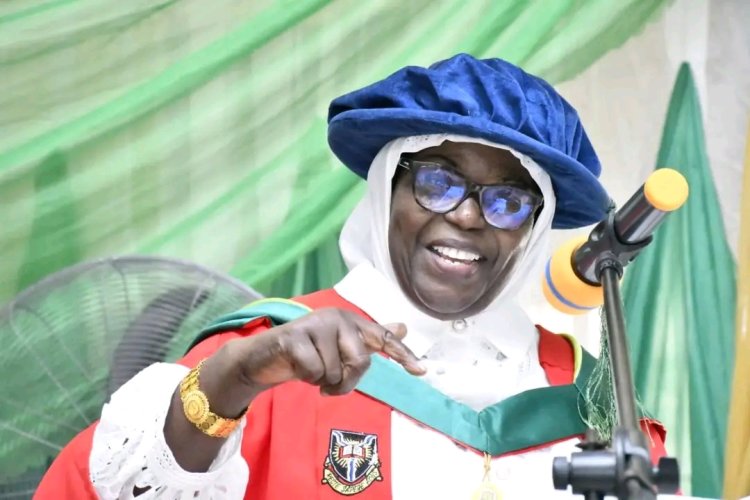
A Professor of Agricultural Economics and Extension Services at Kwara State University, KWASU, Malete, Prof. Taibat Moji Yusuf has called for deliberate and sustained investment in women farmers as a critical requirement for achieving agricultural transformation and sustainable food security in Nigeria.
Professor Yusuf made the call on Wednesday, September 2, 2026, while delivering the University's 23rd Inaugural Lecture at the Mini Convocation Arena of the University in Malete titled “Empowering Women Farmers in Nigeria: Closing the Gender Gap for Agricultural Transformation and Food Security.”
The Professor of Agricultural Economics observed that women make significant contributions to agricultural production, processing and marketing across Nigeria but continue to face persistent barriers in accessing land, credit, agricultural inputs, modern technology and extension services. These inequalities, she noted, have continued to limit agricultural productivity, household welfare, and national food security.
According to her, the challenges confronting women farmers are rooted in sociocultural barriers, economic exclusion, inadequate infrastructure, time poverty, limited access to education and training, as well as weak implementation of gender-responsive agricultural policies. She therefore advocated stronger protection of women's land rights, the provision of gender-inclusive agricultural financing, and reforms in agricultural extension services.
She also called for greater investment in rural infrastructure and labour-saving technologies, alongside increased support for agricultural training, cooperatives, income diversification, agro-processing, contract farming, and improved post-harvest facilities.
The 23rd inaugural lecturer further stressed the need for the systematic mainstreaming of gender considerations in all agricultural policies and programmes, maintaining that Nigeria's agricultural transformation goals would remain incomplete without addressing the structural barriers confronting women farmers.
She added that empowering women farmers would increase agricultural productivity, reduce poverty, improve household welfare, and contribute significantly to the achievement of sustainable food security in the country.