Niger Assembly Moves to Establish Education Trust Fund as IBBUL Vice-Chancellor Seeks Intervention to End ASUU Strike
Niger Assembly Moves to Establish Education Trust Fund as IBBUL Vice-Chancellor Seeks Intervention to End ASUU Strike
 UmarFarouk123
The Niger State House of Assembly has commenced moves to establish the Niger State Skills and Education Development Trust Fund as a dedicated intervention mechanism to address persistent funding challenges confronting educational institutions across the state, particularly tertiary institutions.
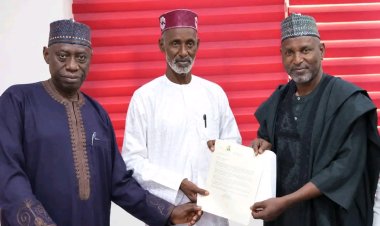
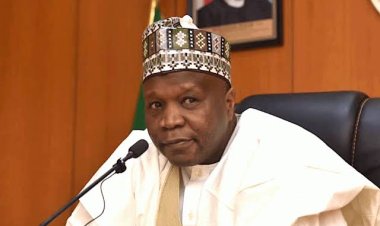
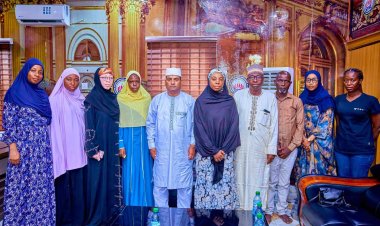
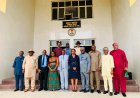
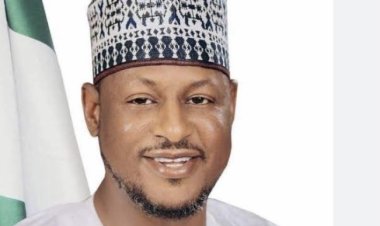
Chairman of the House Committee on Education and member representing Tafa Constituency, Honourable Mohammed Sani Idris, disclosed this during the Committee’s oversight visit to Ibrahim Badamasi Babangida University, Lapai, IBBUL.
He said the proposed Trust Fund was designed to provide a sustainable funding mechanism for the education sector and reduce the recurring dependence of tertiary institutions on annual government budgetary allocations.
According to him, the bill establishing the fund had already passed its first reading on the floor of the House before the legislative recess, following consultations with the state government and a commitment from the Executive Governor. He noted that the Committee intended to make the initiative one of the major legacies of the 10th Assembly.
The proposed fund, he explained, would receive dedicated contributions from specified inflows accruing to the state, as well as an agreed percentage from contracts awarded by the state and local governments.
The lawmaker said the initiative was partly modelled on federal interventions such as the Tertiary Education Trust Fund, TETFund, with the objective of providing educational institutions with additional resources to address urgent needs without having to depend entirely on budgetary releases.
Honourable Idris also disclosed that the committee was reviewing the existing funding arrangement for tertiary institutions, particularly what he described as the practice of “enveloping” budgetary allocations.
He appealed to the State Government to improve the implementation of appropriated funds for tertiary institutions, especially during the final quarter of the financial year, stating that the realisation of the “New Niger” development agenda would depend largely on the state’s ability to support institutions responsible for producing skilled manpower.
Earlier, the Vice-Chancellor of IBBUL, Professor Mohammed Hadi Sulaiman, highlighted several critical challenges confronting the institution and appealed to the lawmakers to draw the attention of the State Government to the University’s urgent needs.
The Vice-Chancellor identified the Central Payment System, CPS, as a major constraint, saying it has affected the University’s ability to independently recruit and replace staff whenever vacancies arise.
Professor Sulaiman appealed to the lawmakers to present the University’s case to the State Government, particularly in the areas of funding, staff welfare, student accommodation and capital development. He described IBBUL as the pioneer university in Niger State and one of the state’s largest tertiary institutions in terms of student and staff population, stressing that its size and responsibilities required corresponding government support.
He also appealed to the House Committee on Education to intervene in the ongoing dispute between ASUU and the Niger State Government, noting that the prolonged strike had disrupted academic activities and delayed students’ examinations.
The Vice-Chancellor said the University Management had recently engaged ASUU to explore possible ways of resolving the impasse, and urged all parties to make the necessary concessions and embrace dialogue. He expressed hope that sustained dialogue would lead to a resolution and enable students to return to the classroom.
In his vote of thanks, the Registrar, Alhaji Idris Saleh Kusherki, commended the Committee for the oversight visit and for listening to the concerns of the University. He described the visit as an important opportunity for engagement and expressed appreciation for the proposed Trust Fund, noting that institutions such as IBBUL require predictable and adequate funding to plan effectively, expand infrastructure, and improve the quality of teaching.