
OAU Professor Ayotunde Titilayo Urges Action Against Harmful Practices Affecting Women
A professor of Demography and Social Statistics at Obafemi Awolowo University (OAU), Ile-Ife, Ayotunde Titilayo, has called for an end to harmful patriarchal practices that threaten the safety, education and empowerment of women and girls in Nigeria.
 judithhh
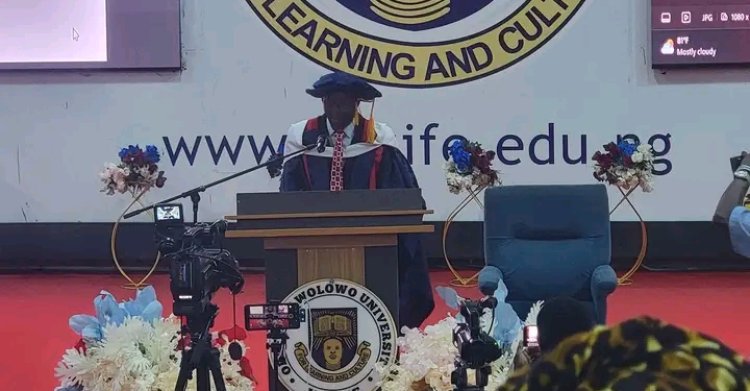
Obafemi Awolowo University professor, Ayotunde Titilayo, urges action against harmful patriarchal practices, child marriage and domestic violence to protect women and girls.
A professor of Demography and Social Statistics at Obafemi Awolowo University (OAU), Ile-Ife, Ayotunde Titilayo, has called for the elimination of harmful patriarchal practices that threaten women’s safety and limit their educational, economic and leadership opportunities.
Titilayo made the call while delivering his inaugural lecture, titled “Reordering Patriarchal Model: That Female Population May Live Safe and Live Well,” at Oduduwa Hall, OAU.
He urged governments, traditional and religious institutions, universities and communities to move beyond declarations on gender equality and adopt practical measures to protect women and girls.
The professor identified discriminatory cultural norms and entrenched gender expectations as barriers to women’s wellbeing and participation in decision-making.
He called for increased investment in girls’ education, expanded economic opportunities for women and greater female representation in political parties, legislative bodies and government cabinets.
According to him, women’s participation in leadership is necessary to ensure that public policies reflect their experiences and needs.

Titilayo also advocated stronger legal protections and effective action against domestic violence, sexual harassment and child marriage, stressing that protective laws must be consistently implemented to give victims meaningful access to justice.
He challenged cultural and religious institutions to review practices that reinforce discrimination and promote values that respect the rights and dignity of both men and women.
Discussing shared parental responsibilities, the professor cited paternity leave as an example of how traditional gender expectations could be reconsidered to support family welfare.
He said fathers’ involvement in caring for newborns and supporting nursing mothers could help reduce the unequal burden of childcare and domestic responsibilities placed on women.
Titilayo identified education, economic opportunity and empowerment as central to improving women’s welfare and advancing the United Nations Sustainable Development Goals.
He also called for long-term research tracking girls from birth into adulthood to better understand how discriminatory practices affect their lives. Other areas requiring study, he said, include men’s roles in promoting gender equality and the influence of music, films and social media on attitudes towards women.
The professor highlighted female genital cutting, child marriage, early childbearing, domestic violence and discriminatory widowhood practices among the challenges affecting women at different stages of life.
He argued that harmful practices should not be regarded as unchangeable simply because they have cultural roots.

“What is built by human hands can be rebuilt by human hands,” he said.
Drawing on the biblical account of the daughters of Zelophehad, who challenged prevailing inheritance practices, Titilayo urged men to become active partners in protecting women’s rights. He also encouraged women to challenge practices that sustain their marginalisation.
He called on universities, policymakers and traditional institutions to translate research findings into practical interventions, enforceable laws and adequately funded policies.
The lecture attracted academics, community leaders and other guests, including delegations representing the Ogunsua of Modakeke and the Alayegun of Odeomu.