Professor Achimugu Delivers 30th Inaugural Lecture of Prince Abubakar Audu University, Calls for Improved Teacher Welfare
Professor Achimugu Delivers 30th Inaugural Lecture of Prince Abubakar Audu University, Calls for Improved Teacher Welfare
 UmarFarouk123
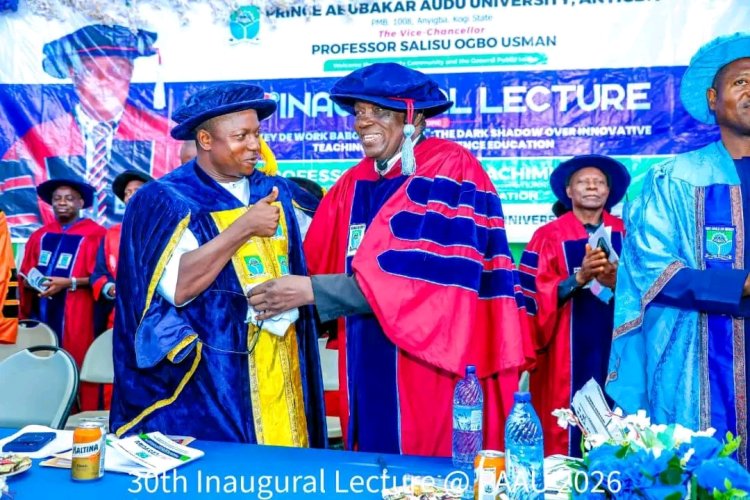
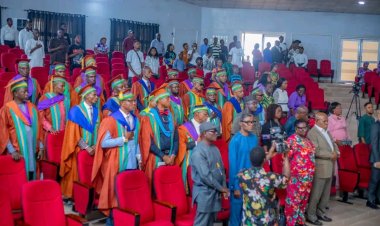
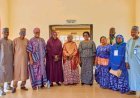
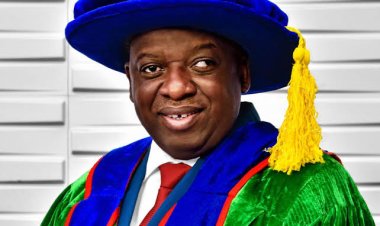
Professor of Science Education and Dean of the Faculty of Education, Prof. Lawrence Achimugu, has called for improved teacher welfare, adequate funding of education and effective implementation of innovative teaching methods to strengthen science education in Nigeria.
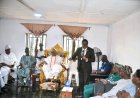
Prof. Achimugu made the call while delivering the 30th Inaugural Lecture of Prince Abubakar Audu University, Anyigba, on Tuesday, October 20, 2026, on the topic "Monkey De Work, Baboon De Chop: The Dark Shadow over Innovative Teaching Methods in Science Education."
The Inaugural Lecturer explained that science education plays a significant role in developing knowledge, skills and competencies required for problem-solving, innovation, critical thinking and national development.
He noted that effective science teaching should expose learners to scientific products, processes and attitudes while equipping them with ability to investigate problems, ask questions, conduct experiments and apply knowledge to practical situations.
Prof. Achimugu explained that innovative teaching methods are modern, creative and learner-centred approaches that move beyond traditional teacher-centred instruction to promote active participation, collaboration, creativity and real-world problem-solving.
He identified emerging approaches to include inquiry-based learning, problem-based learning, project-based learning, STEM, STEAM, digital and virtual laboratories, AI-supported learning, flipped classrooms, blended learning and enriched lecture-teaching method.
He observed that despite recognised benefits, implementation in developing countries including Nigeria remains limited by several challenges.
Explaining the title, Prof. Achimugu stated that the expression "Monkey De Work, Baboon De Chop" reflects a situation where those who make greatest effort do not receive commensurate rewards. He said teachers are often expected to adopt innovative methods while operating under inadequate remuneration, limited resources, insufficient institutional support and poor recognition, which weakens motivation and undermines effective implementation.
On major obstacles, he identified inadequate funding, poor infrastructure, insufficient instructional materials, overcrowded classrooms, inadequate teacher training and weak implementation of educational policies.
He noted that inadequate funding limits availability of functional science laboratories, equipment and digital facilities, while unreliable electricity, internet connectivity and computers in many schools, particularly rural areas, forces teachers to rely on traditional lecture methods.
He also cited high teacher-student ratio, inadequate in-service training and limited awareness and underutilisation of recommended innovative methods among science teachers.
In his recommendations, Prof. Achimugu called for enhanced salaries and incentives for teachers, advocating a "Living Salary Scale" and improved welfare provisions. He recommended that Federal Government work towards implementing UN budgetary allocation recommendations of 26 per cent of annual budget and 15 per cent of GDP for education.
He urged declaration of a state of emergency on teachers' remuneration and welfare, a comprehensive welfare package including leave allowance, furniture allowance, vehicle and housing loans, and reintroduction of science allowance.
He also recommended adoption of simple, student-centred approaches including enriched lecture method, and reintroduction of compulsory Postgraduate Diploma in Education (PGDE) as minimum teaching qualification for university lecturers.
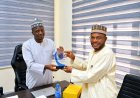
Earlier, Vice-Chancellor, Prof. Salisu Ogbo Usman, described the lecture as timely and significant, noting that science education is central to a society's ability to develop, innovate and compete in a knowledge-driven world.
The Vice-Chancellor congratulated Prof. Achimugu on the milestone and commended his contributions to teaching, research, mentorship and educational leadership.