Former NUC Boss Prof. Rasheed Re-echoes Chinua Achebe’s Legacy at ESAN Diamond Jubilee in ABU
Former NUC Boss Prof. Rasheed Re-echoes Chinua Achebe’s Legacy at ESAN Diamond Jubilee in ABU
 UmarFarouk123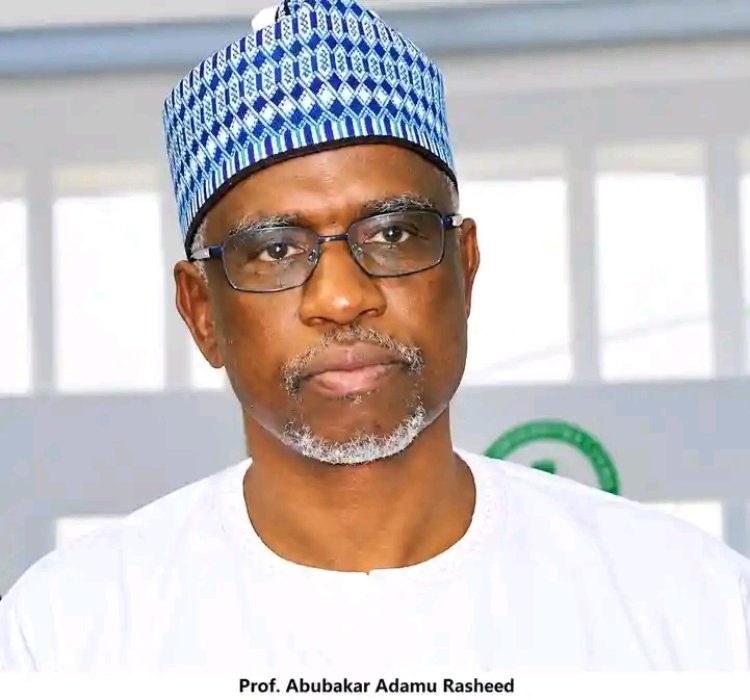
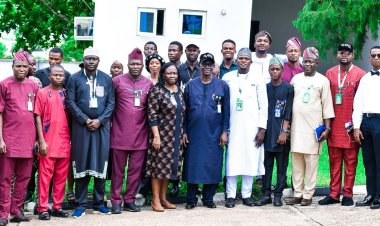
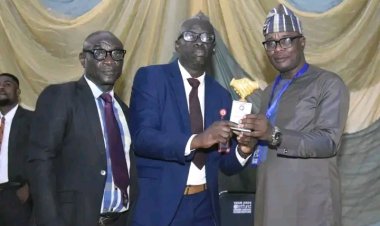
Former Executive Secretary of the National Universities Commission, NUC, Prof. Abubakar Adamu Rasheed, has re-echoed the literary contributions of Chinua Achebe at the 41st Annual Conference and Diamond Jubilee of the English Scholars Association of Nigeria, ESAN, held at Ahmadu Bello University, ABU, Zaria.
Prof. Rasheed, who is also a former Vice-Chancellor of Bayero University, Kano, delivered the keynote address at the event.
Describing Achebe as the "father of modern African literature," Prof. Rasheed said the novelist’s groundbreaking works redefined how Africa is portrayed in world literature.
According to him, Achebe’s achievements went beyond writing novels, as he helped alter the terms upon which African experience entered world literature.
"One of the great achievements of modern African literature was to recover the authority of Africans to represent African experience. To narrate oneself can become an act of intellectual recovery," Prof. Rasheed emphasised.
He added that literature teaches intellectuals to resist what Chimamanda Ngozi Adichie described as "the danger of a single story."
"No individual is exhausted by one description, and no community can be adequately represented by one narrative," he stressed.
"If language gives identity expression, literature gives it memory and imaginative form. Human beings have always lived by stories. We tell stories about where we came from, what we have suffered, what we value and what we hope to become," he said.
Prof. Rasheed noted that the conference theme, _'Rethinking Identity in Language, Literary and Communication Studies in the Digital Age'_, raised questions that go beyond technology.
His central argument was that the digital transformation of society should not be regarded merely as a technological development to which the humanities must adjust.
"The digital transformation of society is itself a profoundly humanistic problem because it is changing the ways in which human beings communicate, construct identity, produce knowledge, tell stories and understand themselves," he said.
Speaking on the Diamond Jubilee, Prof. Rasheed said the milestone provides an opportunity to celebrate sixty years of organised English scholarship in Nigeria, dating back to the Nigeria English Studies Association's founding in 1966.
He recalled that pioneers of English Studies in Nigeria confronted challenges of colonial inheritance, African literary identity, linguistic plurality, curriculum, and nation-building. Over the decades, he added, Nigerian scholars have contributed significantly to African literature, Nigerian English, stylistics, sociolinguistics, pragmatics, discourse analysis, and language education.
However, he cautioned that the jubilee should not be reduced to nostalgia.
"The proper way to honour an intellectual inheritance is not to preserve it unchanged, but to extend it intelligently. They confronted their historical moment. We must confront ours," Prof. Rasheed said.
He challenged the present generation of scholars to address artificial intelligence, digital authorship, algorithmic communication, misinformation, changing reading cultures, and the technological future of African languages.