FUTA Environmental Management Department Seeks NESREA Partnership on Research, Training, Industrial Attachment
The Department of Environmental Management (EVM) of the Federal University of Technology, Akure (FUTA), has sought the partnership of the National Environmental Standards and Regulations Enforcement Agency (NESREA), Ondo State Branch, in research, training, students’ industrial attachment and professional development.
 Philip22
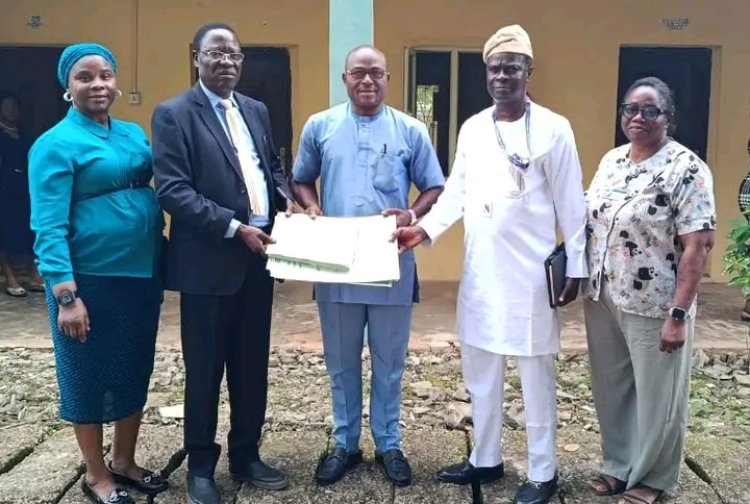
The Department of Environmental Management (EVM) of the Federal University of Technology, Akure (FUTA), has sought the partnership of the National Environmental Standards and Regulations Enforcement Agency (NESREA), Ondo State Branch, in research, training, students’ industrial attachment and professional development.
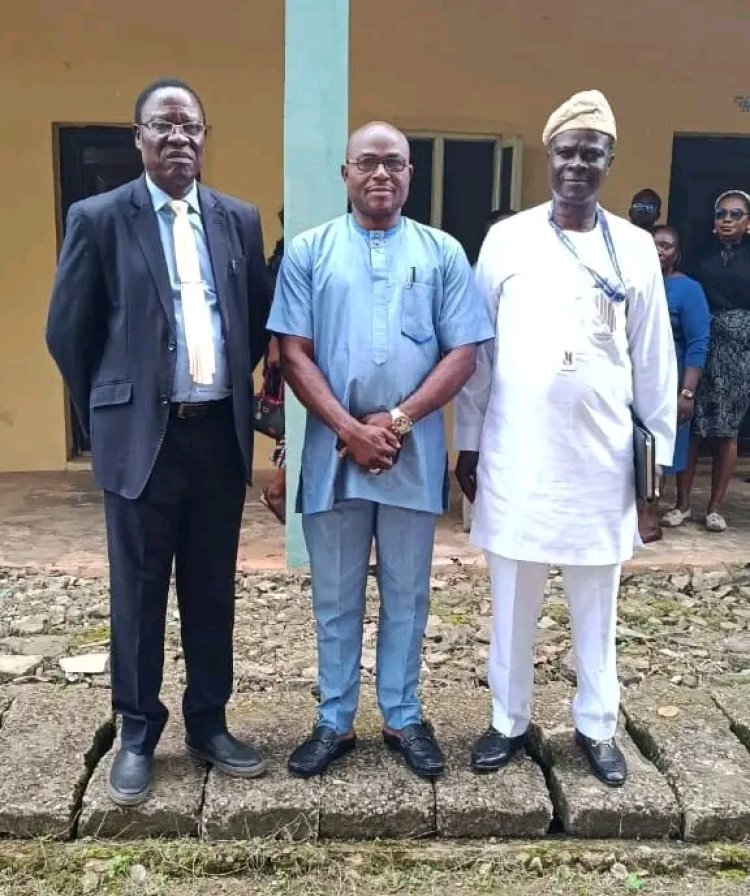
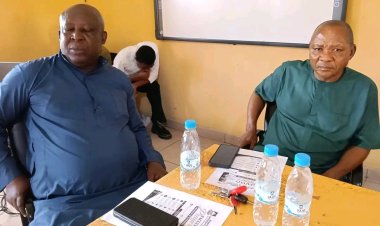
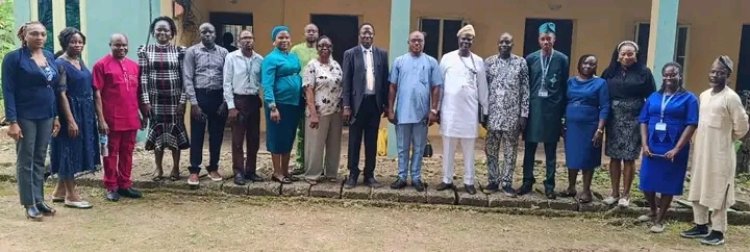
The EVM team made the request during a visit to the NESREA Ondo State office in Alagbaka, Akure, on Monday, August 17, 2026, as part of efforts to establish strategic collaborations that would strengthen the newly created department and enhance its capacity to address environmental challenges in Ondo State and beyond.
Explaining the purpose of the visit, the Head of the Department of Environmental Management, Professor Olukayode Rotowa, said the newly established department needed collaboration with NESREA, particularly in research and the training of staff and students.
He disclosed that the department admitted its first set of students into 100 Level during the 2025/2026 academic session. According to him, the development underscores the university’s commitment to strengthening industry, government and academic partnerships while providing its emerging Environmental Management programme with the practical exposure, professional networks and research opportunities required to effectively address environmental challenges.
The Dean, School of Environmental Technology, Professor Joseph Basorun, who elaborated on the development of the department, described EVM as a new addition to the university with significant potential to grow and fulfil its mandate of producing professionals capable of tackling environmental challenges.
He identified research and training collaboration as major priorities, noting that the partnership could include collaborative research, workshops and seminars.
According to Professor Basorun, environmental problems arise from both natural and human-induced factors and therefore require multidimensional approaches involving relevant stakeholders.
He also requested NESREA’s support in providing industrial attachment opportunities for EVM students, noting that practical exposure would enable students to complement classroom knowledge with real-world experience.
The Dean further sought opportunities for staff capacity development through workshops and professional programmes facilitated or recommended by the agency.
Professor Basorun also appealed to NESREA to support the department with educational and professional resources, including video materials on ecosystem awareness and other environmental issues, the agency’s manuals containing environmental policies, laws, standards, rules and regulations, as well as modern equipment and tools for teaching and learning.
He said such support would create a visible footprint of NESREA in the department while further strengthening the relationship between the two institutions.
Responding, the NESREA Ondo State Coordinator, Mr. Adejuwon Olanrewaju, said the agency had maintained cordial relationships with relevant stakeholders across the Southwest, including tertiary institutions.
He stressed that NESREA could not effectively discharge its mandate in isolation, noting that the agency required the expertise and evidence-based research capacity of institutions such as FUTA to improve its service delivery and address environmental challenges more effectively.
Olanrewaju assured the EVM team that NESREA would partner with the department in research, training and development, stressing that the collaboration would continue beyond his tenure.
He also promised that the agency would engage EVM students for industrial training to broaden their practical knowledge of environmental issues and support them in securing viable organisations for their internships.
On the request for NESREA’s environmental regulations manual, he explained that the agency’s regulations were available on its website and promised to engage the agency’s headquarters on the possibility of further collaboration in that regard.
He also disclosed that discussions would be held with the headquarters on the possibility of providing modern equipment and tools for the department.
Regarding educational materials, Olanrewaju assured the EVM team that video clips on ecosystem awareness and environmental hotspots would be made available.
The NESREA coordinator further pledged to facilitate collaboration with the department on workshops, seminars and other professional programmes.
He added that the agency would notify FUTA of relevant opportunities and involve members of the department in major environmental programmes within and outside Ondo State.
A major issue raised during the meeting was the persistent offensive odour reportedly affecting parts of Ondo State, particularly Akure, the state capital.
The NESREA team sought the expertise of FUTA scholars in determining the nature and composition of the pollutants responsible for the odour before the situation escalates into a wider public health and environmental concern.
A NESREA staff member, Dr. Shuaib Makanjuola, called for the exploration of smart odour-detection technology that could be deployed at different locations to determine the nature and concentration of potentially harmful pollutants being inhaled by residents.
He also advocated the development of a collaborative research proposal that could be presented to the government for timely intervention.