IBBU Moves to Fast-Track Teaching Hospital Accreditation as Niger Govt Targets ₦7bn Infrastructure Intervention
IBBU Moves to Fast-Track Teaching Hospital Accreditation as Niger Govt Targets ₦7bn Infrastructure Intervention
 UmarFarouk123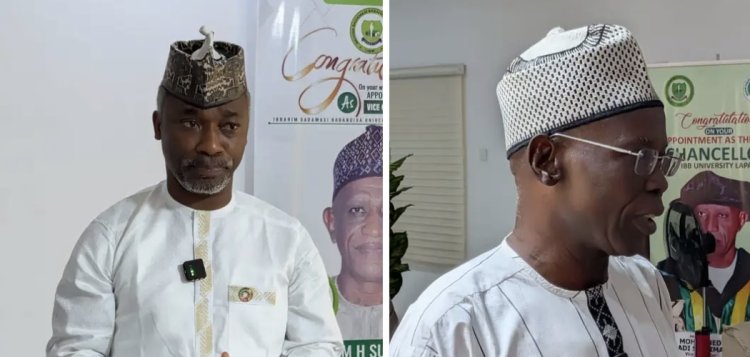
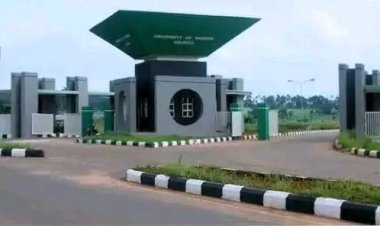
Ibrahim Badamasi Babangida University, Lapai, IBBUL, the Niger State Government and key stakeholders in the health sector have intensified efforts to fast-track the development of the IBB University Teaching Hospital and secure the required accreditation for the training of medical students.
The stakeholders, at a high-level meeting involving the Vice Chancellor, Professor Mohammed Hadi Sulaiman; the Honourable Commissioner for Health; the Permanent Secretary, Ministry of Health; the Provost, College of Health Sciences; members of the University Management; and the Chief Medical Director, IBB Specialist Hospital, reviewed the critical infrastructure and funding requirements for the project.
The meeting followed indications that about ₦7 billion from funds being accessed by the Niger State Government could be allocated to the teaching hospital project, with priority attention to facilities required to strengthen the Institution's accreditation prospects.
Speaking at the meeting, the Vice Chancellor, Professor Mohammed Hadi Sulaiman, stressed the need for all stakeholders to approach the matter with urgency and a clear understanding of the realities on ground.
He said the University was committed to ensuring that the required facilities were provided and that the process was handled in a manner that would protect the academic progression of medical students. The Vice Chancellor's position centred on converting the ongoing discussions and government support into tangible projects within the available timeframe, while ensuring that the University's academic programmes were not disrupted.
The Honourable Commissioner for Health, Dr. Murtala Bagana, also reaffirmed the commitment of the state government to supporting the University's efforts to establish the necessary teaching hospital infrastructure.
He explained that the State had been exploring avenues for accessing substantial funding to support priority health projects, including the IBB University Teaching Hospital. According to him, the intervention is expected to provide the critical facilities required to move the project forward and strengthen the environment for medical education and clinical training, emphasising the importance of collaboration between the State Government, the University and relevant technical stakeholders to ensure that the resources being mobilised translate into measurable development.
Contributing, the Permanent Secretary, Niger State Ministry of Health, Dr. Usman Abdullahi Imam, explained that the proposed ₦7 billion intervention followed an assessment of the teaching hospital project by a technical team and was intended to support more enduring infrastructure rather than temporary solutions.
He said the funding would focus on critical projects including the laboratory, lecture theatre, students' hostel, renovation of relevant facilities, external works, gatehouse and environmental development. He noted that the intervention was capable of addressing more than 90 per cent of the identified infrastructure requirements, while additional resources would still be needed for some improvements around the General Hospital.
He further disclosed that the technical documents, bills of quantities and necessary adjustments for the proposed intervention were already at an advanced stage, with further technical consultations expected to bring the process to completion.
The Permanent Secretary, however, acknowledged that the implementation timeline remained a major consideration, noting that even with accelerated procurement and implementation arrangements, substantial construction work could require several months. He therefore urged the stakeholders to carefully weigh the available options and develop a practical approach that would ensure that the infrastructure programme and the accreditation objective progressed simultaneously.
The Provost, College of Health Sciences, Professor Abubakar Aliyu, described the accreditation timeline as a critical consideration for the University, particularly because of the academic progression of the current medical students.
He explained that the present 200-level students had completed their examinations and would soon proceed to the 300 level, which has a relatively short academic period. Professor Aliyu identified the laboratory and students' hostel as among the most immediate priorities, explaining that the laboratory would be critical to the students' progression while adequate accommodation would be required to cater for successive cohorts at the 400, 500 and 600 levels.
He disclosed that an assessment of the proposed accommodation facilities had already been conducted with the project management team, adding that the University was capable of providing accommodation for the required number of students. He called for a clear roadmap with specific timelines, responsibilities and deliverables, stressing that tangible progress would strengthen the University's position in further engagements with regulatory authorities.
Other members of the University Management who spoke emphasised the importance of translating the proposed government intervention into concrete infrastructure development while maintaining close coordination among all institutions involved. They acknowledged that the University had identified the major facilities required for the teaching hospital and was working with relevant stakeholders to ensure that the projects were properly prioritised.
They also stressed the need for continuous monitoring of the implementation process so that emerging challenges could be addressed promptly without compromising the University's academic programmes.
Also speaking, the Chief Medical Director, IBB Specialist Hospital, Dr. Isah Waziri, highlighted the practical importance of completing the identified facilities, particularly those directly connected to clinical training and service delivery.
He emphasised that the teaching hospital must be developed to meet the required standards while simultaneously serving as an effective clinical environment for medical students and healthcare professionals, noting that adequate infrastructure, functional clinical facilities and appropriate support services would be essential to creating the environment required for quality medical education and patient care.
Dr. Waziri called on the University to think beyond conventional government funding and deliberately build a network of strategic partners around the IBB University Teaching Hospital project. The CMD noted that the teaching hospital is a major institutional asset whose development should attract collective ownership and support, stressing that the University could explore innovative financing models, including Public-Private Partnership, PPP, arrangements, to complement government interventions.
He said a well-structured stakeholder engagement strategy could unlock additional funding, technical expertise and investment, while positioning the teaching hospital as a sustainable centre for medical education, specialist healthcare and clinical research.
The stakeholders agreed on the need for sustained collaboration, urgent technical follow-up and a clearly defined implementation roadmap to guide the next phase of the project.
With the proposed ₦7 billion intervention, ongoing technical preparations and the commitment of the University and Niger State Government, the meeting underscored a renewed determination to accelerate the development of the IBB University Teaching Hospital and position it to meet the requirements for accreditation.